


Types of warehouses: Classification and examples
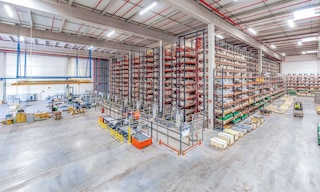
Different types of warehouses play a key role in the supply chain, with each designed to meet specific logistics needs. As a result, businesses rely on one format or another at various stages of their operations. Choosing the right solution can improve efficiency, make better use of available space, and keep goods moving smoothly.
In this post, we’ll explore the various types of warehouses and the characteristics that set them apart within the supply chain.
How to classify the different types of warehouses
The various types of warehouses can be categorized based on a range of operational, technical, and logistics criteria. Some are defined by the role they play in the supply chain. Others are distinguished by their level of automation, the type of products or materials they store, their temperature requirements, or their location within the distribution network.
A warehouse is generally defined as a building or facility used to store goods. Because storage needs vary widely, warehouses can be grouped into multiple categories, each designed to meet specific operational requirements and deliver distinct advantages.
By logistics function
Warehouses can be classified according to the logistics function they perform within the supply chain.
Supply warehouse
A supply warehouse stores inbound goods such as raw materials, components, production parts, and supplier-procured materials used in a company’s manufacturing operations.
Example: Vaillant, a leading HVAC manufacturer, operates a warehouse equipped with Mecalux pallet flow racks to supply its production plant in Belper (UK).
Production warehouse
Production warehouses hold work-in-process (WIP) inventory that has already entered the manufacturing cycle in an industrial plant. They handle semi-finished products, sub-assemblies, and materials that must pass through multiple stages before becoming finished goods. By linking different phases of the manufacturing process, these facilities help maintain a continuous flow of materials while preventing production delays and bottlenecks.
Example: Tool manufacturer Pellenc installed a Mecalux mini-load system to supply its production lines using a just-in-time strategy.
Distribution warehouse
Distribution warehouses store finished goods ready for customer delivery. They receive products from manufacturing plants or suppliers and support faster deliveries, uninterrupted product availability, and responsive customer service.
Example: Alpargatas, the multinational company behind the Havaianas brand, operates one of its largest distribution centers (DCs) in Campina Grande, Brazil. The facility has 40 loading docks and a capacity for more than 34,000 pallets. Equipped with Mecalux’s Pallet Shuttle System, it ships up to 1,500 orders a day to retail stores and other points of sale.
Fulfillment warehouse
Fulfillment warehouses are designed to enable direct access to products, speeding up picking while minimizing errors during the process.
Example: In Créancey, France, logistics provider La Ruche Logistique increased daily fulfillment from 150 to 500 orders — representing more than 3,000 order lines — with Mecalux picking racking and warehouse management software.
Temporary warehouse
Temporary warehouses hold goods for a limited period before they are moved, distributed, or put to their final use. They offer additional storage capacity during demand spikes, transportation delays, operational disruptions, or other logistics challenges. Their purpose is to provide a flexible, short-term solution until products can continue through the supply chain.
Consolidation warehouse
A consolidation warehouse combines goods, orders, or unit loads before they are shipped to their final destination. These facilities help lower transportation costs and reduce shipping errors by organizing distribution based on factors such as delivery route, customer, or product type. They may incorporate technologies such as sorters and conveyor systems to sequence shipments according to a company’s logistics strategy.
Transit warehouse
A transit warehouse supports distribution networks by facilitating the flow of goods between different points in the supply chain. Their primary objective is to keep storage times to a minimum while accelerating the dispatch process. For that reason, many transit warehouses use cross-docking, where goods are received, sorted, and shipped with little or no storage time.
Example: Multinational company Leroy Merlin turned to Mecalux to build two transit warehouses in Torija, Spain. The facilities accommodate products manufactured in France before distributing them to stores and end customers.
Buffer warehouse
A buffer warehouse balances the flow of goods between production and distribution. It receives finished products and supplies other warehouses, distributors, or major customers according to the company’s logistics requirements. These facilities absorb excess production while maintaining inventory availability when demand increases.
Example: Pharmaceutical wholesaler Hefame Group built a buffer warehouse in Riba-roja de Túria, Spain, featuring an AS/RS trilateral stacker crane from Mecalux. From there, the Group replenishes its other facilities alongside its central warehouse in Santomera.
By level of automation
Warehouses can also be grouped according to their level of automation and the degree of human involvement in logistics operations.
Manual warehouse
In manual warehouses, all logistics processes are performed by employees. Storage, internal transport, order picking, and inventory control rely on conventional material handling equipment such as forklifts and pallet jacks.
Example: Sportisimo, Europe's largest sporting goods retailer, consolidated its inventory in a manual warehouse in Ostrava, Czechia. From there, the company ships up to 18,000 orders a day to both brick-and-mortar stores and online customers across the continent.
Semi-automated warehouse
A semi-automated warehouse combines automated storage, material handling, or management solutions with manual operations. While automation streamlines part of the workflow, employees continue to play a key role in activities such as receiving, order fulfillment, and dispatch.
Example: Coca-Cola HBC Ireland and Northern Ireland implemented a Mecalux Pallet Shuttle system with capacity for 9,000 pallets at its finished goods warehouse in Lisburn. This semi-automated solution combines direct pallet access with high-density storage.
Digital warehouse
A digital warehouse uses management software and RF devices to monitor, coordinate, and optimize logistics operations in real time. These facilities improve product traceability, maintain accurate inventory records, and streamline workflows.
Example: Workwear manufacturer Würth Modyf digitalized its operations with Mecalux’s Easy WMS warehouse management system and the Multi-Carrier Shipping Software and Labor Management System modules.
Automated warehouse
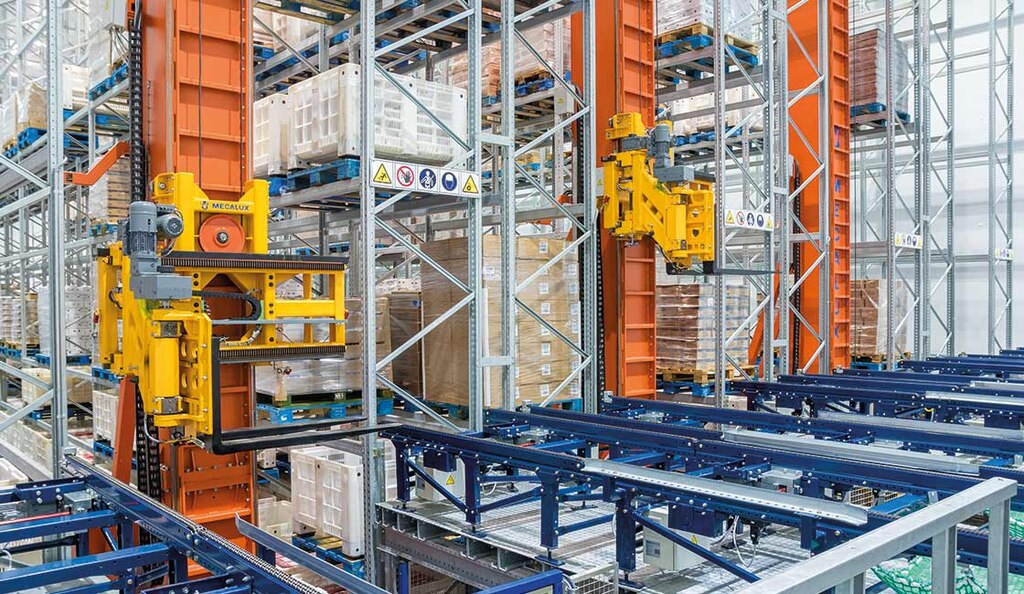
In a fully automated warehouse, automated storage and retrieval systems (AS/RS) perform much of the intralogistics work, from receiving through order fulfillment and shipping. These solutions move loads autonomously, boosting productivity.
Example: Consumer goods manufacturer Hayat Kimya commissioned Mecalux to build an automated warehouse at its headquarters in Izmit, Turkey. Standing 151' tall with capacity for 161,000 pallets, it’s one of Europe’s largest automated rack-supported warehouses.
Smart warehouse
Smart warehouses combine automation, digital tools, and advanced technologies to optimize logistics operations through connected, data-driven processes. They monitor activities in real time, analyze data, and continuously adapt workflows to enhance performance. Unlike conventional automated facilities, smart warehouses leverage technologies such as AI, machine learning, data analytics, and the Industrial Internet of Things (IIoT) to anticipate disruptions and enable better decision-making.
Example: Brazilian french fry producer Bem Brasil partnered with Mecalux to design a smart warehouse as part of a new cold chain facility. The rack-supported building, equipped with the Pallet Shuttle system and three stacker cranes, is managed by Easy WMS.
By type of construction
Warehouses can also be distinguished by their structural design and the environment in which goods are stored.
Rack-supported building
In rack-supported buildings, the racking forms part of the warehouse’s structure. The storage system supports not only the pallet loads but also the wall cladding, roof, and external forces such as wind, eliminating the need for additional columns. Because of their structural characteristics, rack-supported buildings are custom engineered to meet each company’s logistics requirements.
Example: Chemical manufacturer Lakma Strefa worked with Mecalux to construct a rack-supported building in Warszowice, Poland. The structure features 105' high racking that spans 266' long and provides a storage capacity for 15,428 pallets.
Outdoor warehouse
Outdoor warehouses are open-air storage areas used primarily for large or weather-resistant goods. These spaces are typically enclosed with security fencing or perimeter barriers and often store construction materials, steel products, or other durable items.
Indoor warehouse
An indoor warehouse is an enclosed facility that protects goods from external factors such as inclement weather, humidity, and temperature fluctuations. It provides a more secure environment for logistics operations while accommodating products that require controlled storage conditions.
By storage density
Depending on how inventory is organized and how available space is utilized, warehouses can be divided into conventional facilities and high-density warehouses.
Conventional warehouse
A conventional warehouse stores goods on selective pallet racking arranged with aisles that facilitate direct access to every pallet. This layout simplifies storage, retrieval, picking, and replenishment.
Example: To support steady growth experienced in recent years, Italian logistics provider Trasgo installed Mecalux selective pallet racking in its Arena Po warehouse. With a capacity for 20,000 pallets, the racks store products for Enel, one of the world’s leading energy companies.
High-density warehouse
A high-density warehouse is designed to maximize storage capacity and make the most of available floor space. These facilities use compact solutions that reduce the number of aisles while increasing the area dedicated to product storage. Common high-density systems include drive-in pallet racking, mobile racks, and the Pallet Shuttle.
Example: Thread manufacturer Selvafil installed six blocks of Mecalux drive-in racking at its new warehouse in Maçanet de la Selva, Spain.
By temperature
Warehouses can also be categorized according to the temperatures at which goods are stored and handled.
Cold-storage or temperature-controlled warehouse
Cold-storage warehouses maintain products within a controlled temperature range, typically between 32 and 50 °F, to preserve their quality. They’re widely used in the food and beverage, pharmaceutical, and healthcare industries. Temperature-controlled warehouses incorporate insulation, refrigeration, and environmental control systems to maintain product integrity and safety.
Example: Kiwi Greensun operates a cold-storage warehouse from Mecalux in Salvador de Briteiros, Portugal, where it handles 11,460 tons of kiwis each year.
Freezer warehouse
Freezer warehouses are designed to preserve products at temperatures below 32 °F. They house frozen food and other goods that require long-term storage at subzero temperatures. Operating in these environments requires refrigeration, insulation, and material handling systems designed for extreme cold.
Example: Frozen vegetable producer Iberfresco contracted Mecalux to build a warehouse capable of handling more than 27,500 tons of food annually. The facility includes two cold stores maintained at a constant -11 °F with 22 mobile racking units.
Ambient warehouse
Ambient warehouses store products that do not require special temperature conditions. They’re typically used for dry goods, industrial materials, and other nonperishable items. Compared with cold storage warehouses, they offer greater operational flexibility and lower energy consumption.
Example: French cereal producer Sabarot consolidated its logistics operations with an AS/RS for pallets in Chaspuzac. At the client’s request, the warehouse was designed to operate at either ambient temperature or 23 °F.
By geographic location
Warehouses can also be classified by their location within the distribution network, depending on the geographic area it serves and its role in the supply chain.
Central warehouse
A central warehouse is a logistics facility that consolidates products from one or more manufacturing plants and serves as the primary distribution hub for the rest of the network. It stores finished goods and supplies regional warehouses, local facilities, or DCs.
Example: Vehicle glass repair and replacement company Carglass has a central warehouse in Celje, Slovenia, which supplies the rest of its facilities across the country. To manage its inventory of 8,000 SKUs, the company equipped its facility with Easy WMS.
Regional warehouse
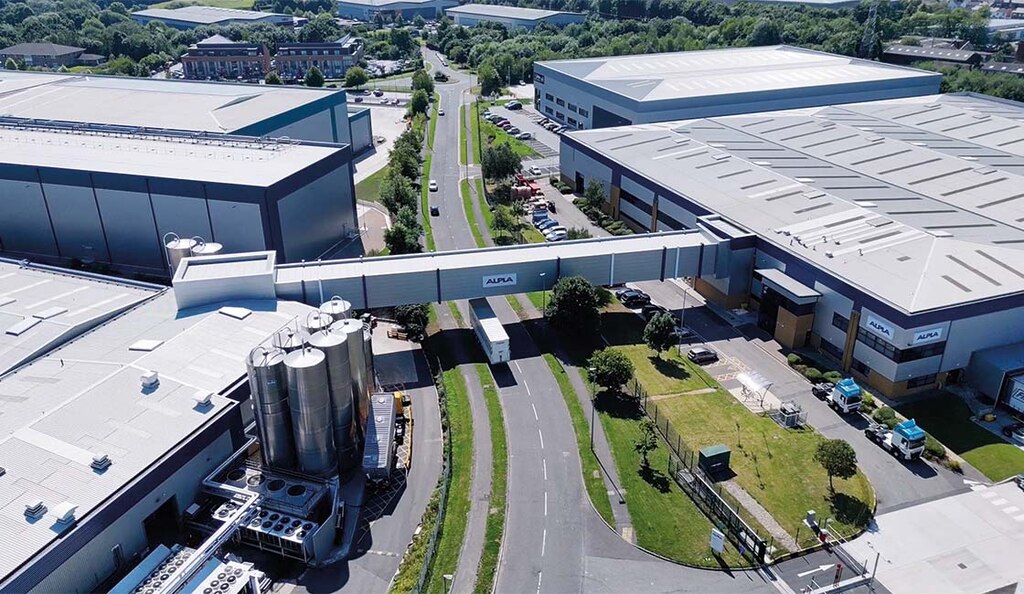
A regional warehouse positions inventory closer to demand while serving a specific geographic area. These facilities receive products from central warehouses or manufacturing plants and distribute them to nearby customers, retail stores, or points of sale. Their strategic location shortens delivery times and streamlines regional distribution.
Example: Slovenian medical supplies company Zaloker & Zaloker serves hospitals, pharmacies, and primary care centers. In Ljubljana, it operates a regional warehouse dedicated to order fulfillment, along with a separate reserve storage facility.
Logistics platform
Logistics platforms bring together storage, transportation, and distribution activities in a single location. These hubs can centralize operations for multiple companies or logistics providers while connecting different transportation modes, shipping routes, and distribution centers. Their purpose is to coordinate the movement of goods and boost efficiency across large-scale logistics networks.
Example: GBS (Groupement des Bières Spéciales), a logistics platform serving independent breweries in France, is building a new warehouse in Billy-Berclau equipped with the Mecalux 3D Automated Pallet Shuttle system and Easy WMS.
Micro-fulfillment centers (MFCs)
These micro-warehouses enable fast order processing close to the end customer while maintaining a limited inventory in urban and suburban areas. Also known as microhubs, MFCs accelerate deliveries in high-demand locations. Their compact footprint makes them well suited to cities, although they require frequent replenishment.
Urban logistics center
Urban logistics centers act as distribution hubs within cities, coordinating deliveries to different urban areas. They centralize receiving, sorting, order fulfillment, and shipping activities related to ecommerce and B2C operations. Unlike MFCs, urban warehouses handle higher product volumes and support broader last-mile distribution networks.
By goods stored
Warehouses can also be grouped by the type of inventory they handle.
Raw materials warehouse
A raw material warehouse stores unprocessed inputs used in manufacturing. These goods are supplied to production lines, where they’re transformed into finished products. Raw material warehouses are typically located close to manufacturing areas to support a steady flow of materials while minimizing internal transport. Accurate inventory control is critical to prevent production disruptions.
Example: Brazilian fragrance manufacturer Aromaty Fragrances completely overhauled its logistics operations by opening an automated warehouse in Louveira. Designed to store raw materials, the facility is also managed with Easy WMS.
Finished goods warehouse
A finished goods warehouse accommodates products that have completed the manufacturing process and are ready for distribution, sale, or shipment. These facilities play a key role in the supply chain by bridging production and distribution. Inventory is typically organized by SKU, customer order, or shipping route to maintain product availability and support efficient order fulfillment.
Example: Global packaging manufacturer Grupo Envases produces and markets tinplate lids at its facility in La Rioja, Spain. Thanks to the real-time integration between Easy WMS and its SAP ERP system, the company has digitalized the management of its finished goods inventory.
Work-in-process (WIP) warehouse
WIP warehouses hold semi-finished products that have completed one or more manufacturing stages but still require additional processing before becoming finished goods. They act as a buffer between production phases, maintaining a continuous flow of materials.
Example: Egg producer and distributor Eggs Product operates three incubation chambers equipped with Mecalux drive-in pallet racks at its facility in Żylice, Poland. They serve as a staging area for semi-finished products during the production process.
Spare parts warehouse
A spare parts warehouse holds components used for the maintenance and repair of equipment, machinery, or vehicles. Its purpose is to minimize operational disruptions and reduce downtime across manufacturing, logistics, and industrial operations.
Example: Automotive parts importer and distributor RADEC serves customers throughout Mexico. Its Guadalajara facility stocks more than 45,000 SKUs covering every vehicle model sold in the country and features multi-tier shelving from Mecalux.
Perishable goods warehouse
Perishable goods warehouses store products that can deteriorate quickly and therefore require specific storage conditions. These facilities generally handle food such as meat, fish, fruit, vegetables, and dairy products, as well as flowers, pharmaceuticals, and certain chemicals. Logistics operations for perishable goods require careful control of temperature, humidity, and ventilation to preserve product quality and safety.
Example: Panificadora de Alcalá manages more than one million product units each day at its logistics center in Alcalá de Henares, Spain. The facility incorporates several Mecalux solutions, including Easy WMS, the semi-automated Pallet Shuttle, the Automated Pallet Shuttle, and drive-in pallet racking.
Chemical warehouse
Chemical warehouses store substances and compounds that require specialized handling and storage conditions. They incorporate safety measures and environmental controls tailored to the characteristics of each product, reducing risks during storage and handling.
Example: German multinational BASF implemented Mecalux’s Easy WMS at one of its warehouses in Indaiatuba, Brazil, to monitor 100% of the movements of its 1,800 SKUs in real time.
Hazardous material warehouse
Hazardous materials (hazmat) warehouses are designed to store flammable, corrosive, toxic, or otherwise dangerous substances safely. They comply with stringent safety regulations and incorporate specialized protection and containment systems to minimize risks in the event of an incident.
Example: Global-TALKE, a logistics provider specializing in chemical products, operates a center in Tarragona, Spain, with a capacity for 30,000 pallets. The facility is divided into separate buildings to meet safety requirements.
High-turnover warehouse
These facilities are designed to handle a continuous flow of inbound and outbound goods while managing fast-moving inventory. Because speed and product availability are vital, these spaces are organized to accelerate replenishment, order fulfillment, and shipping.
Example: French paper manufacturer Clairefontaine expanded its warehouse in Alsace, equipping it with the Automated Pallet Shuttle. This AS/RS is ideal for fast-moving products with a high number of pallets per SKU.
Medical supply warehouse
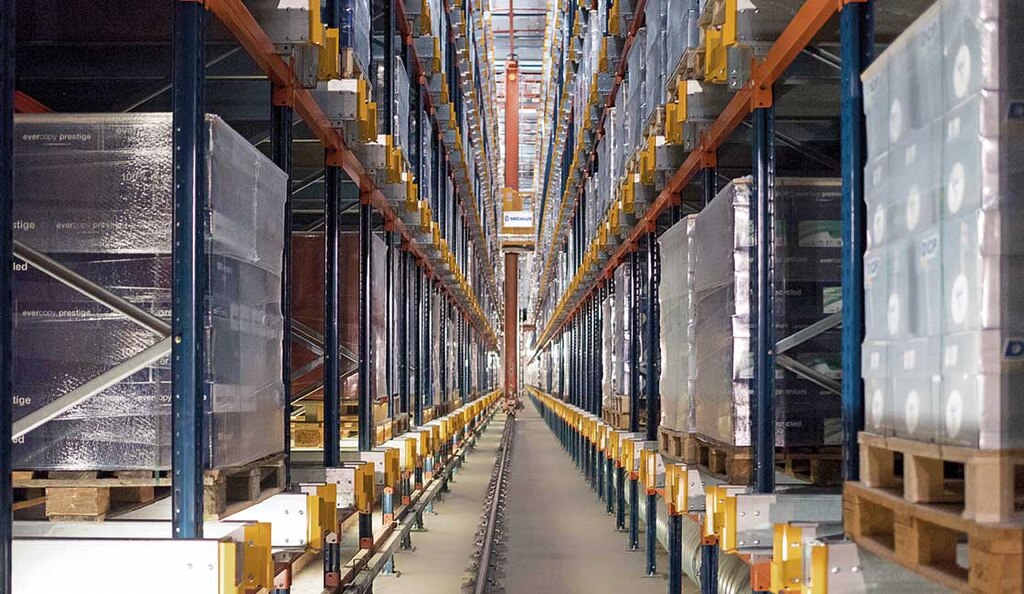
Medical supplies require storage conditions that ensure product integrity, traceability, and safety. These facilities maintain strict control over inventory and environmental conditions throughout warehouse operations.
Example: Pharmaceutical company Laboratorios Americanos operates a warehouse in Lima, Peru, that supplies hundreds of pharmacies and healthcare facilities across the country without delay. The racking was also specially reinforced to withstand the forces generated by potential seismic activity.
By ownership
Warehouses can also be categorized according to their ownership and operating model.
Private warehouse
A private warehouse is owned and operated by the company that owns the goods stored inside. As part of the business’s logistics infrastructure, it allows for direct control over storage, distribution, and inventory management. Although operating a private warehouse requires investment in facilities, equipment, maintenance, and personnel, it also gives organizations greater oversight of their logistics processes.
Example: After years of outsourcing its logistics operations, professional and consumer cookware manufacturer Browne brought them in-house by building a new 196,000 ft² warehouse in Aurora, Canada. To improve responsiveness and maintain a high level of customer service, the company implemented Interlake Mecalux’s Easy WMS.
Third-party logistics (3PL) warehouse
Warehouse operations can also be outsourced to logistics providers, which offer storage and distribution services to other businesses. This approach reduces infrastructure investment while allowing greater flexibility, particularly when demand fluctuates or business requirements change.
Example: Logistic Net is a 3PL provider specializing in warehousing, inventory management, and material handling services. Its warehouse in Bassano del Grappa, Italy, is equipped with Mecalux drive-in pallet racking served by four pallet shuttles. This solution enables storage for more than 3,000 pallets, all managed from a tablet.
Bonded warehouse
In a bonded warehouse, imported goods are stored under customs supervision until their final destination is determined. During this period, businesses can defer the payment of import duties and taxes. These facilities are especially valuable for companies engaged in international trade and those handling high-value products with medium or low inventory turnover. They also offer greater flexibility when distributing or re-exporting goods.
By size
Warehouses can also be classified by their storage capacity, floor space, and the volume of goods they handle. Although there’s no universal classification, they’re generally grouped as small, medium, or large facilities based on their size and operational scale.
Small warehouses typically accommodate fewer than 1,000 pallets and cover approximately 21,500 ft². They are commonly used by local businesses and companies with relatively modest logistics operations. Medium-sized warehouses generally hold between 1,000 and 10,000 pallets. Depending on the operation and the storage systems installed, they can exceed 108,000 ft². Lastly, large warehouses can manage tens of thousands of pallets and often span 215,000–325,000 ft². They’re commonly used in industries such as e-commerce, distribution, and manufacturing.
Choosing the right type of warehouse
The multiple types of warehouses reflect the diverse operational challenges found across today’s supply chains. The Mecalux Group’s experience designing and implementing warehouse solutions for companies in a broad range of industries demonstrates the importance of selecting a facility tailored to logistics needs. The right warehouse can maximize available space, improve operational efficiency, and support a smooth flow of goods.