


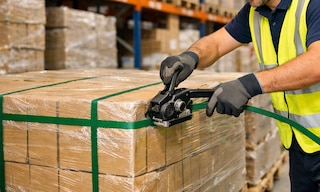
Pallet strapping: Benefits, materials, and best practices
Pallet strapping is a standard procedure in logistics operations, from small warehouses to large automated distribution centers (DCs). As businesses move increasing volumes of freight, stabilizing loads for storage and shipment has become an essential step across industries.
In this post, we explore pallet strapping, its benefits, the different materials used, and best practices for securing palletized loads.
What is pallet strapping?
Pallet strapping is the process of securing and protecting a load with straps to keep it stable during storage, handling, and transportation. Common in logistics and manufacturing, this technique compacts the load and helps hold it firmly in place along its journey through the supply chain.
In warehouses and DCs, the choice between manual and automated equipment will be determined by throughput and load characteristics. Businesses that handle high volumes often rely on pallet strapping machines or fully automated systems to increase consistency and speed.
Although the two methods are sometimes combined, pallet strapping is not the same as stretch wrapping. Straps fasten the load to the pallet, while stretch wrap encloses the palletized goods to shield them from dust, moisture, and minor shifting during storage and transit.
Benefits of pallet strapping
Pallet strapping plays an important role in safeguarding loads during transportation by truck, rail, air, or sea. While not every shipment requires it, the practice is part of daily operations across industries, including e-commerce, manufacturing, construction, and third-party logistics (3PL).
Once boxes have been palletized, strapping improves stability during handling and transportation. A properly bundled pallet is less likely to shift in transit, reducing product damage and freight claims while making loads easier to stack, move, and store. Pallet strapping can also shorten loading and unloading times, helping streamline receiving, storage, and order fulfillment.
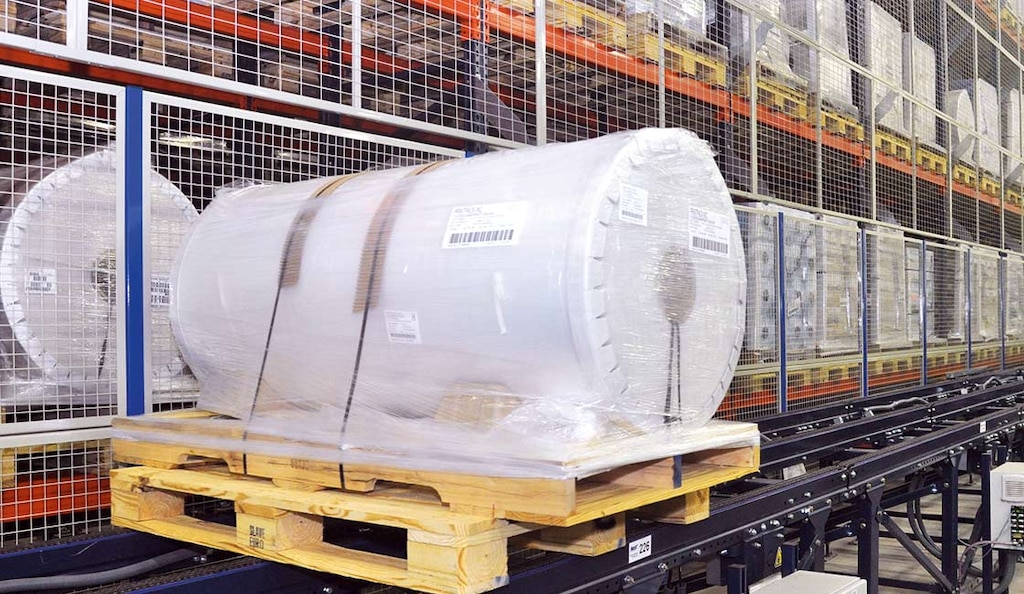
Types of pallet strapping
One of the most common ways to classify pallet strapping is by the orientation of the straps. The choice between vertical and horizontal strapping depends on the load configuration, its stability, and the type of products being shipped:
- Vertical strapping. Straps run from the top of the load, underneath the pallet, and back over the top, securing the contents firmly to the pallet. This method is well suited to heavy, bulky, or unstable cargo.
- Horizontal strapping. Straps wrap around the sides of the palletized goods to reinforce stability and reduce the risk of collapse. This approach is particularly effective for smooth-sided products or loads made up of stacked boxes.
Depending on throughput requirements and operational needs, strapping can be performed manually, semi-automatically, or with fully automated equipment.
Types of strapping materials
Straps are available in several materials, each with distinct performance characteristics. The right choice hinges on factors such as load weight, product type, and shipping and storage conditions.
- Steel pallet strapping. Steel straps provide the highest tensile strength, making them suitable for heavy-duty applications. However, they offer less flexibility than other materials and may not be appropriate for every type of product.
- Plastic pallet strapping. Plastic straps are commonly made from polypropylene (PP) or polyester (PET).
- One of the most cost-effective options, PP strapping is recommended for lighter palletized loads (generally up to 770 lb) and performs well across a range of temperatures.
- PET strapping is designed for heavier applications (1,200 to 2,200 lb, depending on the product) and maintains excellent tension under changing temperatures.
- Textile or corded strapping. Made from woven synthetic fibers, textile straps are flexible and absorb impacts well, making them a good choice for delicate items and goods with easily damaged surfaces.
Selecting the right material involves evaluating factors such as load weight, product characteristics, and storage and transportation conditions. Each option offers a different balance of strength, flexibility, and protection.
How to strap a pallet: Step by step
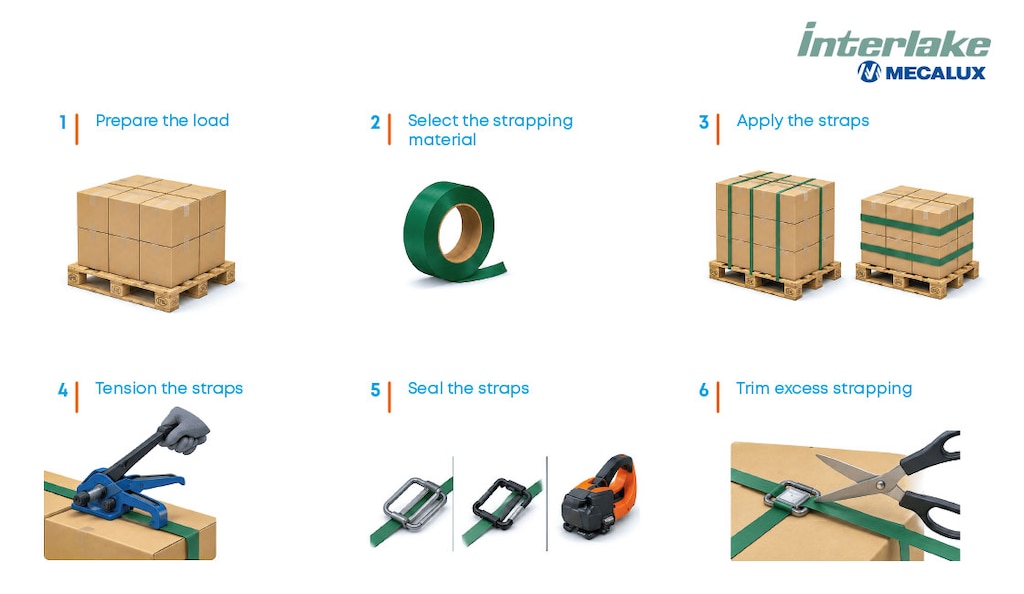
Proper pallet strapping requires a few key steps to stabilize and safeguard the load throughout storage, handling, and transportation:
- Prepare the load. Arrange the products evenly on the pallet. Distribute the weight uniformly and keep the load aligned to create a stable, level surface.
- Select the strapping material. Choose the appropriate strap type based on the load’s weight, fragility, and destination.
- Apply the straps. Bulky items are typically held in place with vertical strapping, while horizontal strapping is often better suited to stacked boxes and similar products.
- Tension the straps. Tighten the straps using manual, semi-automatic, or fully automated equipment.
- Seal the straps. Once tension has been applied, join the strap ends using the appropriate sealing method. As a rule, manual tools utilize metal or plastic buckles, whereas automatic machines rely on heat or friction welding.
- Trim excess strapping. Cut the strap tail to prevent it from catching on equipment or creating safety hazards.
Automating pallet strapping
Pallet strapping can be performed manually, semi-automatically, or automatically. The most suitable option will hinge on product characteristics, throughput, and shipping requirements.
- Manual strapping. A warehouse associate fastens the load using hand tools (such as tensioners and sealers) or dedicated manual strapping equipment.
- Semi-automatic strapping. The associate positions the pallet for strapping, and the machine then tensions and seals the strap.
- Automated strapping. Fully automated systems complete the entire process with minimal human intervention. These solutions can be integrated into conveyor lines and order fulfillment operations.
In warehouses with automated storage and retrieval systems (AS/RS), consistent pallet preparation is crucial for reliable material handling. Automatic strapping machines standardize and speed up the process, reducing packaging inconsistencies and minimizing bottlenecks. As a result, they are found in many manufacturing facilities and automated DCs.
Pallet strapping: A key part of logistics
Pallet strapping is a standard practice in modern logistics. An improperly bundled load can lead to damaged products, freight claims, and supply chain disruptions. Therefore, choosing the right strapping method affects not only cargo protection but also warehouse performance. The continued development of automatic strapping machines and their integration into state-of-the-art logistics facilities highlight the important role this process plays in warehouse efficiency.
Pallet strapping FAQs
What is pallet strapping?
Pallet strapping is the process of securing a palletized load with one or more straps to keep it stable and safeguard it during storage, handling, and transportation. It reduces the risk of shifting, product damage, and freight claims.
What do you need to strap a pallet?
To strap a pallet, you need a properly prepared palletized load, straps suitable for the weight and type of products being shipped, and strapping equipment — manual, semi-automatic, or automated. Depending on the system, sealing may require buckles or heat or friction welding.
What is the difference between pallet strapping, pallet wrapping, and pallet banding?
Pallet strapping and pallet banding generally refer to the same process: applying straps or bands to stabilize a palletized load during storage, handling, and transportation. Pallet wrapping, by contrast, involves covering the load with stretch wrap to protect it from dust, moisture, and minor shifting. In many operations, strapping and wrapping are used together to improve load stability and protection.
What is the difference between palletizing and pallet strapping?
Palletizing is the process of arranging and stacking products on a pallet to create a single unit load. Pallet strapping is the next step: stabilizing that load with straps to help prevent shifting and damage during storage, handling, and transportation.
Can pallet strapping be automated?
Yes. Pallet strapping can be performed manually, semi-automatically, or with fully automated equipment. Automatic strapping machines integrate with conveyor systems and pallet handling lines, enabling consistent load stabilization with minimal operator intervention. Automating the process increases productivity, standardizes load preparation, and helps reduce bottlenecks in high-throughput warehouses and DCs.