


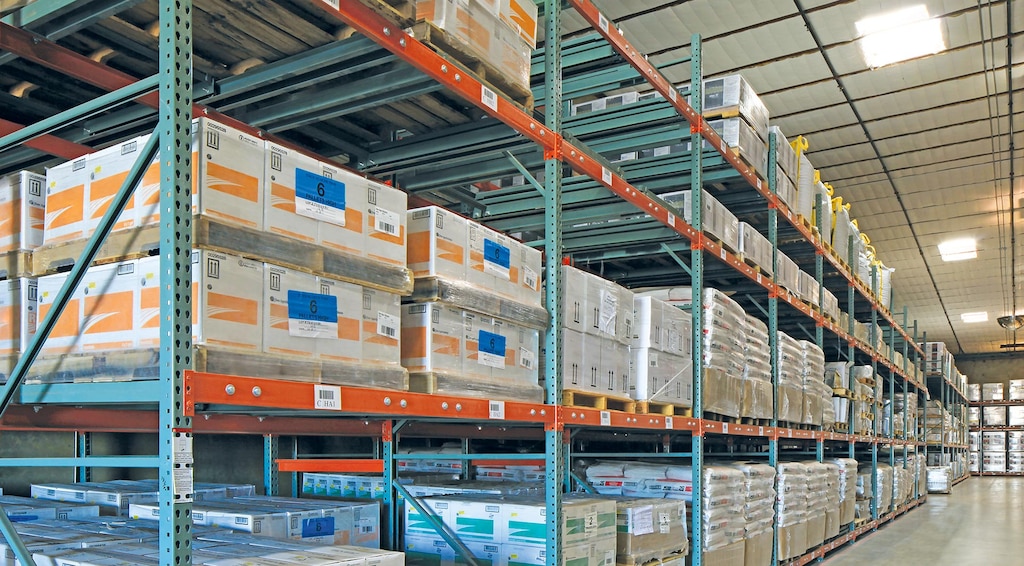
Push-Back Pallet Racking
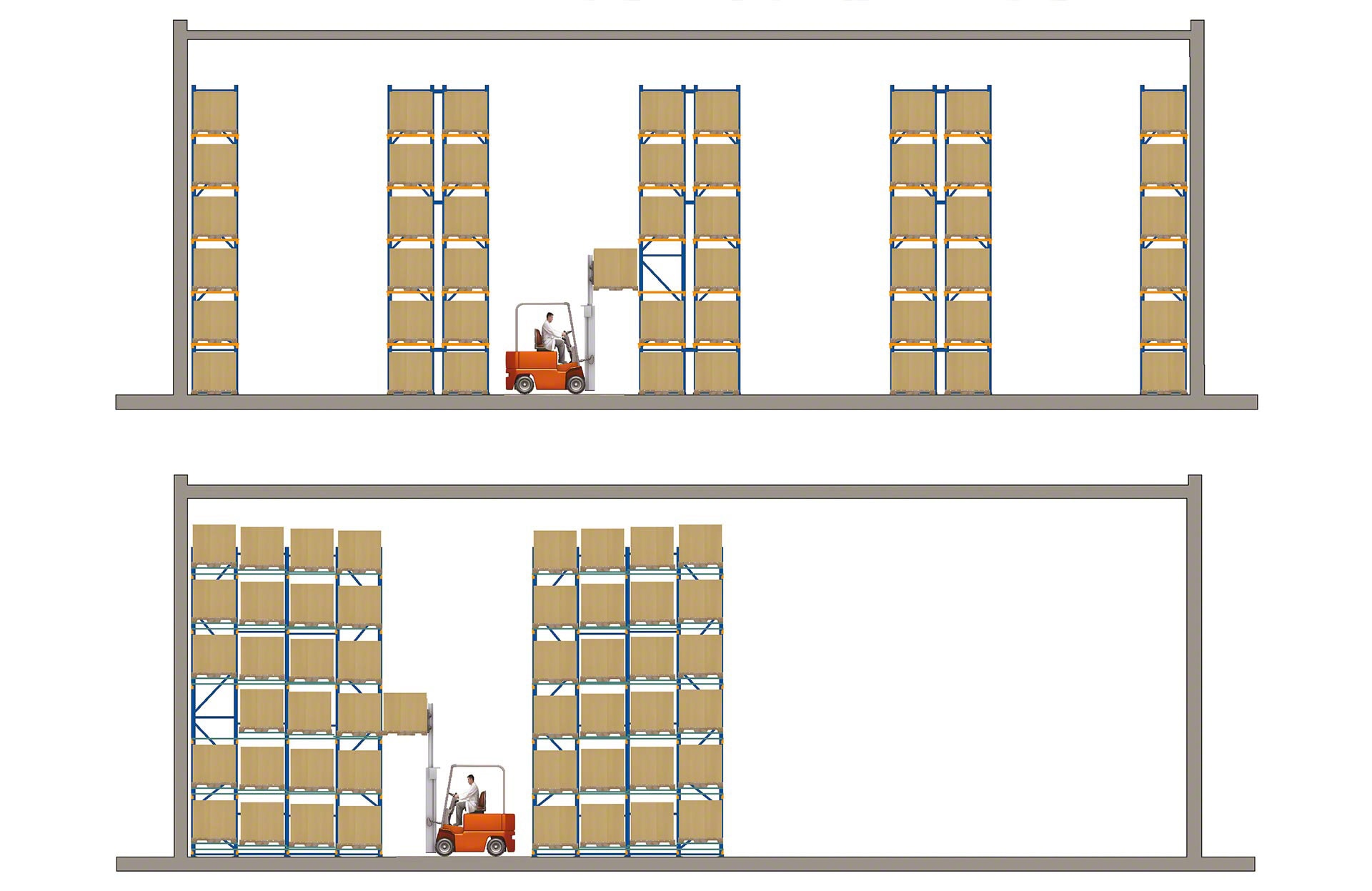
Increase warehouse capacity with a high-density solution designed for same-aisle loading and unloading of single-SKU storage. Excellent selectivity and optimal space utilization.
The product
Push-back racking: Multiproduct storage that saves time and space
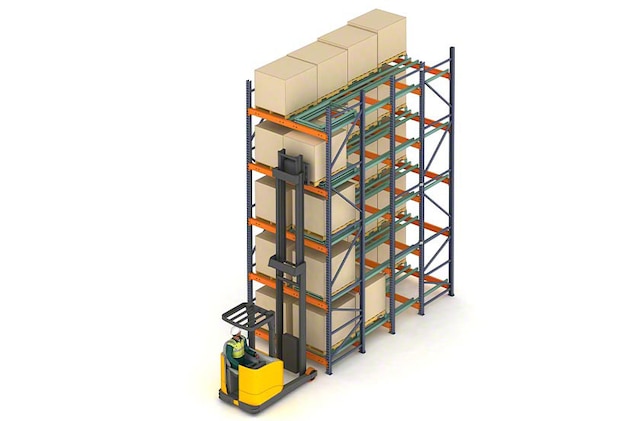
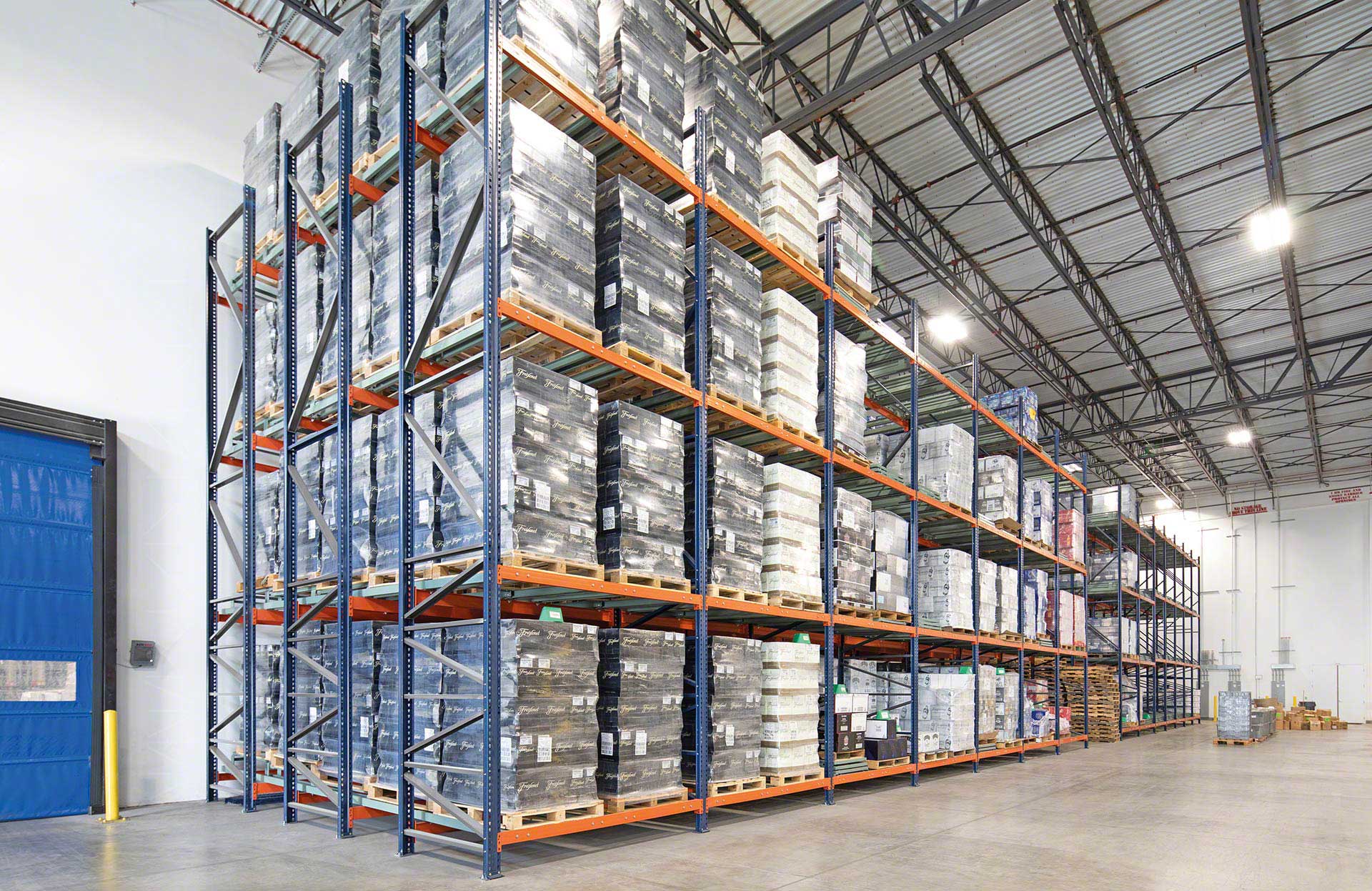
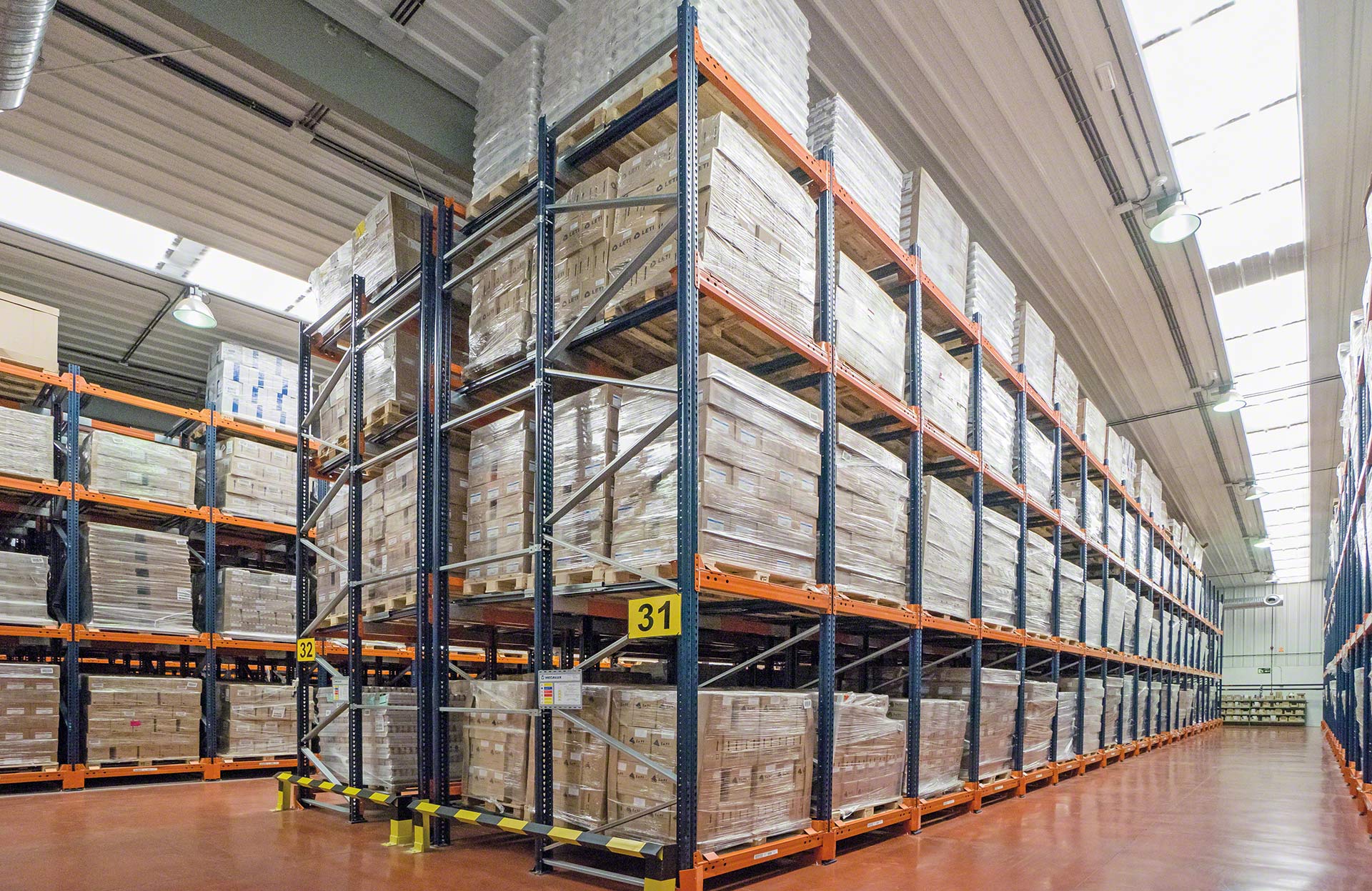
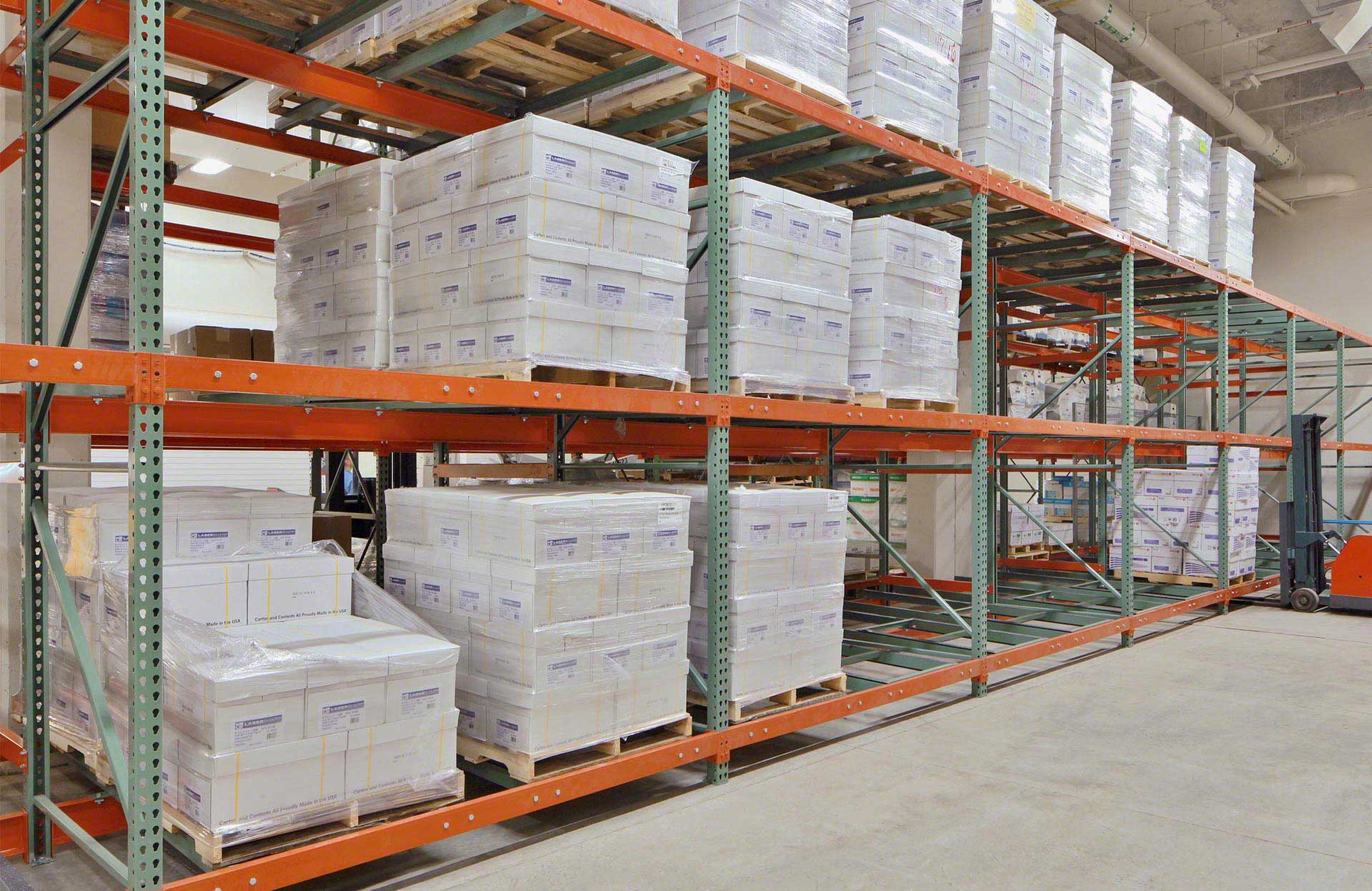
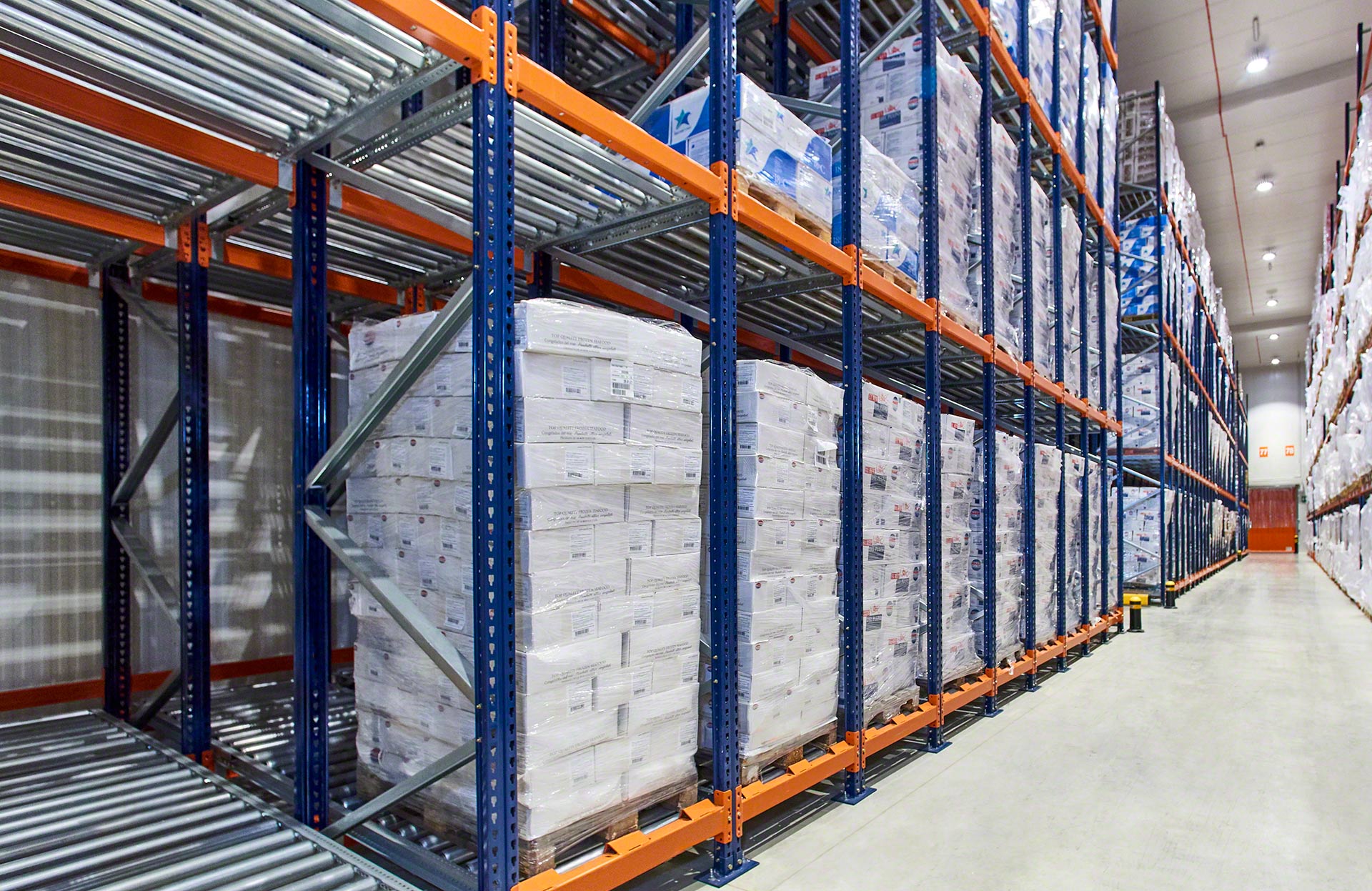
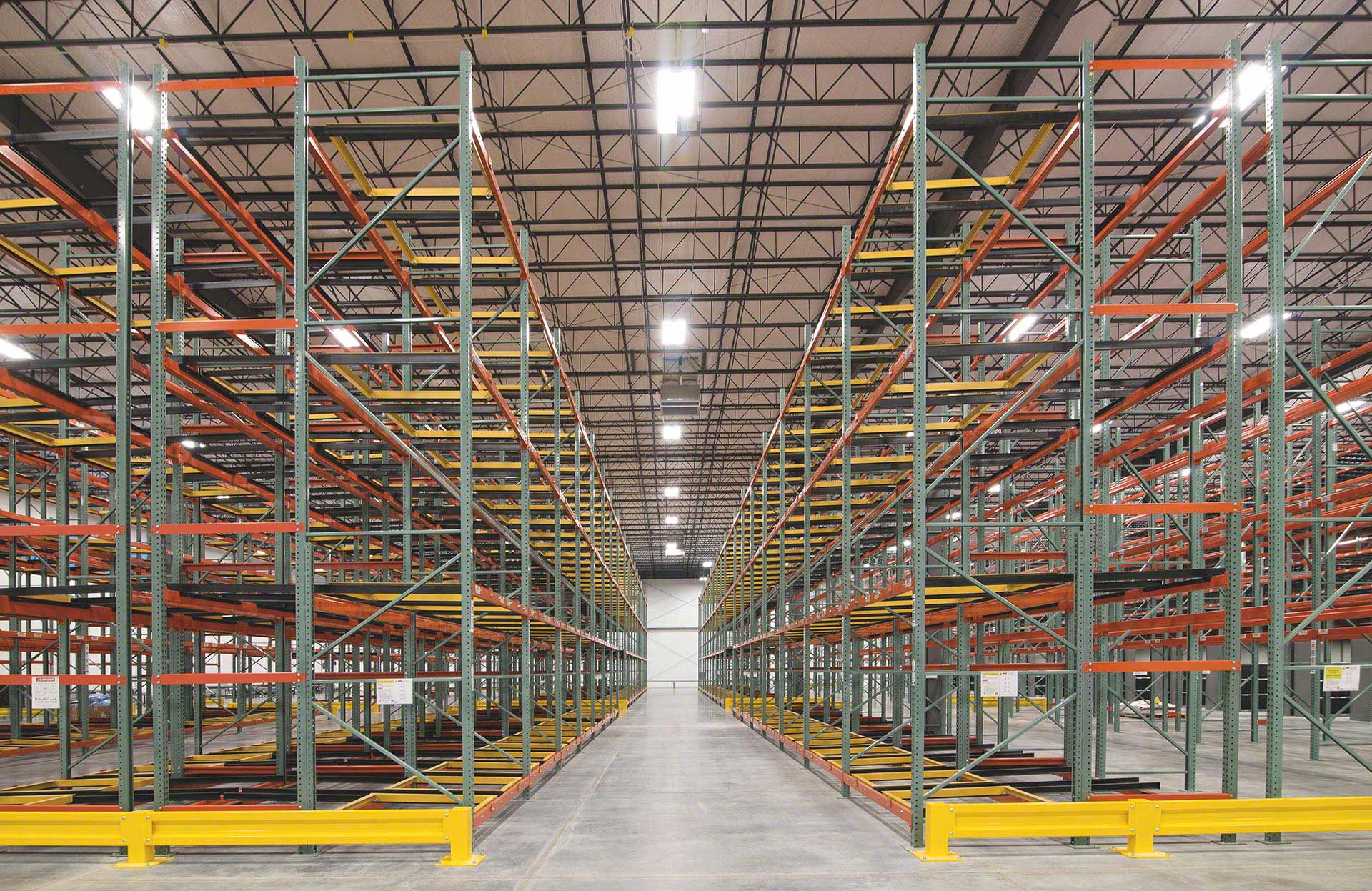
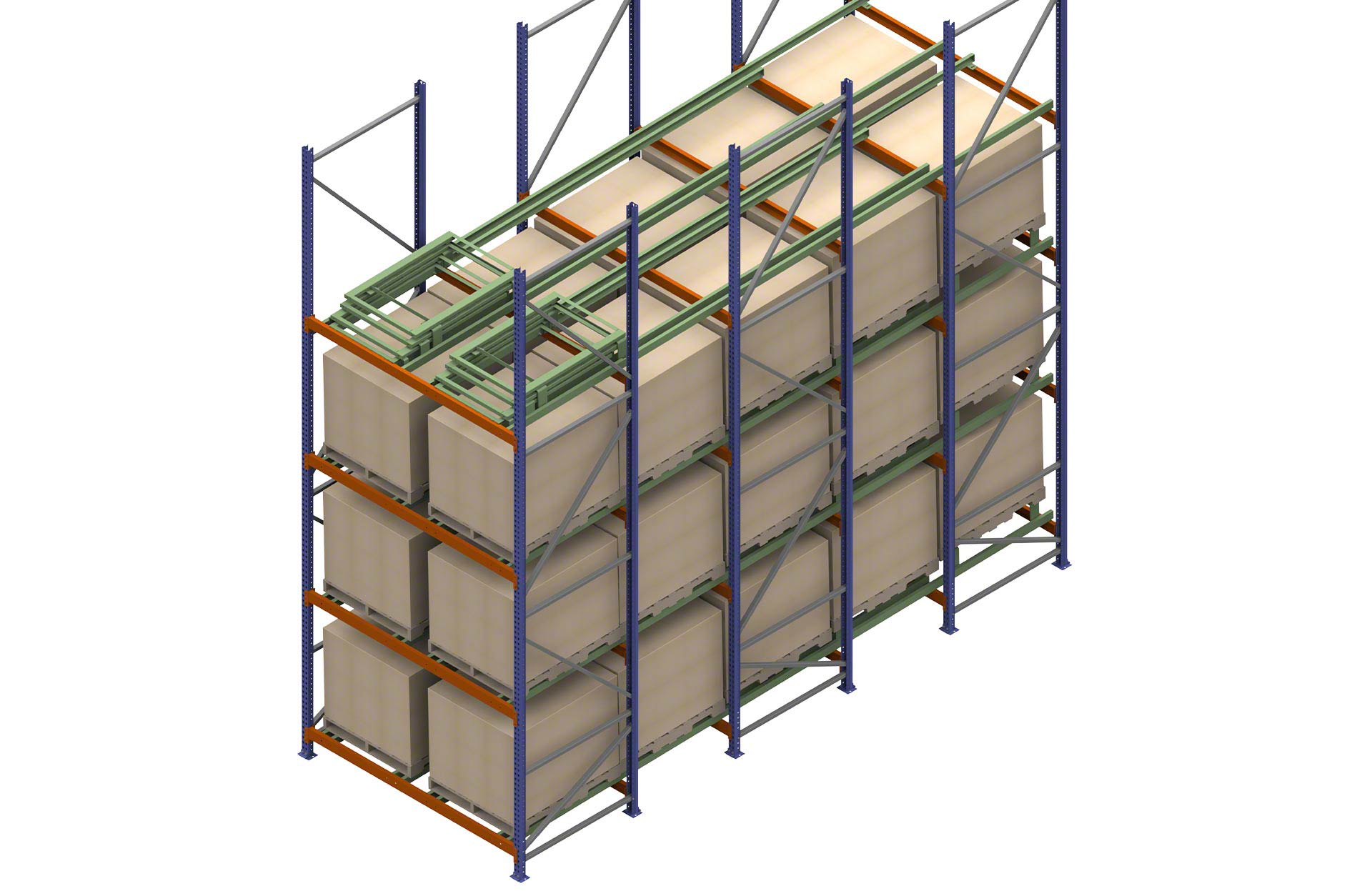
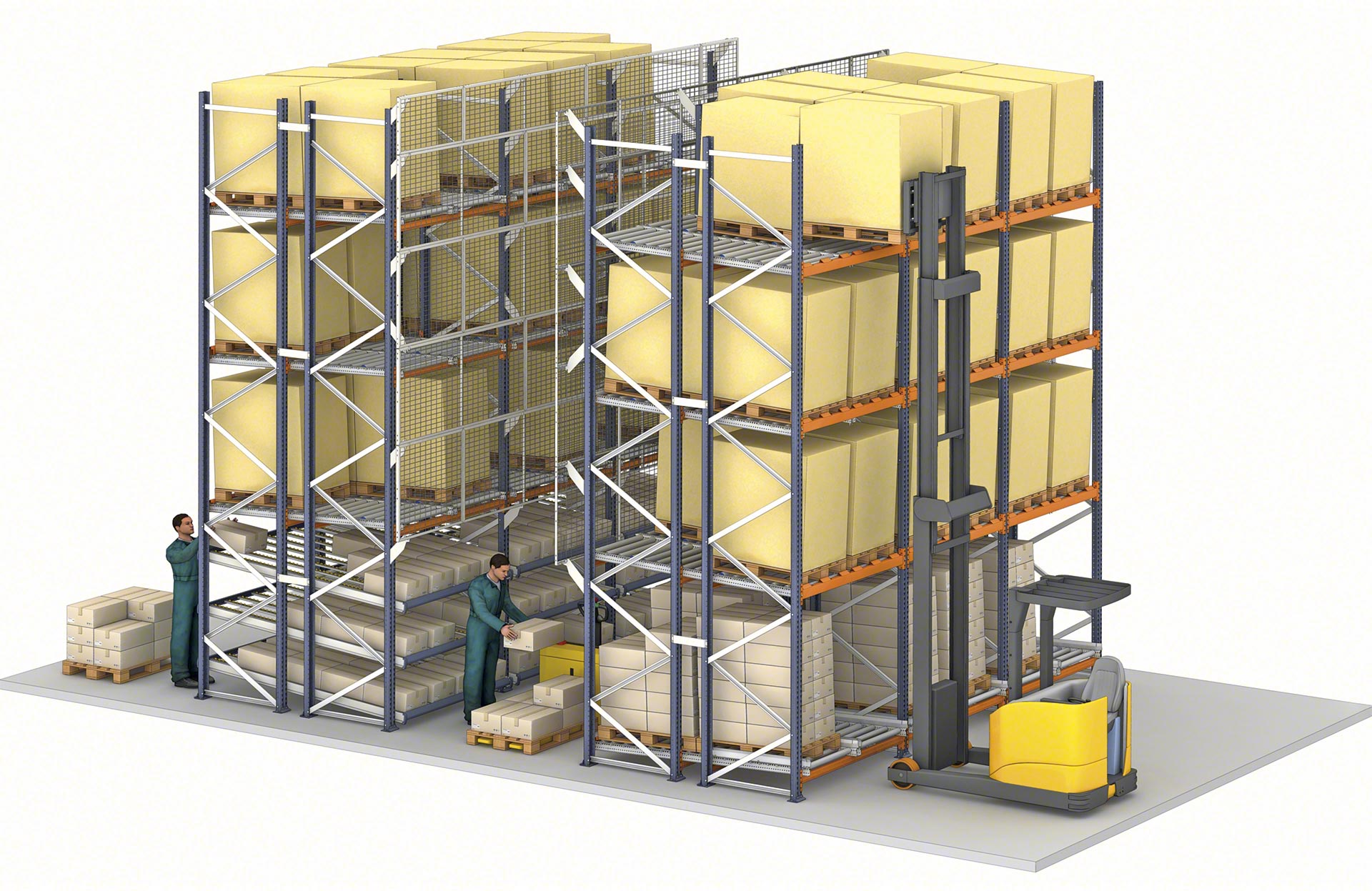
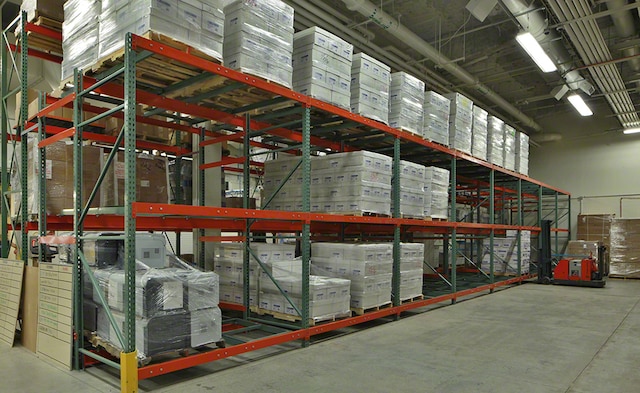
The push-back racking system combines high-density storage and excellent selectivity. Nesting carts can store up to five pallets deep at a time, with a different SKU in each lane. The result is extremely high pick flows from all lane entrances facing the work aisle.
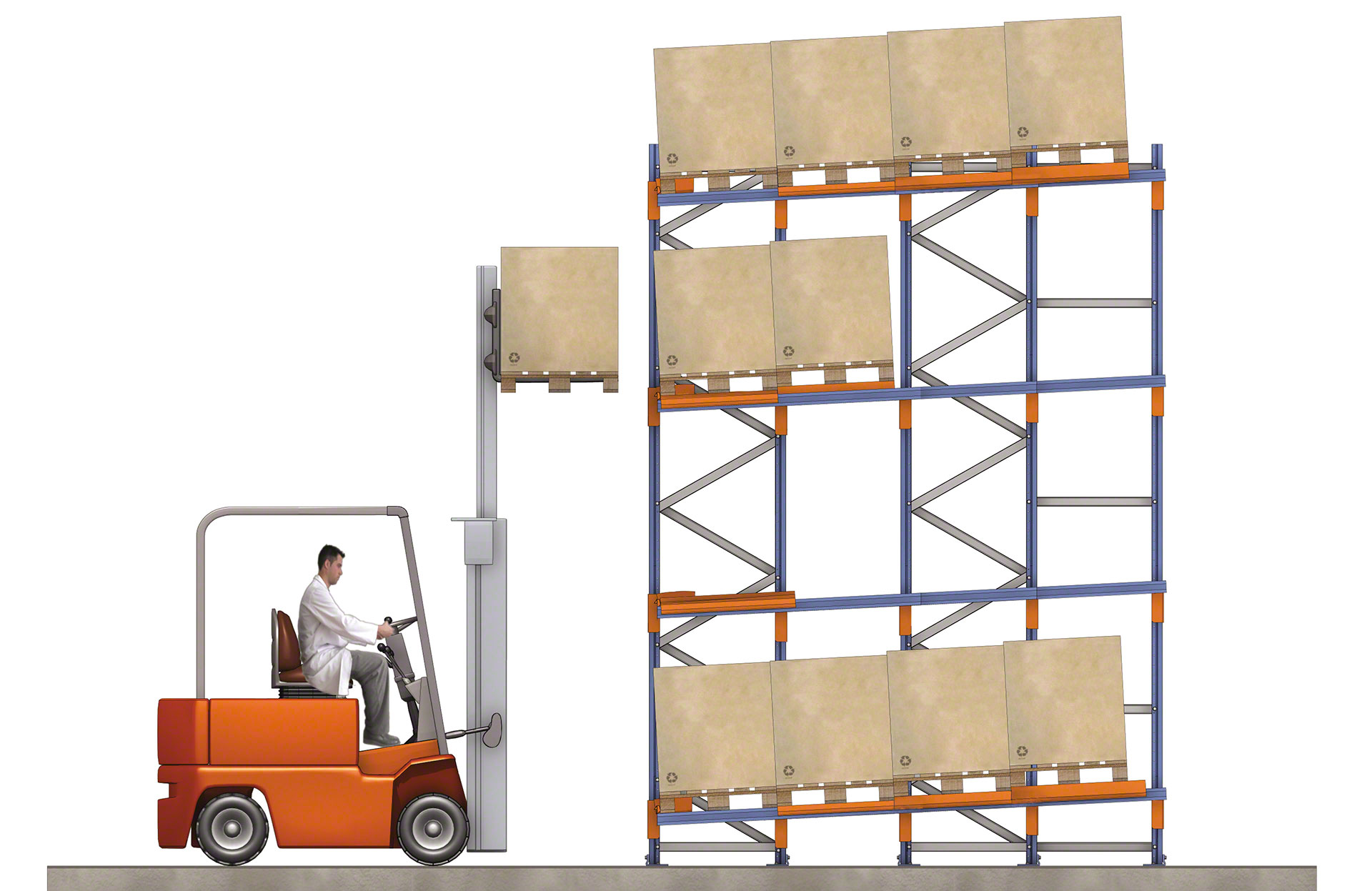
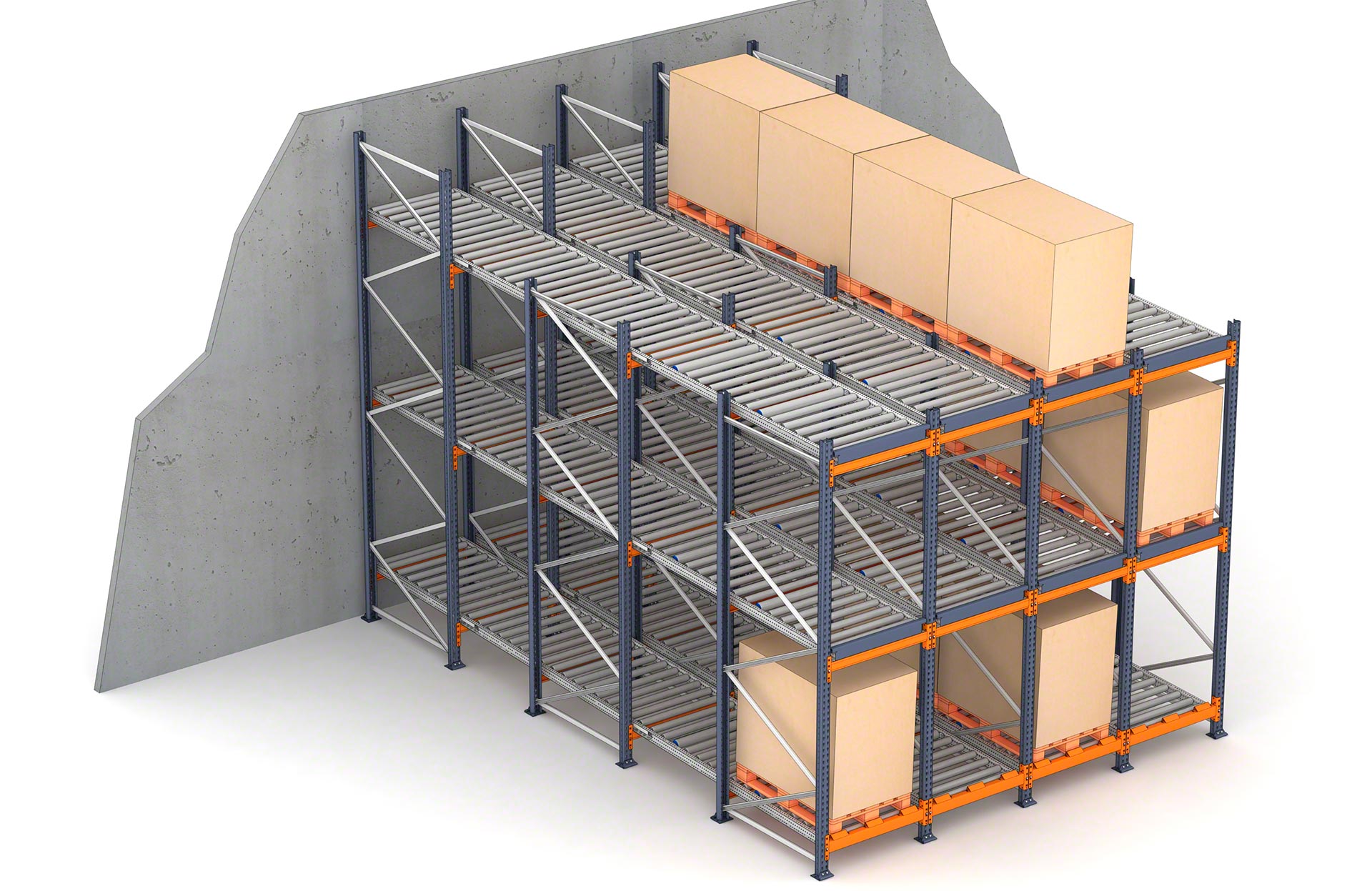
A push-back pallet rack works by accumulation: as each pallet is loaded, it is placed on the free-rolling cart and pushed back into the lane by loading additional pallets. Gravity moves the pallets forward to the aisle on the telescopic carts during unloading. As such, no reach equipment or driving into the rack is necessary. This solution is based on the LIFO (last in, first out) goods management method.
Push-Back Racking advantages
- Space savings: Eliminating extra aisles maximizes the available space and boosts storage capacity.
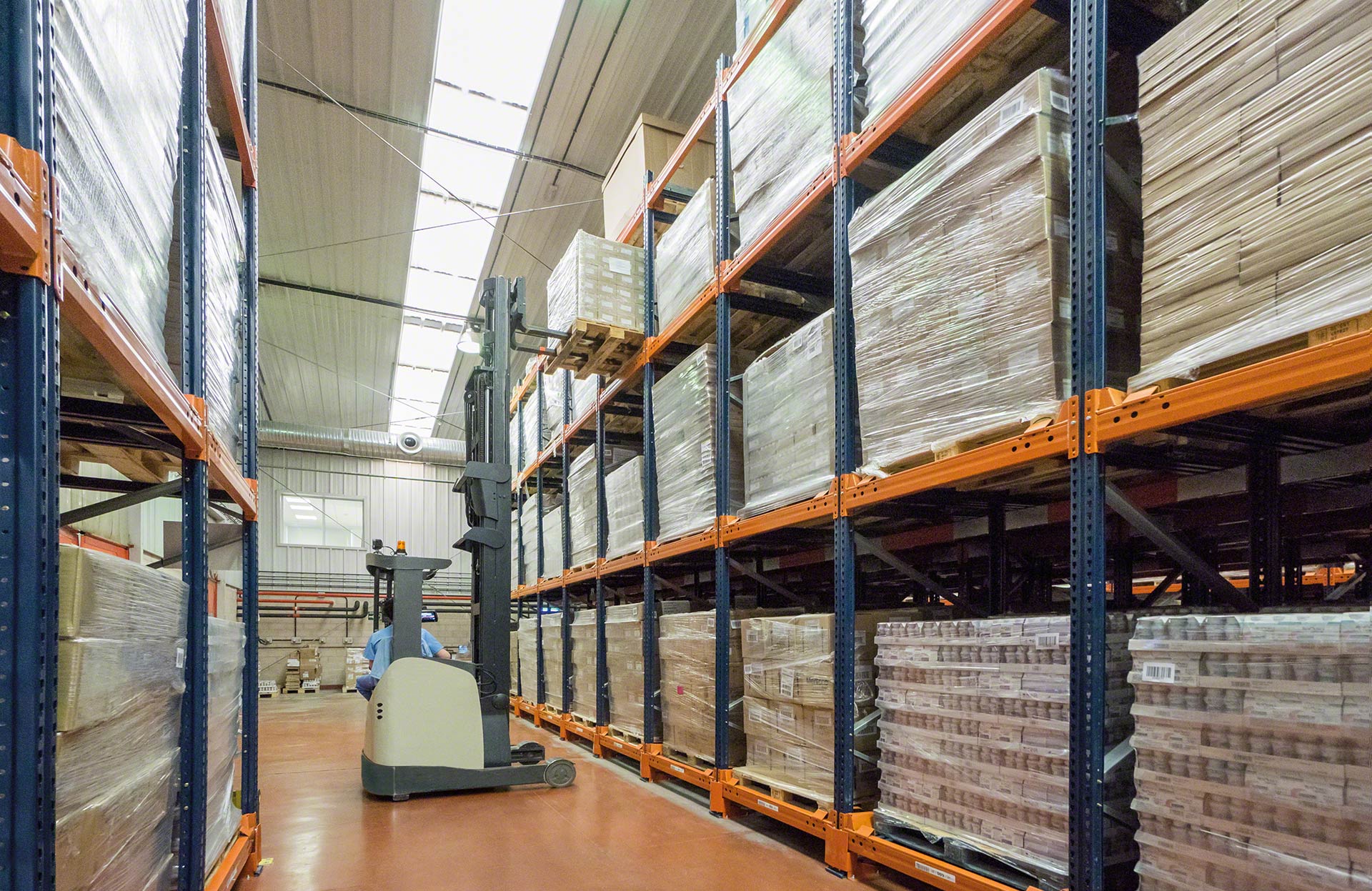
- Time efficiency: Since forklifts stay in one aisle and don’t enter the racks, loading and unloading become much faster.
- Multiple SKUs: Each storage lane can hold a different product, allowing for a variety of items to be stored.
- Wide temperature range: The carts in the racks are built to work in temperatures from -22 °F to 104 °F.
- Safety: Features like locking devices, stops, and pallet guides ensure safe and easy handling.
- Low maintenance: The system needs minimal upkeep and is designed for strength and durability.
We are very happy with the Interlake Mecalux racking that are in place right now. It has brought a whole new look to the warehouse.
Applications of Push-Back Racks
Extremely flexible solution adaptable to different types of warehouses
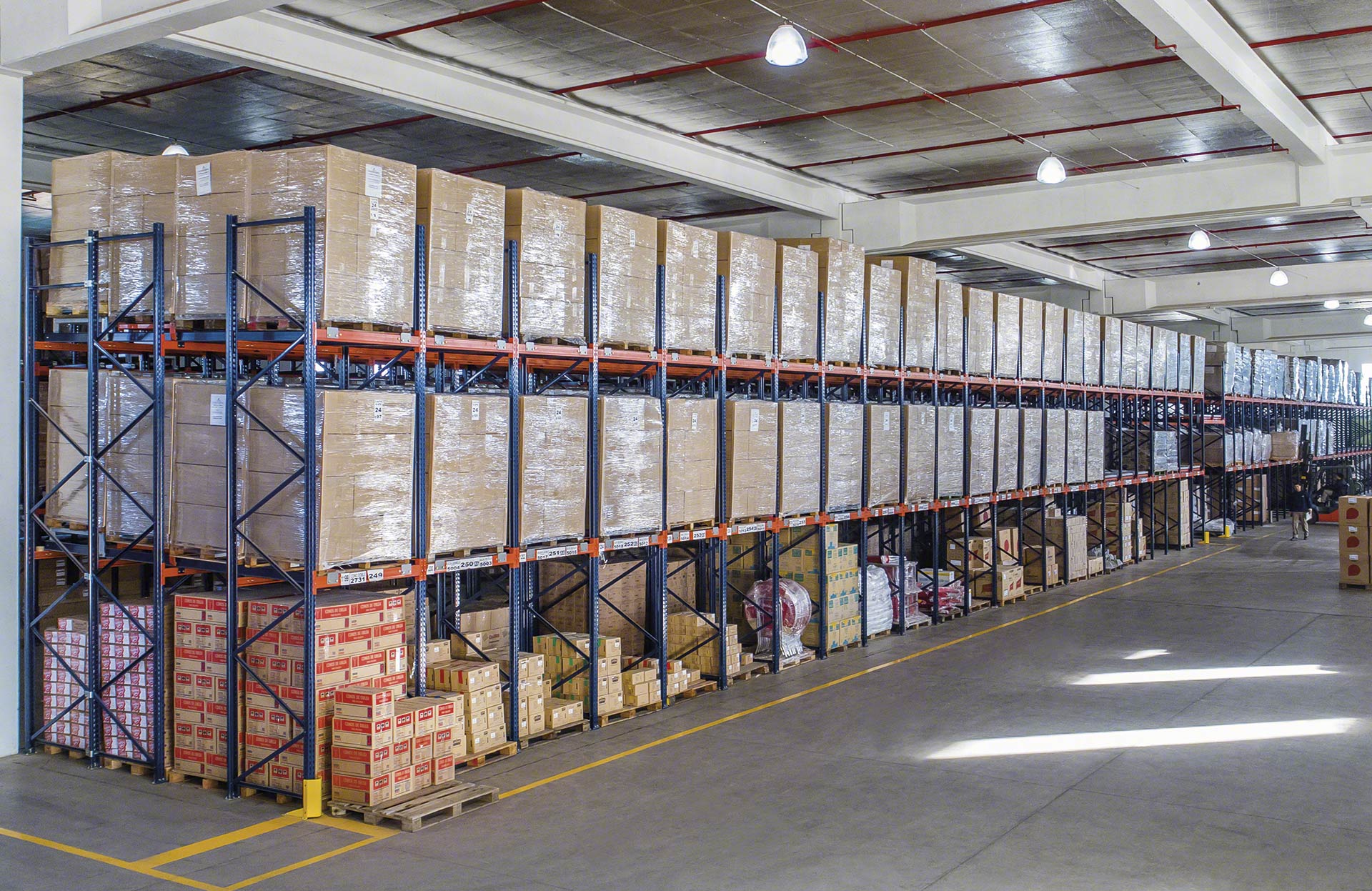
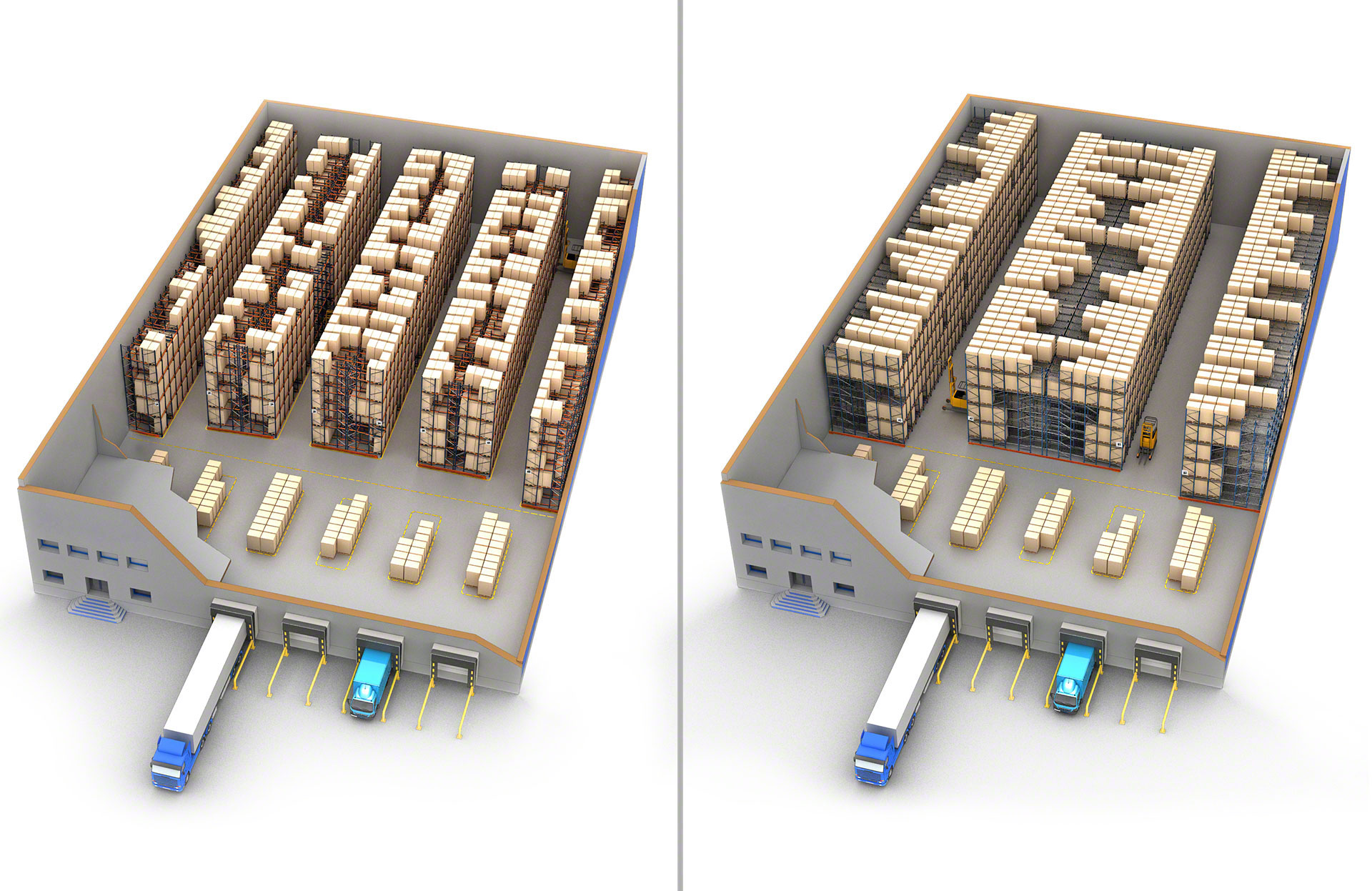
Pushback pallet racking is the perfect system for companies with medium-turnover palletized goods or with a small variety of SKUs and few pallets per SKU. It is also ideal for facilities that need to leverage their available surface area.
Warehouses with medium-turnover products
A push-back pallet rack is optimal for medium-turnover palletized goods with 2 or more pallets per SKU and LIFO management.
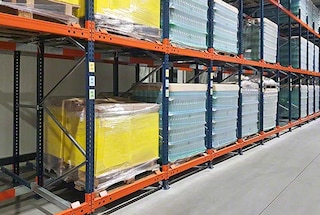
Batch storage
Each lane is independent, making it possible to store a different SKU per lane and facilitating batch management.
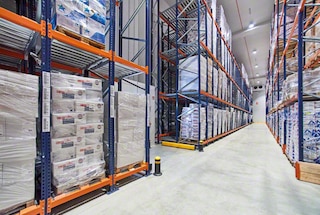
Cold stores
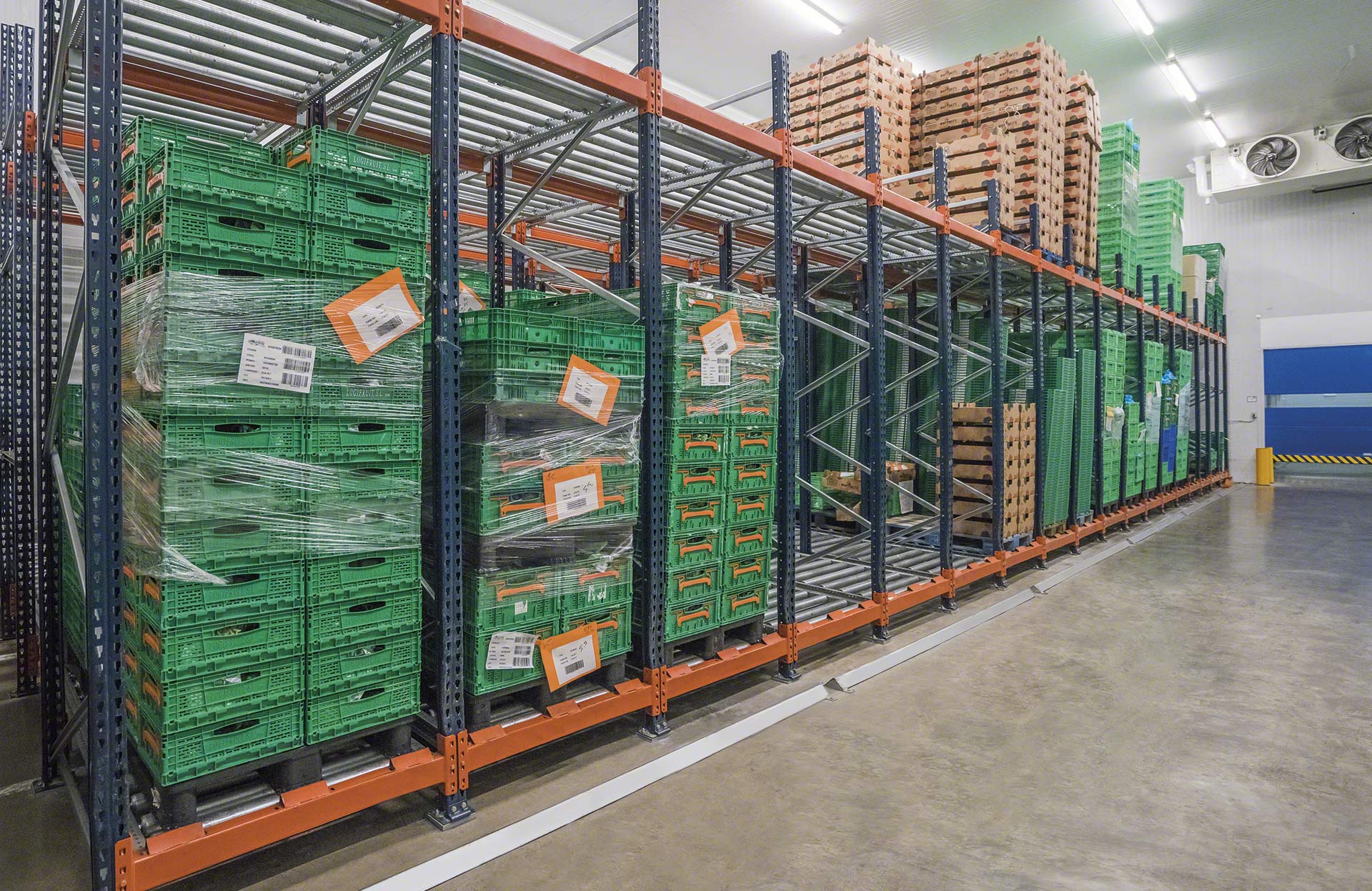
Recommended for warehouses operating at low temperatures: the system reduces the volume to be cooled and thus energy consumption.
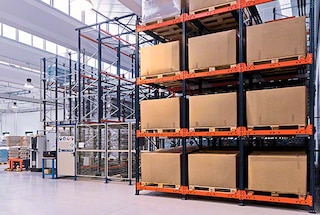
Buffer for picked orders
These racks can be used in temporary storage areas to house prepared orders.
How does a Push-Back Racking System work?
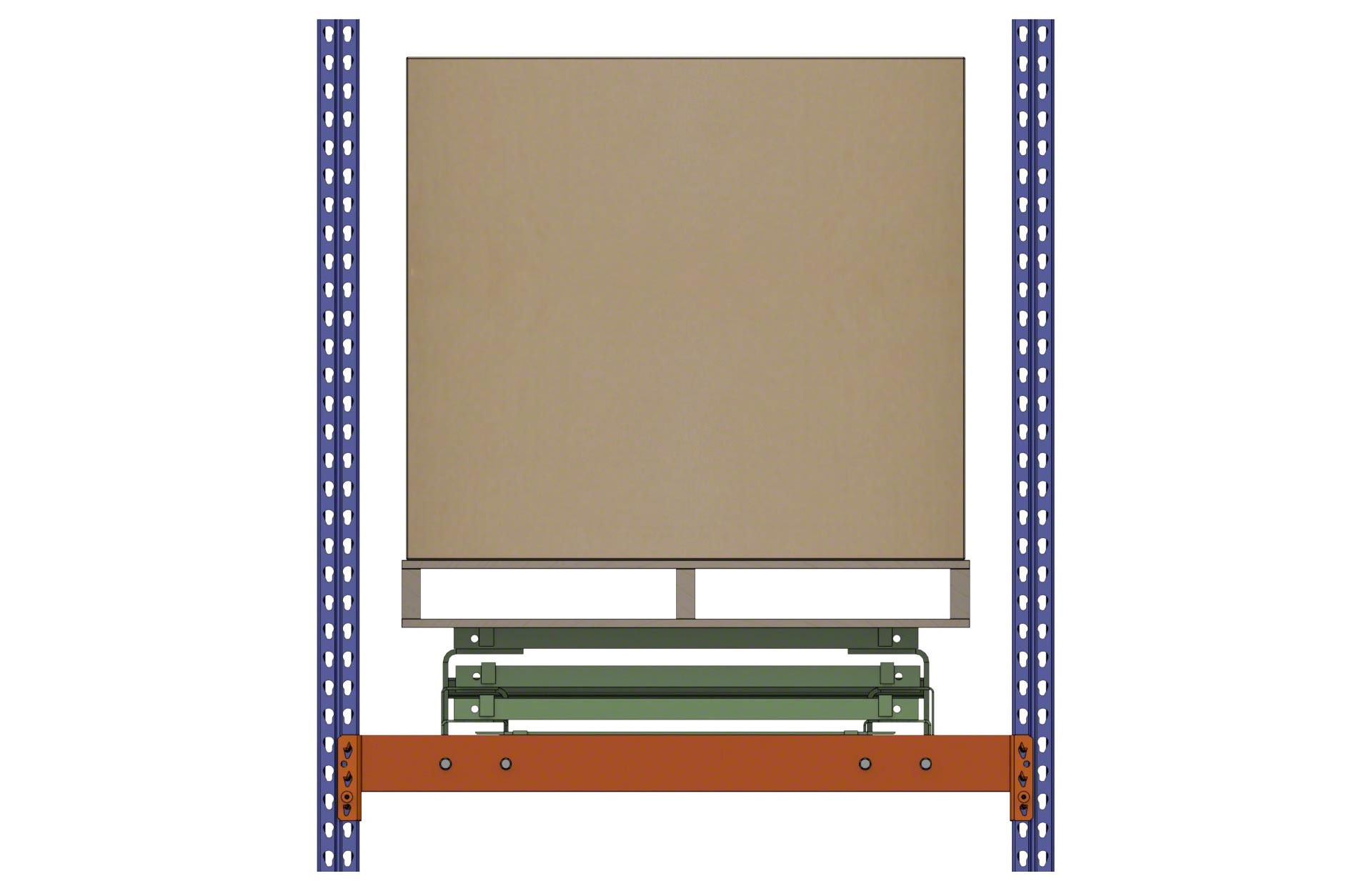
Set of carts or rollers for loading and unloading pallets smoothly and safely
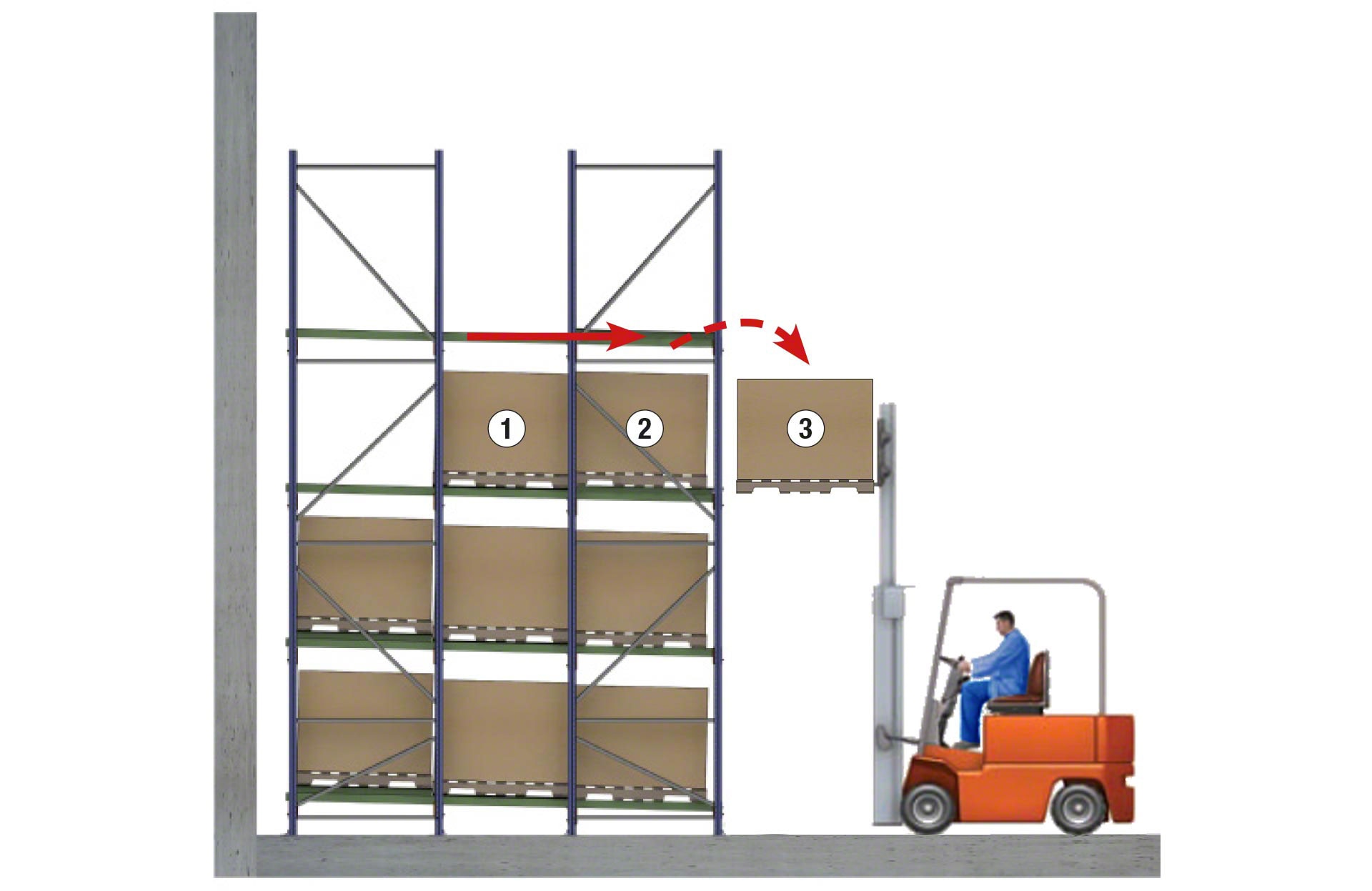
Push-back pallet racking systems work according to a simple movement mechanism that leverages and balances two opposing forces: the pushing force to place the pallets in the storage lane and the force of gravity to facilitate their removal.
Storing the first pallet
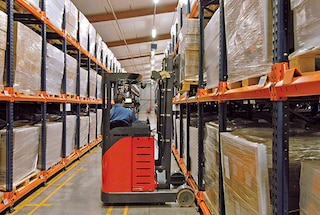
The forklift places the first pallet at the beginning of the storage lane, resting it on the first set of parallel carts.
Storing the second pallet
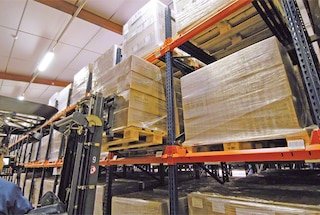
The second pallet is used to push the first one, which moves back until leaving the next set of carts available. The second pallet is deposited here on the next set of carts.
Storing the rest of the pallets
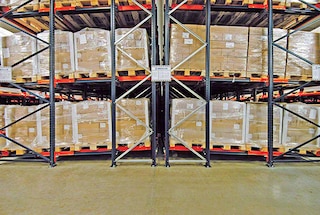
The operation is repeated with the remaining pallets. The last pallet is supported directly on the rails, as no carts are used for this position.
Pallet removal
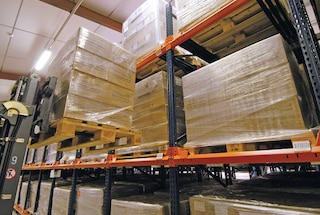
To retrieve pallets, the process is reversed. When removing the first pallet, the others move towards the aisle by gravity until they fill the space created.
Case studies
Push back the chaos with Interlake Mecalux pallet racking
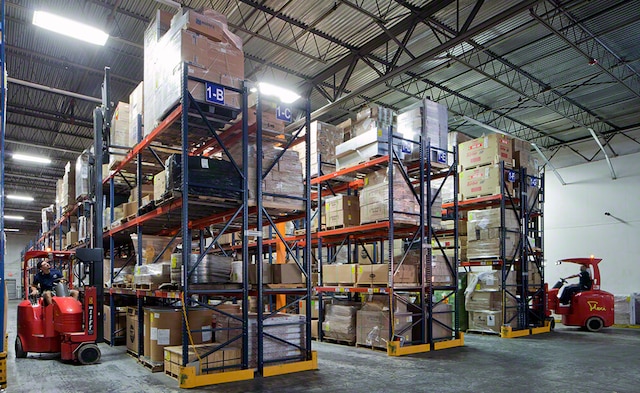
Push-back racking designed by Interlake Mecalux maximizes space utilization and reduces costs for Interworld Freight’s warehouse. Read more
3PL to Yuma: Interlake Mecalux push-back racking vertical solution
Desert Depot implements Interlake Mecalux’s push-back racking in its Arizona warehouse to leverage space and minimize storage costs. Read more
Dufry: direct access and massive storage of 30,000 SKUs
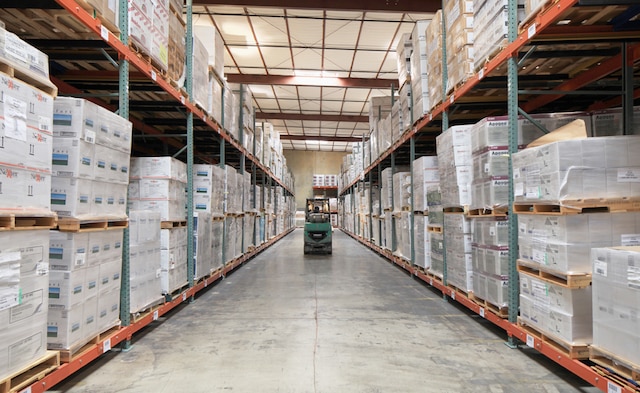
Interlake Mecalux and partner Andersen Material Handling have outfitted a 150,000 ft² warehouse in Miami, Florida, for airport retail chain Dufry. Equipped with adjustable pallet racks and push-back racking, the two systems offer a total storage capacity of 9,200 pallets. Read more
Just the right size: Interlake Mecalux push-back racking vertical solution
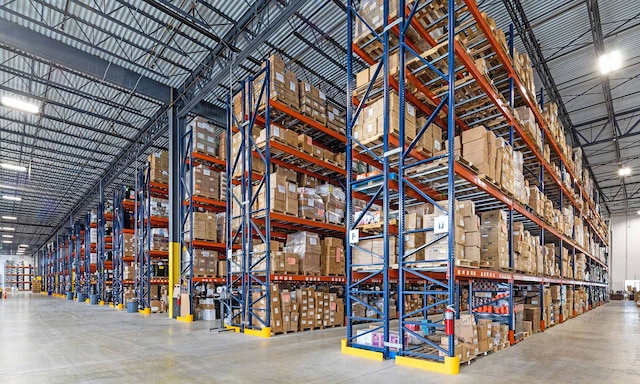
The College of DuPage warehouse in Glen Ellyn, Illinois, plays a key role in supplying students, faculty, and staff with essential materials. Serving more than 28,000 students across 11 major buildings, the facility supports daily operations on the 273-acre campus. Read more
Multiple solutions to expand Capacity's storage capacity
Capacity, a comprehensive order fulfillment and warehousing provider, has installed several storage systems in its New Jersey logistics center. The new facility features multiple solutions to boost the capacity and productivity of logistics operations. Read more

Push-Back Racking configurations
Different structural options available to meet the logistics needs of each facility
Interlake Mecalux’s pushback pallet racking can store 2 to 5 pallets deep on each level.
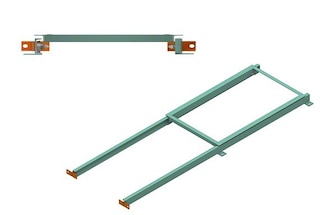
Two pallets deep
This set consists of 2 rails and 1 cart. The first pallet will sit on the cart, and the second pallet will sit on the rails.
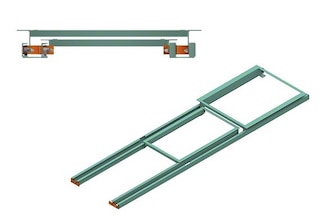
Three pallets deep
This set consists of 4 rails (2 short and 2 long) and 2 carts. The first and second pallets will sit on carts, and the third will sit on the rails.
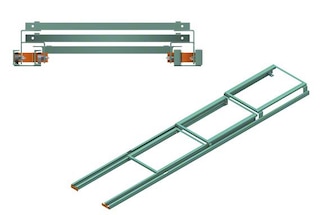
Four pallets deep
This set consists of 4 rails (2 short and 2 long) and 3 carts. Up to the third pallet will sit on the carts, and the fourth will sit on the rails.
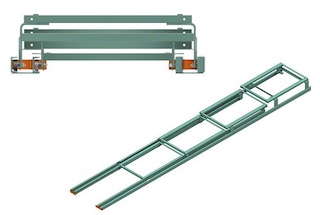
Five pallets deep
This set consists of 4 rails (2 short and 2 long) and 4 carts. Up to the fourth pallet will sit on the carts, and the fifth will sit on the rails.
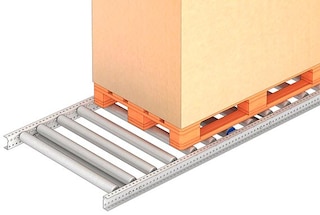
Rollers (4+ pallets)
When storing more than 4 pallets per lane, rails and carts are replaced by rollers. This structural system is similar to that of pallet flow racking, with the difference that pallets are stored and removed from the same side.
Components of Pushback Pallet Racks
Interlake Mecalux push-back racking systems are engineered in accordance with the 2023 RMI design standards, recognized by ANSI, and referenced in the International Building Code. Our designs also comply with AISI specifications and meet regulations set by IAS.
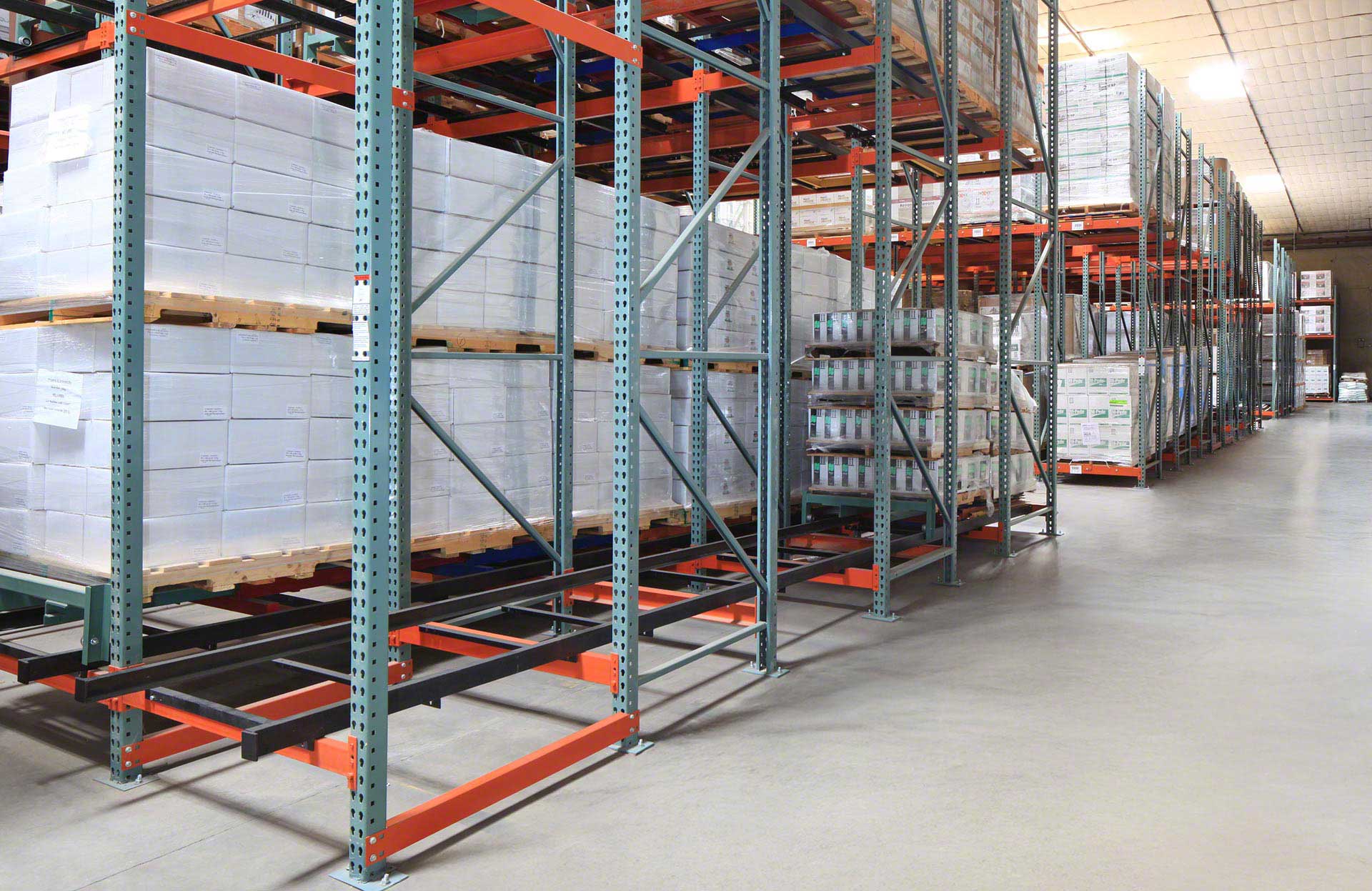
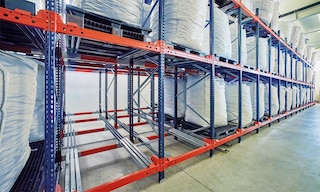
Although they share several common elements found in other types of metal pallet racking (e.g., frames and beams), what sets push-back shelving apart is its rails and carts.
Push-back racks are equipped with a set of specific components to ensure streamlined, risk-free loading and unloading operations. These elements ensure the safety of the operators, the goods, and the storage system.
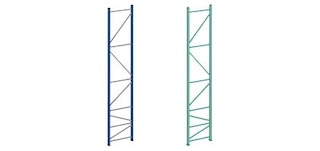
Frames
Vertical elements formed by 2 uprights connected using horizontal and diagonal struts. The uprights are slotted every 2" to accommodate the beams.
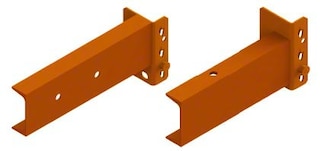
Beams
Horizontal elements on which the rails are fixed. They are mounted with the necessary slope for the proper movement of the pallets. Standard beam lengths are 48", 96", and 144". Custom sizes offered to accommodate various pallet dimensions.
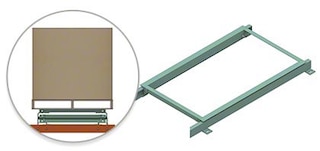
Carts
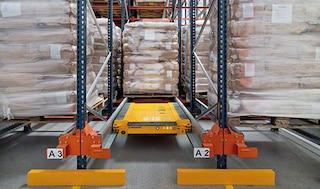
Engineered to support pallets while enabling stacking, these units are constructed from structural profiles. They feature built-in stoppers to prevent pallets from falling out and are equipped with wheels to facilitate smooth movement within the system.
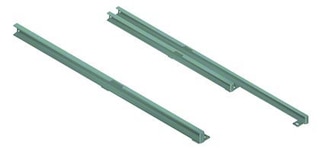
Rails
Structural profiles designed to support the carts and enable smooth movement within the push-back system. The front of the rail is bolted to the first beam, while the remainder of the rail is securely fastened to the top of the interior and rear beams.
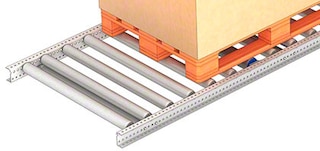
Rollers
Solution used to achieve greater lane depth. The roller axles fit into the grooves of the rails.
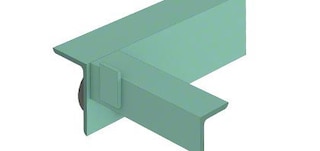
Pallet stop
Welded tabs on the front of the carts ensure they remain securely in place. Since the final pallet position does not rest on a cart, the structural beam acts as a stopper.
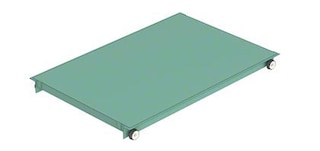
Full cart cover
Full cart covers are used for top-heavy loads or those that contain liquids and have the potential to spill over. They provide a larger surface area for loads to rest on.
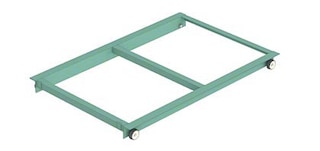
Extra cross ties
Extra cross ties are added to reinforce the carts and prevent bending or buckling in a push-back rack. They are welded on the middle of the cart.
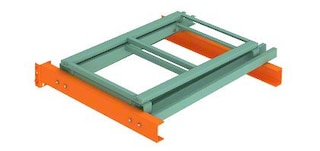
Floor-level carts
This option features special carts with an extension at the front wheel. They provide horizontal support surfaces parallel to the floor rather than having the carts follow the same angle as the rails.
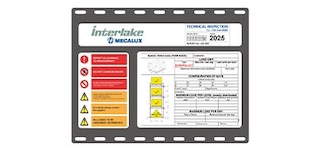
RMI signs
RMI signs are commonly placed at the end of aisles to inform warehouse or storage facility personnel in charge of loading/offloading material of the pallet racking’s capacity limits per the current RMI standards.

FAQs
Push-back pallet racking is a high-density storage solution that maximizes warehouse capacity by eliminating interior aisles and allowing for up to five pallets deep per lane. Pallets are placed on carts or rollers along rails set at a slight incline. The system operates on a LIFO (last in, first out) principle, where forklifts push back existing pallets to create space for new ones. As goods are removed, gravity automatically advances the back pallets forward, maintaining access in a single working aisle.
Push-back racking systems are versatile but particularly suited for medium-turnover palletized goods managed via the LIFO method, especially when there are two or more pallets per SKU. They are also effective in facilities with fewer SKUs and pallets. Additionally, push-back racks excel in storing fast-moving consumer goods (FMCGs), enhancing loading and unloading efficiency. Overall, these high-density storage solutions are ideal for businesses looking to maximize available space and expand warehouse capacity.
The primary distinction between pallet flow and push-back racking systems lies in their inventory management strategies. Push-back racking operates on the LIFO (last in, first out) principle, as goods are accessed from the same aisle. In contrast, pallet flow racking utilizes separate aisles for loading and unloading, adhering to the FIFO (first in, first out) principle.
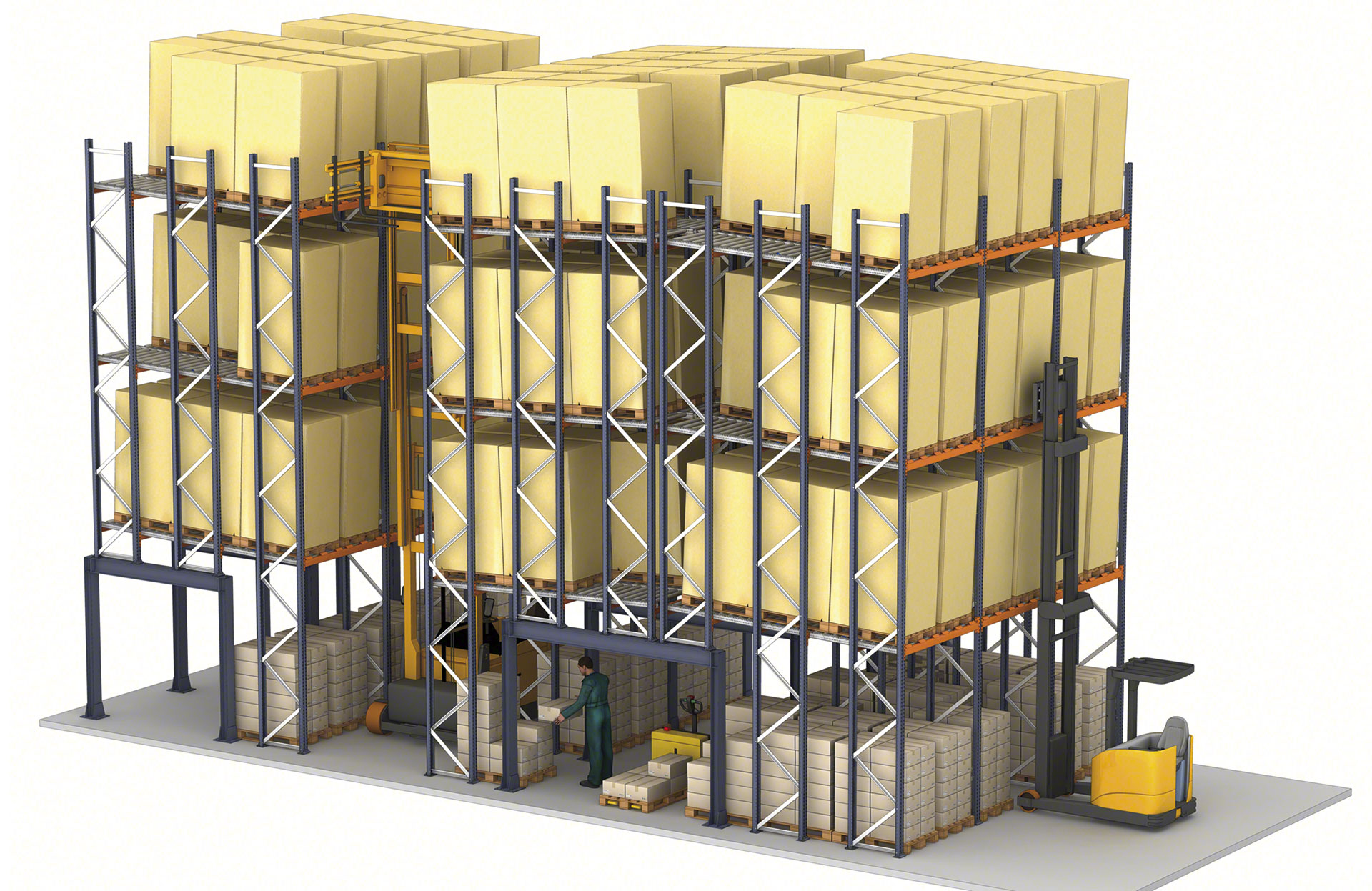
The push-back rack is a high-density storage solution that accommodates different SKUs in each lane. Forklifts operate from a single aisle, enhancing safety and efficiency by eliminating the need for maneuvers inside the structure. However, the system is limited in depth and height, typically allowing for five pallets deep and a maximum frame height of 40'. For greater capacity, Interlake Mecalux offers alternative solutions, such as the Pallet Shuttle system, which can reach storage lanes of up to 130' deep.
Interlake Mecalux’s push-back pallet racking uses carts and rails that allow up to 5 pallets per lane. When integrators are used, deeper lanes can be achieved.
The height limit will be set by the handling equipment, available space, and product weight. Interlake Mecalux manufactures frames up to 40' in height.
The beam width depends on the pallet dimensions and the number of pallets wide. For 40" wide pallets, three standard options are available: a 48" beam for 1 pallet wide, a 96" beam for 2 pallets wide, and a 144" beam for 3 pallets wide.
Pallets should be placed from the designated entry side, with the first pallet resting on the top cart. Subsequent pallets push the prior ones into the racking until the last pallet is positioned on the rails. For unloading, the process is reversed, allowing gravity to automatically fill the first pallet position.
In a push-back pallet rack, each storage lane within a bay operates independently from those above and below, allowing different SKUs to be assigned to each level. This offers a clear advantage over drive-in racking, where the same SKU has to be stored across all levels of each bay.
Theoretically, any forklift model can be utilized with push-back pallet racking systems, but certain factors must be considered. The forklift’s rigidity and strength will influence the number of pallets per lane. It is generally recommended that the forklift can push 4% of the total weight of the pallets being moved, excluding the pallet on the forks. For example, in a five-deep system with each pallet weighing 3,000 lbs, the forklift would need to exert approximately 480 lb of force (4% of 12,000 lb).
Ask an expert