


Oxygen reduction systems: What they are, when to use them, and how they work
Oxygen reduction systems are widely utilized in industries such as logistics, chemicals, food production, and pharmaceuticals. By lowering oxygen concentrations and limiting moisture, they create a controlled atmosphere for storing, processing, and transporting goods. This method enhances safety, particularly in facilities where flammable or oxygen-sensitive materials are present. It also helps protect equipment and products from corrosion, oxidation, and contamination.
In this post, we explore what oxygen reduction systems are and outline their benefits, applications, and the main methods used to create inert atmospheres. We’ll also explain how they improve safety in automated storage and retrieval systems (AS/RS).
What are oxygen reduction systems?
Oxygen reduction systems lower the concentration of oxygen inside an enclosed space by introducing inert gases such as nitrogen, carbon dioxide, or argon. The objective is to prevent unwanted combustion while shielding sensitive products from oxygen and moisture. In practice, this approach creates a safer, more stable environment for storing, transporting, or processing materials.
Oxygen reduction systems are commonly installed in industries that store and handle flammable substances, moisture-sensitive products, and materials that can deteriorate when exposed to air. Applications include fuel storage tanks, pipelines carrying gases or chemicals, industrial reactors, automated warehouses, and cold chain facilities.
The concept behind oxygen reduction is based on the fire triangle, which states that combustion requires three elements: fuel, oxygen, and a heat (or ignition) source. Decreasing the oxygen level removes one side of that triangle, preventing a fire from starting or spreading.
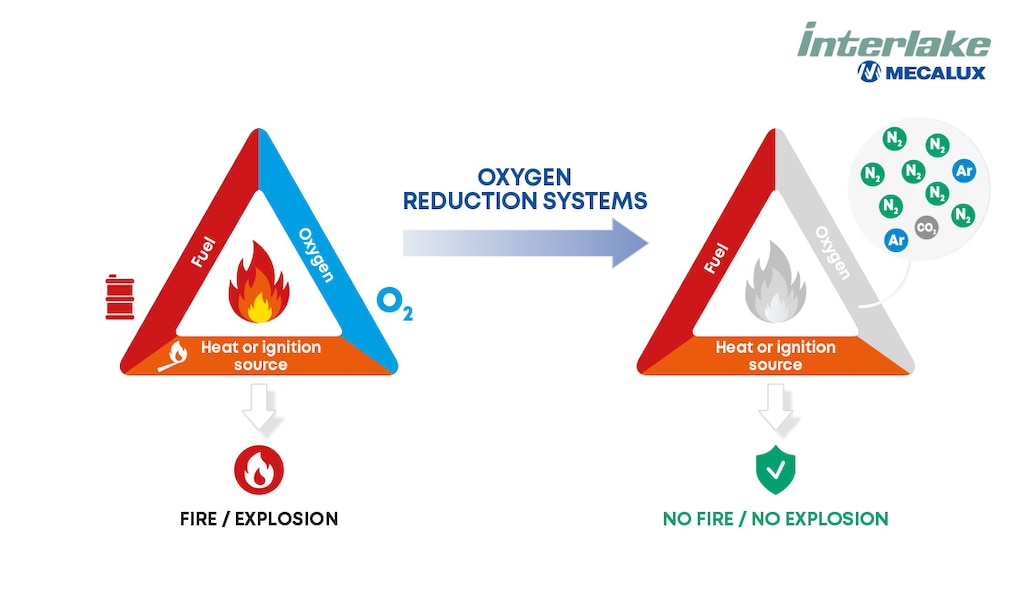
Atmospheric air contains about 21% oxygen. Once that level falls below the limiting oxygen concentration threshold, combustion is no longer possible. This value is not fixed; it depends on the material being stored or processed, the inert gas being used, temperature, pressure, and the specific operating conditions. For that reason, industrial projects determine the acceptable oxygen concentration through a risk assessment, the characteristics of the combustible material, and applicable technical standards.
Benefits of oxygen reduction systems
Oxygen reduction systems offer several advantages in industrial and logistics environments where flammable and sensitive products are stored or handled:
- Fire and explosion prevention. By lowering the oxygen concentration below the combustion threshold, these solutions apply one of the fundamental principles of fire suppression.
- Protection for sensitive products. These systems limit oxidation, moisture, and other reactions that can damage food, pharmaceuticals, electronics, and chemicals.
- Longer equipment life. Maintaining a controlled atmosphere helps minimize corrosion and deterioration in warehouses, pipelines, and industrial facilities.
- Safer operations. Minimizing the likelihood of leaks, hazardous emissions, and explosive atmospheres helps safeguard personnel, infrastructure, and the surrounding environment.
Although oxygen reduction systems offer significant safety benefits, they also involve technical considerations. These include installation and maintenance costs, continuous monitoring of the oxygen concentration, and the need to maintain an airtight environment.
Applications of oxygen reduction systems
Oxygen reduction systems are used across numerous industries. Their application depends on the type of facility, the materials handled, and the level of fire protection required.
- Chemicals and petrochemicals. These solutions are installed in storage tanks, reactors, and pipelines that contain or transport flammable substances. Decreasing the oxygen concentration helps eliminate explosive atmospheres and minimizes the risk of combustion.
- Food and pharmaceuticals. Controlled atmospheres help extend product shelf life and preserve quality. They’re also used during packaging to slow oxidation and protect food, medicines, and other sensitive products.
- Electronics. Semiconductor and printed circuit board manufacturing rely on inert atmospheres to limit moisture, prevent material degradation, and significantly lower the risk of overheating or fire.
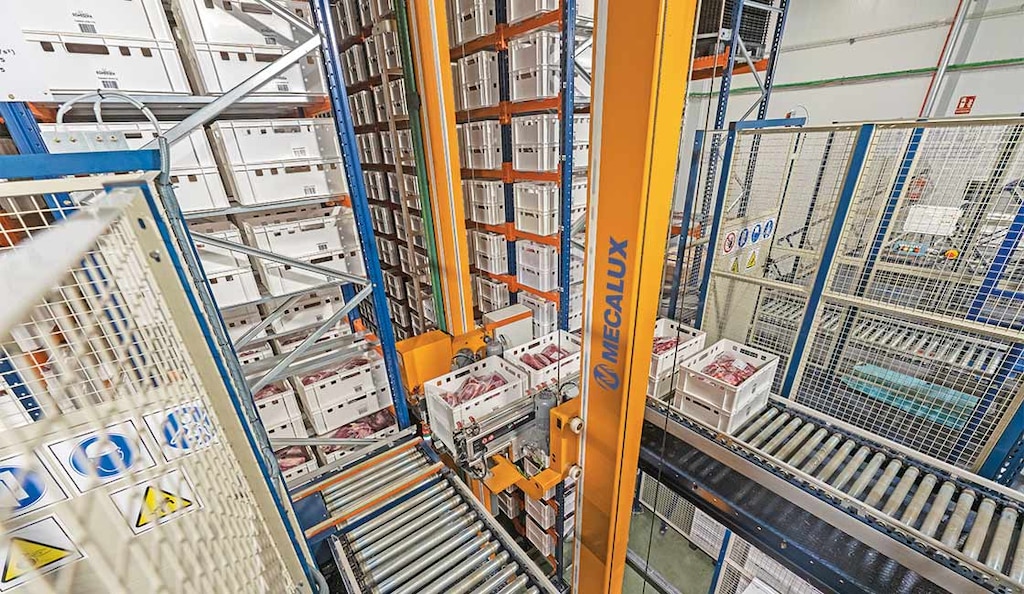
- Logistics. In certain automated warehouses and cold storage facilities, this technology enhances fire protection. It is particularly valuable in environments where extinguishing a fire can be more challenging, such as high-bay facilities equipped with high-density storage systems.
- Combustible dust. Silos that store or process materials such as flour, sugar, grain, or wood dust use controlled atmospheres to reduce the risk of dust explosions resulting from airborne particles.
- Cold storage. Refrigerated warehouses and tunnel freezers maintain controlled oxygen concentrations to limit fire propagation in subzero environments. These installations typically utilize nitrogen to create an inert atmosphere and strengthen fire protection in airtight facilities with high storage density.
Oxygen reduction methods
Several techniques are used to lower oxygen concentrations to a point where combustion or an explosion can no longer occur:
- Blanketing. This method creates a protective layer of inert gas over a stored product to keep it from coming into contact with oxygen and moisture. It helps maintain stable storage conditions.
- Sparging. This technique introduces fine bubbles of inert gas into a liquid to remove dissolved oxygen and other unwanted gases. Sparging is widely employed in chemical processing, food production, and water treatment.
- Purging. An inert gas is injected into a tank, pipeline, or enclosed system to displace or dilute the oxygen inside. Nitrogen, carbon dioxide, and argon are the main gases used, depending on the fire risk, product characteristics, cost, and availability. Different purging methods are available based on how the inert gas replaces the air within the installation:
- Dilution purging. Inert gas is introduced into tanks, pipelines, or other enclosed spaces, where it mixes with the existing air and gradually lowers the oxygen concentration.
- Displacement purging. The inert gas pushes air or other gases out of tanks or pipelines without fully mixing with them. Because less gas is generally required to achieve the target oxygen concentration, this method can be more efficient.
- Pressure purging. Inert gas is injected under pressure into tanks or industrial equipment to facilitate mixing and oxygen displacement. It’s utilized in installations designed to withstand moderate pressure variations.
- Vacuum purging. Air is first evacuated from the tank or enclosed space before introducing the inert gas. This method can achieve very low oxygen concentrations while employing less gas, although it requires equipment designed to operate at low pressure.
Oxygen reduction systems in warehouses
The logistics industry uses oxygen reduction systems as part of its warehouse safety strategy. Unlike conventional fire suppression solutions, which respond after a fire has started, oxygen reduction systems are designed to maintain conditions that make combustion unlikely in the first place.
Traditional fire protection solutions normally detect a fire in its early stages, extinguish it once it develops, or slow its spread with flame-resistant materials and other safeguards. In the case of AS/RS solutions, fire protection measures for metal racks and warehouses must also address the challenges of tall structures, narrow aisles, and high-density configurations. By contrast, oxygen reduction systems work proactively to prevent ignition.
To achieve this, they typically rely on nitrogen, an inert gas naturally present in the atmosphere that’s both stable and nonreactive. Nitrogen generators, oxygen sensors, and automated systems continuously maintain a controlled atmosphere throughout a facility.
One example is Takeda’s rack-supported building in Poland. Standing 106' tall, the facility is equipped with an oxygen reduction system that uses nitrogen to maintain the concentrations below 15%. Built to store pharmaceutical products, the warehouse also features temperature and humidity control, double-deep racking, and automated material handling equipment to manage 6,500 pallets.
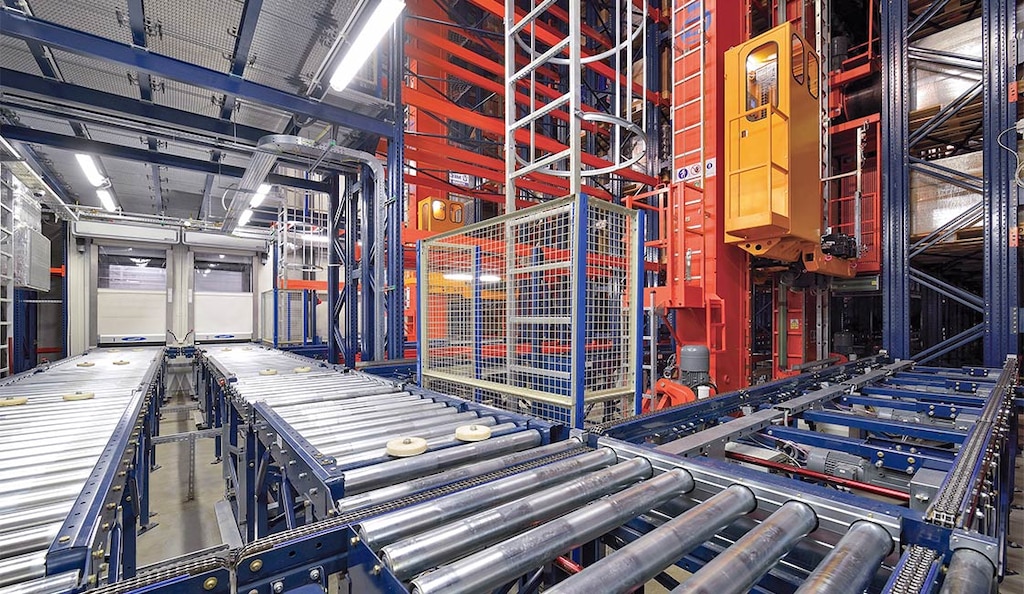
Another example is the new distribution center of Frigo Logistics, a third-party logistics provider specializing in frozen foods and temperature-controlled warehousing. The facility is equipped with a comprehensive Mecalux solution, including an oxygen reduction system that strengthens fire protection in a subzero, high-density storage environment.
Oxygen reduction systems for warehouse fire protection
Oxygen reduction systems provide an effective way to improve safety in industrial and logistics environments with a risk of fire or product degradation. By controlling the amount of oxygen in the air, they create a more stable atmosphere in facilities such as automated and cold storage warehouses.
Here are some tips and recommendations to keep in mind when implementing these systems:
- Continuously monitor oxygen levels to ensure safe, stable operating conditions.
- Nitrogen is the inert gas generally used to lower oxygen concentrations because it is abundant in the atmosphere and chemically stable.
- An airtight facility is essential for preserving a controlled atmosphere and maintaining performance.
- In automated warehouses, cold storage facilities, and other high-density storage environments, this approach can strengthen fire protection.
- Oxygen reduction should be combined with monitoring technologies and additional safety measures to safeguard both personnel and facilities.