


How to reduce delivery times in 10 steps
Reducing delivery times is one of the main challenges facing today’s supply chains. Achieving this goal requires more than accelerating transportation. Companies must also optimize inventory management, order fulfillment, shipping, and the other processes that ensure goods leave the warehouse.
In this article, we’ll explore 10 steps for identifying where delays occur, addressing them, and using a WMS to streamline deliveries.
1. Identify what is slowing down your deliveries
Reducing delivery times starts with pinpointing where delays originate and detecting potential bottlenecks. Delivery lead time is measured from the moment an order is received. From there, the inventory must be checked, the order picked and packed, and the shipment dispatched from the warehouse.
Once the goods leave the facility, factors such as transportation, traffic, customs, and last-mile delivery can extend shipping times. Distinguishing between internal and external processes makes it possible to identify which part of the total delivery time depends on the company and which is influenced by third parties, such as carriers. Understanding the source of delays will help you prioritize improvement efforts effectively.
| Component | What is measures | Where delays occur |
|---|---|---|
| Fulfillment time | From order receipt until the shipment leaves the facility |
Inventory, picking, and packing |
| Transit time |
From dispatch to customer delivery |
Carrier, routes, traffic, customs, and last-mile delivery |
| Delivery time = Fulfillment time + Transit time | ||
2. Optimize inventory management and stock availability
Once the source of delays has been identified, businesses must ensure that products are always on hand when an order comes in. Inventory shortages don’t just slow order fulfillment — they also affect the customer experience. According to Accenture, when consumers can’t find what they’re looking for, they often turn to competitors, which can affect a brand’s long-term sustainability. Having accurate, real-time information about inventory levels and product locations speeds up fulfillment and prevents operational disruptions.
Accurate demand forecasting and planning also help prevent stockouts by anticipating replenishment needs and maintaining the required inventory levels. As a result, warehouse associates can locate products quickly and fulfill orders without delays caused by inventory shortages or errors. This streamlines workflow and shortens delivery times.
3. Reduce order processing and picking times
Order fulfillment is one of the most critical operations for cutting delivery times because it accounts for much of the work between receiving an order and dispatching the goods. In an article published in the European Journal of Operational Research, René de Koster, Tho Le-Duc, and Kees Jan Roodbergen note that picking is the most labor-intensive warehouse activity, accounting for up to 55% of operating costs.
One way to expedite this process is to minimize operator travel through slotting, which involves organizing storage locations according to product turnover. Using the ABC analysis to place high-demand merchandise in the most accessible areas optimizes pick paths and speeds up retrieval.
The selected picking method also affects productivity, but no single strategy is suitable for every warehouse. The best option depends on the number of SKUs and order lines, daily order volume, and product characteristics. For example, methods such as batch picking, wave picking, and zone picking address different operational needs.
4. Automate warehouse processes
Manual operations can limit a facility’s capacity as order volumes increase. Automation keeps products moving steadily and prevents repetitive tasks from slowing down processes.
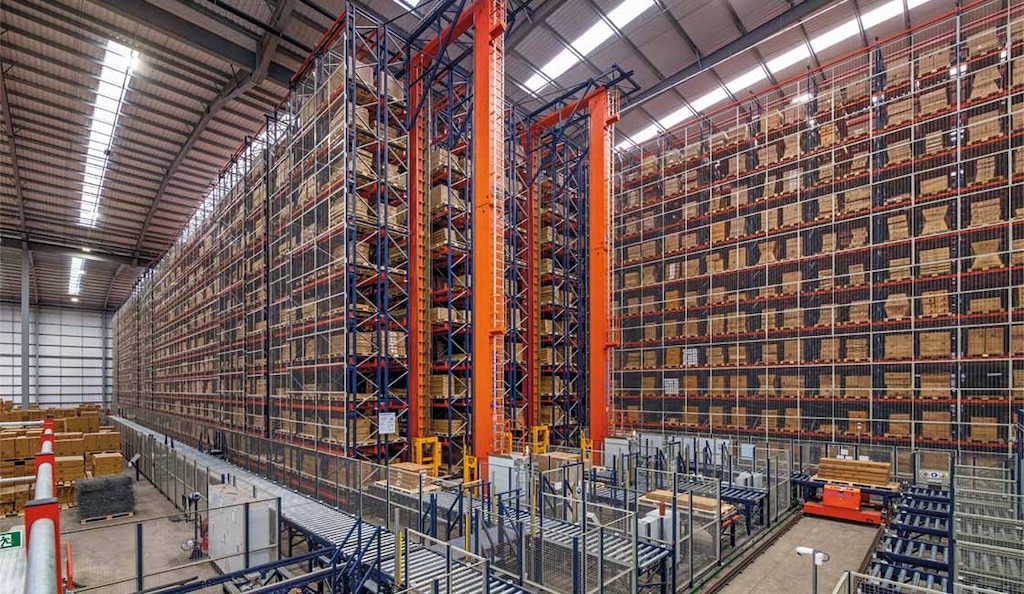
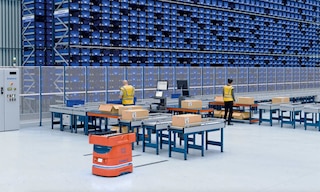
Automated storage and retrieval systems (AS/RS) speed up access to goods by minimizing the time spent locating and retrieving them. Similarly, conveyors and autonomous mobile robots (AMRs) move totes and pallets between different areas of a facility automatically, eliminating unnecessary travel and waiting times. High-performance pick stations, meanwhile, bring the items required for each order to a single workstation, increasing productivity. Each of these solutions addresses a different bottleneck, either by shortening the time required to access and pick items or by avoiding travel.
5. Streamline packing, staging, and dispatch
Once order fulfillment is complete, several operations still need to take place before the goods leave the warehouse. The order may still need to go through consolidation, packing, labeling, documentation, dock assignment, and vehicle loading. Any of these stages can become a bottleneck if they’re not properly optimized.
To prevent delays, it’s advisable to coordinate dispatch based on delivery routes, carriers, priorities, and pickup times. This eliminates unnecessary waiting and ensures that each order leaves the facility as scheduled. Minimizing the time spent on consolidation, packing, and vehicle loading also extends the cutoff time for accepting orders for same-day shipment.
6. Use a WMS to accelerate order fulfillment
A warehouse management system (WMS) coordinates all logistics operations from a single platform. This synchronizes inventory, fulfillment, replenishment, and dispatch, ensuring each task is carried out at the right time.
Interlake Mecalux’s Easy WMS, for instance, accelerates warehouse operations in several ways:
- ERP integration. The WMS synchronizes inventory between the two systems, eliminating manual data entry and supporting a seamless flow of information.
- Order prioritization. The software automatically organizes tasks based on criteria such as urgency, customer type, and service level so that the most critical orders are handled first.
- Replenishment. It anticipates replenishment needs in picking locations, preventing interruptions caused by stockouts.
- Dispatch cutoff management. The WMS coordinates with carrier departure times so orders can be shipped the same day without missing the pickup window.
- Ecommerce. Orders from online sales platforms are entered into the WMS, while the Multi-Carrier Shipping Software module automates carrier selection, label generation, and shipping documentation.
7. Optimize transportation and carrier management
Once an order leaves the warehouse, delivery depends largely on transportation planning. Choosing the right carrier, optimizing routes, and consolidating loads help shorten transit times and improve service levels.
Companies that work with multiple logistics providers can benefit from Easy WMS’s Multi-Carrier Shipping Software. This module automates carrier selection and documentation generation, expediting dispatch. A transportation management system (TMS) also facilitates route planning and real-time shipment tracking. This visibility enables businesses to respond more quickly to incidents, reorganize deliveries when necessary, and keep customers informed about their orders. In addition, carrier performance data helps companies select the most suitable option for each type of shipment.
8. Reduce last-mile delivery times
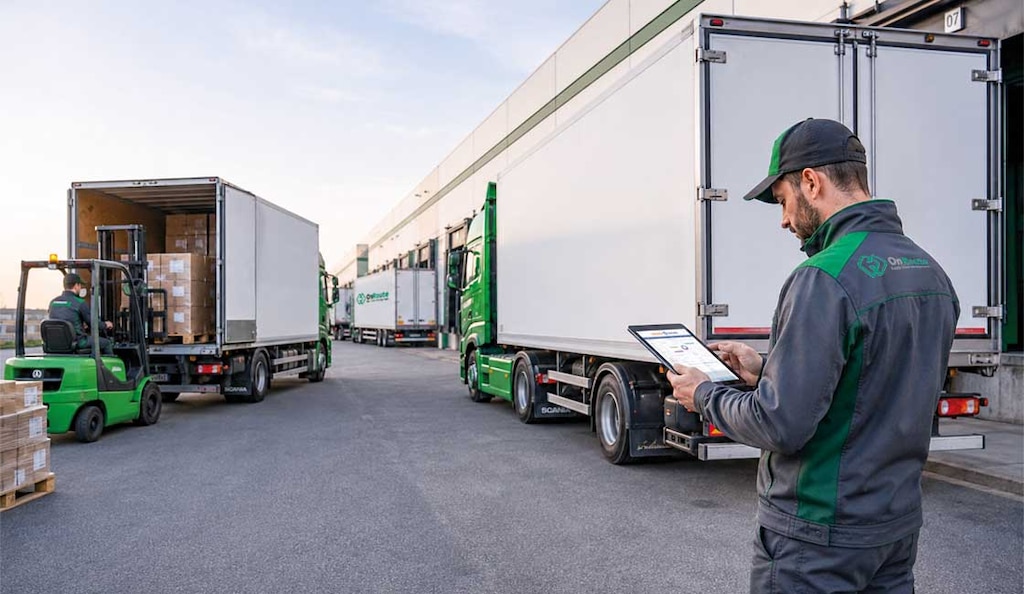
The last mile can be one of the most complex stages of the supply chain and create bottlenecks. Factors such as traffic, delivery issues, and inefficient route planning can delay a shipment even when it leaves the warehouse on time.
To prevent this, businesses should optimize routes, plan deliveries based on the geographic density of each area, and offer delivery windows that meet customers’ needs. Using pickup points and real-time tracking tools can also speed up the last mile.
9. Position inventory closer to customers
Moving merchandise closer to consumers cuts delivery times but makes management more complex. A network of warehouses allows organizations to ship orders from a nearby location, but it also requires coordination between sites.
For a multi-location strategy to be effective, businesses must determine which facility should fulfill each order. Interlake Mecalux’s Easy DOM (distributed order management) system automates this assignment based on criteria such as inventory availability, proximity to customers, and company-defined rules. This approach shortens delivery times without adding unnecessary complexity to stock control.
10. Measure and continuously improve delivery performance
Consistently reducing delivery times requires tracking results at every stage of the process. Organizations use various key performance indicators (KPIs) to evaluate both logistics lead time, or cycle time — how long it takes from order receipt to customer delivery — and each individual stage.
In the warehouse, businesses should track KPIs such as order processing time, picking time, order accuracy, and dock-to-dispatch time. For transportation, useful metrics include transit times and on-time dispatch and delivery rates. Analyzing these indicators separately makes it easier to pinpoint where delays originate.
Finally, global metrics such as OTIF (on-time, in-full) and DIFOT (delivery in full, on time) provide an overall view of service levels. OTIF measures a supply chain’s ability to deliver complete orders within the agreed time frame. Meanwhile, DIFOT assesses compliance with these commitments from an operational and fulfillment perspective.
Faster deliveries start with a more efficient warehouse
Reducing delivery times depends on more than a single measure. It calls for optimizing every stage of the logistics process, from inventory management and order fulfillment to dispatch, transportation, and last-mile delivery. These improvements shorten delivery times and enhance customer service. Tools that provide visibility and facilitate coordination enable companies to respond more quickly to demand and meet increasingly high customer expectations.