


Cycle time: What it is, how to calculate it, and why it matters in logistics and production
Cycle time is a key metric for assessing the efficiency of any manufacturing or logistics process. It shows how long a task takes from start to finish, whether that involves making a product or fulfilling an order.
In this post, we explain what cycle time is and why it plays a strategic role in operations. We’ll also include how to calculate it and how to minimize it in industrial settings and warehouses.
What is cycle time?
Cycle time refers to the time required to complete one production unit or task within a process. It begins when an operation starts and ends when it is finished, typically accounting for both active work and any pauses that occur along the way. In agile and continuous improvement frameworks, cycle time reflects the actual pace at which work is completed. It differs from lead time, which encompasses the entire period from order placement to final delivery.
In manufacturing, cycle time often describes how long it takes a machine to produce a single part. In logistics, it can measure the window from the customer’s request for an order until it is staged and ready for shipment.
This key performance indicator (KPI) plays a central role in lean methodology, which focuses on eliminating non-value-added activities. It shouldn’t be confused with complementary KPIs like takt time, which defines the required production pace to meet consumer demand.
Importance of cycle time
Tracking cycle time helps identify bottlenecks in workflows and align operational capacity with actual demand, helping businesses cut costs. It also provides objective data to boost service levels and throughput without adding resources.
Ongoing monitoring reveals inefficiencies that extend cycle time, such as downtime, rework, unnecessary movement, or idle periods. The less wasted time, the stronger the company’s competitive position and the more stable its operations.
Additionally, cycle time has a direct impact on lead time — the total time from order receipt to final delivery. This makes it vital for meeting customer service expectations and strengthening loyalty.
Applications of cycle time
Cycle time applies across multiple business areas. In industrial manufacturing, it gauges how long each operation takes within a production line. This insight helps balance workloads, prevent excess WIP inventory, and enhance resource planning and coordination.
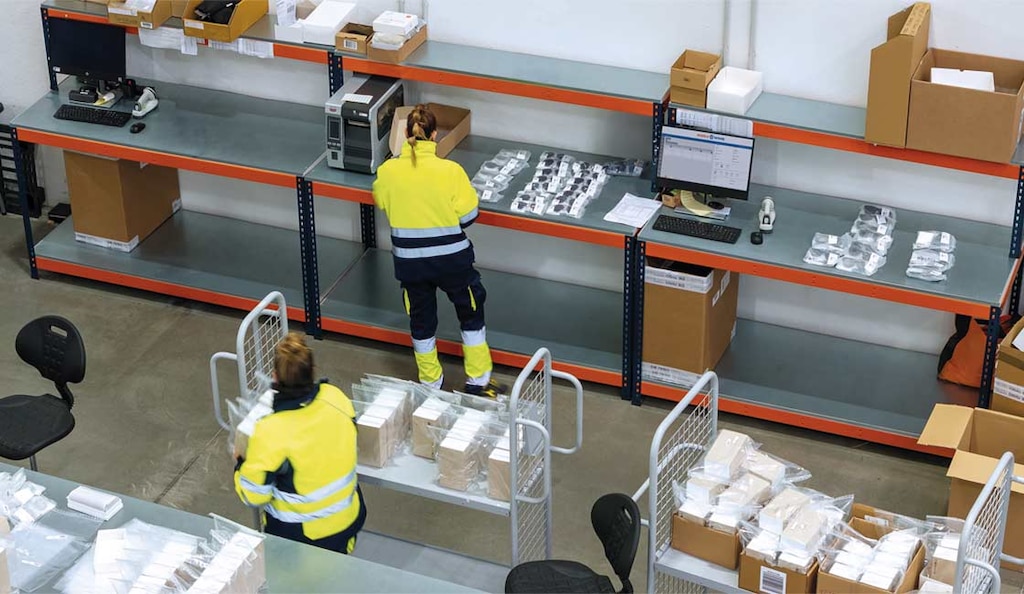
In logistics and warehousing, cycle time is analyzed in processes such as goods receipt, putaway, replenishment, and order picking. Streamlining picking cycle time, for instance, directly increases daily shipping capacity along with service levels.
In software development, process cycle time tracks the interval from when work begins on a task to its deployment in production. This KPI helps optimize workflow and project predictability.
How to calculate the cycle time of a process
The cycle time formula is straightforward: divide the total production time by the number of units produced during that period.
Cycle time = Total production time / Number of units produced
For example, if 600 units are produced in 8 hours (480 minutes), the average cycle time is 0.8 minutes (48 seconds) per unit. In logistics, this can apply to orders fulfilled per shift or order lines processed per hour.
Accurate measurement requires reliable systems. In modern facilities, manual tracking has largely been replaced by digital tools. A warehouse management system (WMS) like Interlake Mecalux’s Easy WMS records task durations in real time for picking, replenishment, putaway, and shipping. This visibility supports productivity analysis by associate, zone, or activity while enabling more informed decision-making.
Challenges in measuring cycle time
Gauging cycle time presents several challenges that can distort results if not properly managed:
- Process variability. Not every order, product, or task requires the same effort or execution time. In manufacturing, product complexity varies. In logistics, factors such as order size, item location, and handling requirements influence process duration.
- Differences between associates or shifts. Experience and specialization affect execution speed. Workload distribution and operational setup may also vary between shifts.
- Unrecorded downtime. Micro-stops caused by technical glitches, material shortages, or internal bottlenecks often go undocumented without proper traceability. These invisible delays skew data, making it impossible to calculate cycle time accurately.
- Lack of system integration. When production, warehouse operations, and management tools aren’t connected, data becomes fragmented, and estimates replace real, traceable figures.
Without accurate data, strategic decisions rely on incomplete information. For this reason, automation and digitalization are crucial for reliable metrics and stronger analysis capabilities.
How to reduce cycle time
Shortening cycle time requires a structured, continuous approach across both production and logistics.
In production
Trimming cycle time in manufacturing environments involves analyzing each stage of the process and addressing factors that lead to delays, imbalances, or interruptions:
- Balance workloads. Distributing tasks evenly across workstations prevents overload in some areas while others remain idle. An optimal balance minimizes internal wait times and synchronizes the production pace.
- Eliminate inefficient activities. Removing unnecessary steps, duplication, or superfluous movement simplifies workflows and speeds up total process times.
- Implement preventive maintenance. Scheduled preventive maintenance reduces the risk of breakdowns and unexpected downtime. As a result, operations and thus cycle time are more predictable.
- Streamline changeovers. Shortening setup and tool-change times between production runs increases equipment availability and enhances operational continuity.
- Standardize operations. Clear, repeatable procedures ensure consistency, avoid variation, and make results more predictable.
Together, these actions minimize cycle time losses and stabilize manufacturing processes.
In warehousing and logistics
In logistics settings, accelerating cycle time relies on several operational and technological strategies:
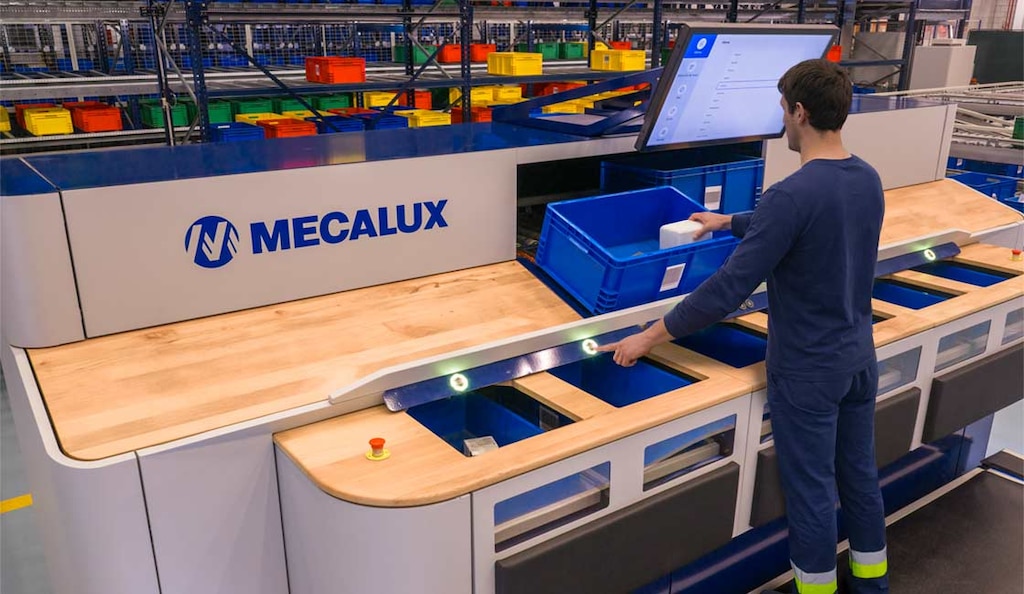
- Optimize order fulfillment. Picking systems directly affect process performance. Efficient routing through a WMS decreases travel time and idle periods. Likewise, solutions such as high-performance pick stations and goods to person systems — where items are brought directly to warehouse associates — increase output per shift.
- Adapt storage solutions to logistics needs. Selecting the right system based on product type, turnover rate, volume, and automation level plays a key role in shortening cycle time.
- Automate internal movements. Automatic pallet and box conveyors, autonomous mobile robots (AMRs) and electric monorail systems streamline transfers between receiving, storage, picking, and shipping. They reduce manual handling while ensuring continuous flow.
- Digitalize processes with a WMS. Warehouse management software coordinates tasks, prioritizes order fulfillment, and records data in real time, improving organization and process execution times.
Cycle time as a key efficiency driver
Cycle time is essential for assessing operational performance in manufacturing and logistics. Analyzing this KPI pinpoints inefficiencies and supports targeted upgrades to better respond to demand. By integrating technology, automation, and specialized software, companies can turn this metric into a strategic tool for maintaining competitiveness.
Cycle time in 5 questions
What is cycle time?
Cycle time is the period from the start of a process to its completion. This metric helps evaluate efficiency in production and logistics environments, determine operational capacity, and identify opportunities for improvement.
What is cycle time loss?
Cycle time loss refers to unproductive time caused by downtime, rework, delays, or inefficiencies. It reduces available capacity, drives up operating costs, and may affect service levels.
How is cycle time recorded?
Cycle time can be logged manually or via digital tools. In warehouses, WMS software applications capture real-time data, enabling analysis by task, associate, or zone and supporting continuous improvement.
Takt time vs. cycle time
Cycle time indicates how long it takes to complete a task, while takt time defines the pace required to meet customer demand. One reflects actual performance, while the other sets the target speed.
Cycle time vs. lead time
Cycle time measures the duration of a specific operation. Lead time covers the entire process from order placement to delivery, including administrative tasks, fulfillment, and transportation. It offers a clear picture of the entire fulfillment time.