



Sustainable ecommerce: Key practices for responsible online retail
Sustainable ecommerce has become a strategic priority for companies that sell online. While the digital retail boom has opened the door to new business opportunities, it has also expanded the environmental footprint of logistics operations. This impact is especially noticeable in transportation, packaging, and warehouse energy consumption.
In this post, we explore why modern businesses prioritize sustainable ecommerce and which initiatives can help reduce the environmental impact of their operations. We’ll also look at how warehouse automation, logistics digitalization, and smarter transportation strategies support a more responsible approach to online retail.
Why sustainable ecommerce matters for companies
Investing in sustainable ecommerce has become essential for businesses across industries. The rapid rise of online shopping has greatly increased logistics activity. As a result, organizations face growing pressure to adopt more efficient and responsible solutions — not only to curb environmental impact but also to meet customer expectations and strengthen competitiveness.
Environmental responsibility and lower emissions
Online retail relies heavily on transportation, warehousing, and packaging activities. As a result, many businesses are working to shrink their environmental footprint by streamlining delivery routes, improving warehouse energy performance, and embracing green logistics practices.
Adopting sustainable ecommerce models helps offset a carbon footprint and utilize fewer natural resources through more efficient logistics operations. In addition, integrating initiatives such as material reuse and effective returns handling supports a circular economy approach.
Consumers expect sustainable practices
Today’s shoppers value companies committed to environmental responsibility, a factor that increasingly influences purchasing decisions. More consumers are prioritizing brands that employ recyclable or reusable packaging, offer low-impact delivery alternatives, and communicate sustainability policies openly.
Nevertheless, customer expectations go far beyond purchase intent. In the packaging sector — one of the most environmentally sensitive areas of ecommerce sustainability — consulting firm McKinsey reports that between 40% and 80% of consumers are willing to pay more for sustainable solutions. This highlights just how strongly sustainability shapes buying behavior. Against this backdrop, sustainable ecommerce becomes a cornerstone of customer satisfaction and loyalty.
Competitive advantage and brand positioning
Beyond meeting market demands, sustainability can also differentiate a business from competitors. Companies that incorporate responsible practices into their logistics operations strengthen their reputation as innovative and forward-thinking organizations. However, this positioning must be backed by concrete, measurable actions. Consumers are becoming more skeptical about vague environmental messaging or claims that lack transparency.
Stricter environmental regulations
Public policies aimed at decreasing emissions and promoting the circular economy are driving new regulations that affect logistics and online retail. For example, the European Union’s new Packaging and Packaging Waste Regulation introduces stricter standards regarding recyclability, material usage, and excessive packaging. Globally, policies such as Extended Producer Responsibility are also gaining momentum, placing greater accountability on businesses for the waste generated by the products they sell. Companies now face tougher requirements for waste management, energy performance, and sustainable transportation. Incorporating eco-conscious practices into logistics strategies helps businesses stay ahead of evolving regulations while ensuring compliance.
Long-term cost savings
Although some sustainability initiatives require upfront investment, they often lead to operational savings over time. Optimizing energy usage, simplifying packaging, and digitalizing logistics processes all contribute to greater operational and cost efficiency. Similarly, creating a sustainable warehouse can provide both financial and environmental benefits simultaneously.

Actions and best practices for building a sustainable ecommerce model
Sustainable ecommerce involves fine-tuning multiple areas of the logistics chain, from warehouse management to packaging design and transportation. Below are some of the most effective initiatives for lessening the environmental impact of online retail operations.
Curb energy consumption in warehouses and distribution centers
Warehouses and logistics facilities represent a major source of energy consumption within ecommerce operations. Boosting their efficiency is one of the first steps toward a more sustainable model.
Key initiatives include adopting energy-efficient automation technologies and implementing smart lighting in warehouses to adjust electricity usage based on activity levels. Motion and daylight detection sensors activate lighting only when necessary, while LED technology can cut energy consumption by more than 50%. Likewise, renewable energy sources also help shrink the environmental footprint of logistics facilities.
Dark warehouses are also becoming more widespread. These highly automated facilities operate with minimal human intervention. Because fully automated processes eliminate the need for lighting in work areas, these buildings can dramatically lower energy consumption.
Digitalize warehouse management
Implementing a warehouse management system (WMS) is another initiative that strengthens a company’s commitment to sustainable ecommerce. These apps eliminate reliance on paper by digitalizing processes across intralogistics operations, including order fulfillment.
Additionally, WMS software ensures accurate inventory control. It helps prevent overstock situations that could result in dead stock — products that never sell and end up becoming waste, consuming unnecessary resources in the process.
Advanced predictive analytics tools also enhance demand planning. They minimize resource waste linked to inefficient forecasting, such as overproduction, excess inventory, and unnecessary replenishment.
Revamp packaging with more sustainable solutions
Packaging is one of the areas of ecommerce with the greatest environmental impact. For this reason, companies pursuing eco-friendly ecommerce strategies are redesigning their packaging practices to cut down on material usage and improve sourcing.
Common initiatives include eliminating unnecessary formats (such as double packaging), shipping products in their original parcels, and enabling returns without repackaging requirements.
Using packaging sized appropriately for the product also decreases parcel volume and transportation-related emissions. Recyclable and biodegradable materials further support more sustainable packaging practices.
Promote lower-impact shipping options
To cut emissions during distribution and foster supply chain sustainability, many ecommerce businesses are adopting more efficient logistics models such as micro-fulfillment centers. Located in urban areas or close to consumers, these small warehouses shorten delivery distances by positioning products nearer to end customers.
Last-mile delivery accounts for a considerable share of ecommerce emissions, making pick-up points and curbside pickup viable alternatives. Rather than delivering every order directly to a customer’s home, pick-up locations consolidate shipments into a single destination. Meanwhile, curbside pickup allows shoppers to retrieve orders in-store, eliminating delivery stops.
Advanced order routing systems, such as distributed order management software, also optimize the process. They assign each order to the closest fulfillment location, avoiding deadheading and lessening the environmental impact of transportation. At the same time, adopting electric vehicles in logistics contributes to fewer emissions.
Minimize returns
Returns are a major challenge for ecommerce and sustainability because they generate additional transportation, product reprocessing, and, in some cases, wasted merchandise.
To reduce returns in ecommerce companies must provide clear, detailed information on their websites so customers can make informed purchasing decisions.
A transparent and accessible returns policy is equally important, as is keeping order fulfillment errors to a minimum through WMS software and automated picking technologies. Goods-to-person solutions such as the Shuttle System, mini-load AS/RS (for boxes), and high-performance pick station bring products directly to warehouse associates, limiting mistakes, travel time, and fulfillment delays.
In this context, returns management — one of the core processes of reverse logistics — hinges on preventing issues before shipment and streamlining return flows. Quality controls and responsive after-sales service also advance this goal.
Work with sustainability-focused partners
Sustainable ecommerce depends not only on a company’s internal operations but also on collaboration with suppliers and logistics service providers that share environmental goals. Working with courier companies with low-emission fleets, renewable energy suppliers, and businesses that hold environmental certifications are fast becoming industry best practices. These partnerships encourage the development of sustainable logistics models that lessen the environmental impact of operations.
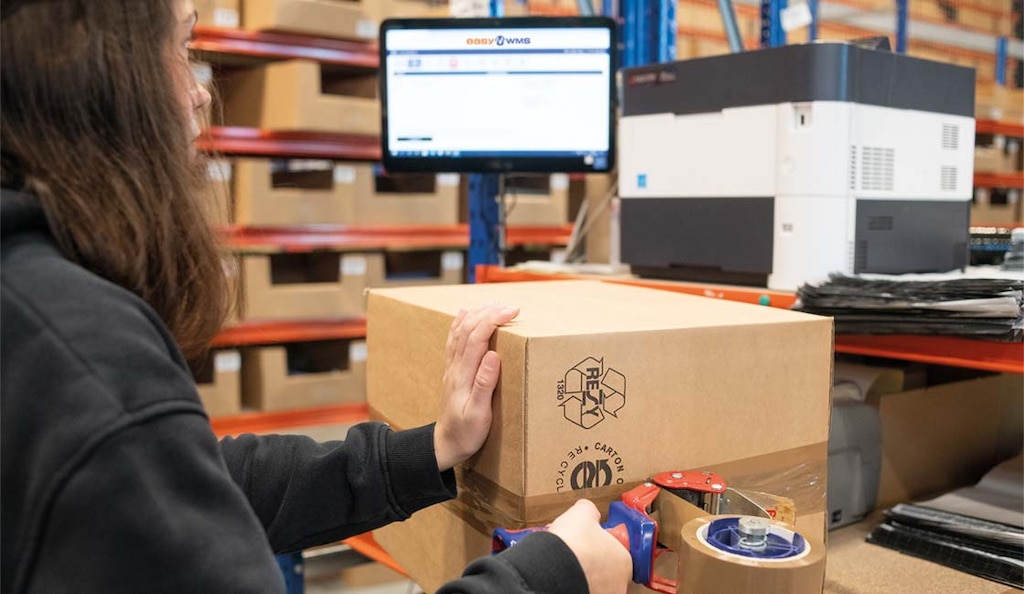
How to move toward more sustainable ecommerce
Building a sustainable ecommerce model requires integrating sustainability throughout the logistics chain. From warehouse energy performance to transportation and packaging strategies, every operational decision can help lower the environmental impact of online retail. Through automation, digitalization, and collaboration with sustainability-focused partners, companies can establish efficient, resilient operations that foster long-term business growth while respecting the environment.
Sustainable ecommerce in 5 questions
Why is sustainability important in ecommerce?
Investing in sustainable ecommerce practices helps reduce the environmental impact of logistics operations, strengthen brand reputation, and meet growing consumer expectations. It also facilitates better resource management and compliance with increasingly strict environmental regulations.
How can ecommerce become more sustainable?
To create a more sustainable ecommerce model, companies should improve energy efficiency in their warehouses, digitalize logistics management, streamline packaging and transportation, and minimize returns. Working with environmentally responsible suppliers and carriers is also vital.
What is green ecommerce?
Green ecommerce refers to an online retail model that incorporates environmental criteria into logistics management. It includes initiatives such as recyclable packaging, low-emission transportation, energy-efficient warehouses, and optimized supply chain operations.
How does warehouse automation boost sustainable ecommerce?
Warehouse automation accelerates internal product flow while eliminating inefficiencies in order fulfillment. It also increases inventory accuracy, helping businesses avoid overstock and returns.
How do logistics software solutions improve ecommerce sustainability?
Logistics software digitalizes operations, fine-tunes inventory management, and enhances demand forecasting. Through advanced analytics, businesses can avoid excess stock and unnecessary replenishment while maximizing resource efficiency and shrinking their environmental footprint.