



Supply chain execution (SCE): What it is and the software behind it
Supply chain execution encompasses the processes and systems responsible for carrying out day-to-day operations across the supply network. In an increasingly digital environment, companies rely on a variety of strategies and technologies to streamline activities and adapt to changing customer expectations. Understanding how these functions are structured and which tools support them is essential for building efficient operations.
In this post, we analyze supply chain execution, its stages, and its objectives. We’ll also explore the technologies that facilitate it and the best ways to manage it.
What is supply chain execution?
Supply chain execution (SCE) refers to the management and monitoring of daily operations, as well as the physical and information flows that move through the supply chain. It covers processes including procurement, manufacturing, warehousing, and order processing, supported by specialized applications like warehouse and transportation management software.
Supply chain execution systems direct the movement of goods from sourcing through production and final delivery. But they also oversee, coordinate, and track those flows continuously. Likewise, they incorporate capabilities for handling incidents and adapting operations to current supply chain conditions.
This level of oversight strengthens control across every stage of logistics operations. According to Gartner, more than 75% of deliveries in North America and Europe could achieve near-real-time visibility by 2027 thanks to advances in logistics execution technologies.
It’s also important to distinguish supply chain execution (SCE) from supply chain planning (SCP). The latter focuses on forecasting demand and determining how to respond through production planning, sourcing decisions, and inventory policies. SCE, meanwhile, translates those decisions into action by coordinating the daily activities required to keep goods moving. Together, supply chain planning and execution create a connected approach that links strategy with operational performance.
What are the objectives of supply chain execution?
The primary goals of supply chain execution are operational efficiency, accuracy, and the successful completion of tasks that satisfy customer demand while maintaining appropriate inventory levels. Below are some specific aims of SCE:
- Fulfill orders accurately and on time. Products must reach customers in good condition and within the expected time frame to boost satisfaction.
- Optimize warehouse and transportation performance. This objective focuses on maintaining smooth product movement and making effective use of resources throughout the logistics network.
- Increase real-time process visibility. Access to current information about inventory, orders, and shipments enables organizations to identify issues quickly and respond appropriately.
- Minimize operational errors. Automation and process coordination help limit mistakes in picking, inventory control, and transportation, resulting in more dependable operations.
What are the main stages of SCE?
The supply chain execution process consists of multiple interconnected activities that coordinate and carry out logistics operations. Some are associated with supply-related tasks, and others are linked to production, storage, or transportation phases.
In the inbound supply stage, facilities manage and record products as they arrive. During receiving, organizations process open purchase orders and coordinate supplier appointments and deliveries to maintain a steady flow of materials.
For companies with manufacturing operations, supply chain execution extends to shop-floor activities. These involve executing production orders, supplying assembly lines, and tracking work-in-process (WIP) inventory and materials throughout this phase.
In the warehousing stage, inventory management plays a central role in maintaining product availability. Activities such as slot allocation, picking, replenishment, and order fulfillment must be coordinated effectively to ensure productivity. Warehouse management systems (WMSs) contribute by guiding and optimizing putaway, picking activities, and order-processing workflows.
Lastly, the outbound stage encompasses order consolidation, loading, and shipping operations. Transportation activities move goods to their final destination, providing shipment tracking and coordinating deliveries. Vehicle routing and carrier assignment also form part of this stage.
What does supply chain execution software consist of?
Supply chain execution systems rarely consist of a single application. Instead, they comprise several specialized programs working together to boost productivity and performance in the different parts of the supply chain.
During inbound supply:
ERP and WMS
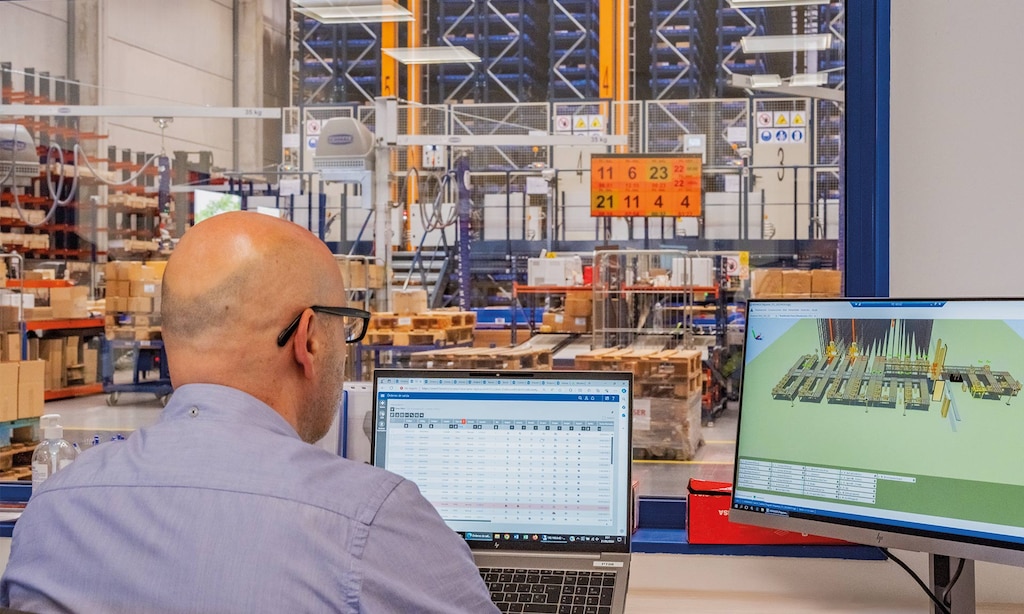
ERP systems (short for enterprise resource planning) centralize business information and manage administrative functions such as procurement, invoicing, and supplier relationships. A WMS, on the other hand, provides real-time operational control inside the logistics facility. It optimizes receiving, putaway, and the management of physical products. Warehouse management solutions such as Interlake Mecalux’s Easy WMS facilitate receiving operations by verifying inbound inventory against expected quantities. They also manage inbound orders, assign docks and staging areas, assist with goods receiving and labeling tasks, and support inspection and quality-control procedures.
During production:
MES
Manufacturing execution systems (MES) continuously monitor and synchronize production activities across a facility to maximize efficiency and shrink costs. These platforms manage manufacturing orders, track process status, and ensure end-to-end product traceability. Manufacturers use MES technology to enhance plant performance and coordinate production resources.
During warehousing:
WMS
Warehouse management systems (WMSs) centralize intelligent slotting, task sequencing, and the automation of physical and information flows. These capabilities reduce errors while providing real-time inventory visibility. Interlake Mecalux’s Easy WMS, for example, integrates with automated storage systems and robotic solutions, facilitating operations of varying complexity.
WCS and WES
Warehouse execution systems (WESs) coordinate elements in automated facilities. They allocate resources, sequence tasks, and accelerate workflows in real time. Warehouse control systems (WCSs), meanwhile, communicate directly with automation equipment — including conveyors, stacker cranes, and sortation systems — to execute commands at the equipment level.
Slotting software
Warehouse slotting involves strategically assigning inventory to storage locations to streamline replenishment and order-picking performance. Easy WMS’s Slotting for WMS module calculates the optimal location for each SKU based on predefined rules, demand (current and historical), and sales forecasts. This strategy enhances both space utilization and stock control.
OMS and DOM
Order management systems (OMS) oversee the entire order lifecycle, from order receipt through fulfillment and shipping. They validate, process, and coordinate orders across logistics systems. Distributed order management (DOM) systems extend these capabilities by selecting the ideal fulfillment location from a company’s network of warehouses and distribution centers.
LMS
Labor management systems (LMS) measure warehouse productivity and help identify inefficiencies and opportunities for improvement. They offer insight into the performance of logistics operations and help define operational standards. Interlake Mecalux’s Labor Management System optimizes resource allocation and task execution in line with workload requirements, helping organizations balance labor demand across operations.
During transportation:
YMS
Yard management systems (YMS) allow companies to supervise vehicle movements throughout warehouse yards, dock areas, parking zones, and access checkpoints. Easy WMS’s Yard Management System syncs operations to shorten wait times and ensure fluid communication between customers, suppliers, and carriers.
TMS
TMS (transportation management systems) oversee logistics activities related to moving goods by road, sea, or air. Capabilities typically comprise carrier selection, route planning, load consolidation, rate management, and shipment tracking.
Visibility software:
SCEM and supply chain analytics
Supply chain event management (SCEM) systems monitor activities across the network in real time. They compare actual performance against planned operations and identify incidents (e.g., delays, stockouts, and interruptions).
Organizations seeking deeper insights often complement these capabilities with advanced analytics solutions, which interpret data and convert them into key performance indicators (KPIs). Easy WMS’s Supply Chain Analytics capability evaluates supply chain KPIs and generates reports that support decision-making.
Supply chain execution strategies
Companies can strengthen their supply chain execution solutions through several operational and technological approaches:
3PL providers
One option is to outsource logistics operations to a 3PL (third-party logistics) provider. These companies manage activities such as storage, order fulfillment, distribution, and returns processing, allowing organizations to focus on their core business.
3PLs often rely on supply chain execution tools capable of handling multi-owner environments while offering visibility to customers. Warehouse management systems are particularly valuable because they coordinate workflows, track inventory, and maintain product traceability.
Some solutions are designed specifically for 3PL operations, simplifying multi-client management while providing detailed visibility into products, batches, and expiration dates. Easy WMS includes these capabilities through its WMS for 3PL module.
Hyperconnectivity
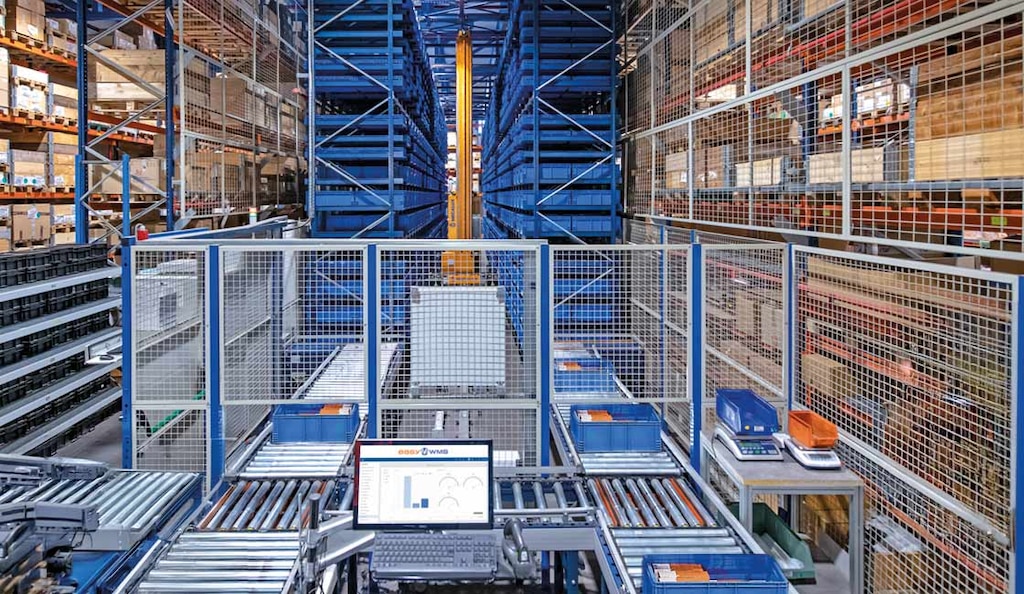
Another fundamental supply chain execution strategy is hyperconnectivity: the ability to integrate and synchronize systems, processes, and stakeholders across the supply chain in real time. This Logistics 4.0 approach connects WMS, TMS, ERP, and AS/RS solutions so that information flows seamlessly between them. As part of Supply Chain 4.0, this interconnectedness enables different systems to operate in sync and share information seamlessly. As a result, companies can gain greater visibility into their operations and better coordinate activities such as order management, warehousing, and transportation.
Automation and AI
Automation has become a key component of supply chain execution. Automated storage and retrieval systems (AS/RS) and advanced software solutions accelerate workflows, lower error rates, and improve resource utilization. Integrated systems and digital logistics processes also create a foundation for adopting IIoT (Industrial Internet of Things) and AIoT (Artificial Intelligence of Things) technologies. These solutions connect devices and systems in real time, analyze operational data, enhance decision-making, and enable advanced concepts like digital twins. According to Forbes, this transformation is already reshaping the future of supply chain execution.
Supply chain execution and competitive edge
Supply chain execution has become a cornerstone of modern logistics operations. The combination of specialized software, automation technologies, and connected systems allows organizations to respond more effectively to growing demand. Beyond ecommerce, SCE plays a crucial role in manufacturing, distribution, and the food and beverage industry, where reliability and service continuity are critical. A well-organized supply chain improves resource utilization, limits disruptions, and contributes directly to business competitiveness.
Supply chain execution in 5 questions
What does supply chain execution mean?
Supply chain execution (SCE) refers to the management and monitoring of daily operations spanning procurement to end-customer delivery. It encompasses order fulfillment, warehousing, manufacturing, and transportation, along with the systems that coordinate and supervise those flows in real time.
What is the difference between supply chain planning and supply chain execution?
Supply chain planning involves forecasting demand, scheduling production, and determining inventory requirements. SCE focuses on carrying out those decisions through order processing, warehouse operations, and transportation management. In short, planning determines what should happen, while execution handles how it happens.
What is the integration of supply chain planning and supply chain execution?
Integrating supply chain planning and execution connects strategic decisions with day-to-day operations. This alignment allows companies to adapt activities according to actual demand, improve coordination across processes, and respond faster to disruptions.
What is the supply chain execution framework in ecommerce?
The supply chain execution framework in ecommerce refers to the structure that organizes and links key operations such as order management, inventory control, warehouse fulfillment, transportation, and returns processing.
What is supply chain execution software?
Supply chain execution software refers to the collection of systems used to manage and monitor operational activities throughout the supply network. Examples include WMS, WCS, WES, OMS, DOM, LMS, and slotting applications. Together, these technologies oversee and coordinate product and material flows from raw-material sourcing through final customer delivery.