


IoT supply chain: How connected technology is transforming logistics operations
The IoT supply chain represents a major shift for the logistics industry. The Internet of Things is reshaping warehouse management, freight transportation, and coordination across networks. By connecting physical devices to the internet, businesses can collect real-time data, monitor operations, and make faster, better-informed decisions.
In this post, we examine what adopting IoT in supply chain management entails, the benefits it offers, and how it works. We’ll also explore its applications and the technologies that enable its deployment.
What is IoT in supply chain and logistics?
The Internet of Things (IoT) is a network of connected devices that continuously capture, transmit, and exchange data. In logistics, these devices, equipped with sensors and communication systems, make it possible to track goods, vehicles, warehouse processes, and transportation activities. As a result, companies gain end-to-end visibility into the material and information flows moving through the supply chain.
This continuous monitoring and tracking strengthens coordination among suppliers, distribution centers (DCs), and end customers. In addition, it supports decision-making and the early detection of potential issues. In manufacturing and logistics settings, this technology is known as the Industrial Internet of Things (IIoT), as it links equipment, systems, and assets to optimize operations in real time.
Benefits of IoT in the supply chain
IoT solutions deliver benefits at every stage of the supply chain.
- Greater operational visibility. Connected devices provide up-to-the-minute information on the location, status, and condition of goods, as well as on the storage and transportation systems involved.
- Data-driven decision-making. Continuous access to current information makes it easier to identify issues and improve logistics processes over time.
- Increased efficiency. Automated monitoring of assets and processes limits manual intervention and boosts productivity.
- Streamlined inventory management. Data from sensors and connected systems help organizations keep inventory levels more aligned with demand.
- Cost reductions. The ability to anticipate problems and make better use of resources helps curb operating costs and prevent service disruptions.
- Enhanced customer experience. Real-time traceability provides more accurate information about orders and deliveries.
How the Internet of Things works: The 7 layers of IoT
IoT architecture consists of several layers that turn physical data into useful insights for decision-making. While there are various reference models, they share the same goal: to show how connected devices capture, transmit, process, and leverage data.
Layer 1: Devices and sensors
This is the physical layer where data originate. It includes temperature, humidity, vibration, geolocation, motion, and energy-consumption sensors. These devices capture information from their surroundings and convert it into digital data for subsequent processing.
Layer 2: Connectivity
Devices send information through communication technologies such as Wi-Fi, Bluetooth, RFID, 5G, and low-power, wide-area networks (LPWANs), including LoRaWAN and NB-IoT. The choice of network depends on range, energy consumption, transmission speed, and the volume of data exchanged.
Layer 3: Edge computing
At the edge computing layer, part of the information is processed near its source to lower latency and speed up the system’s response. This allows teams to respond to changes or incidents without transferring every data point to a remote processing center.
Layer 4: Data storage
Collected information is stored on local servers or cloud platforms that can handle large datasets. Businesses have a centralized source for reviewing historical records and extracting information for analysis.
Layer 5: Processing and analytics
Data are organized, analyzed, and interpreted to identify trends, detect anomalies, and obtain insights for logistics management. This stage turns large data volumes into knowledge that facilitates decision-making.
Layer 6: Applications and platforms
Users access the information through dashboards, a warehouse management system (WMS), transportation management system (TMS), and supply chain management tools. These applications make it possible to track key performance indicators (KPIs) and oversee logistics activity in real time.
Layer 7: Intelligence and automation
The top layer combines technologies such as AI and machine learning to generate forecasts, automate decisions, and continually refine processes. These capabilities help companies anticipate issues and increase operational efficiency.
IoT supply chain applications
IoT can be applied at virtually every stage of the supply chain. Its ability to capture and analyze real-time data improves visibility, coordination, and decision-making, positioning it as a key technology for supply chain strategies.
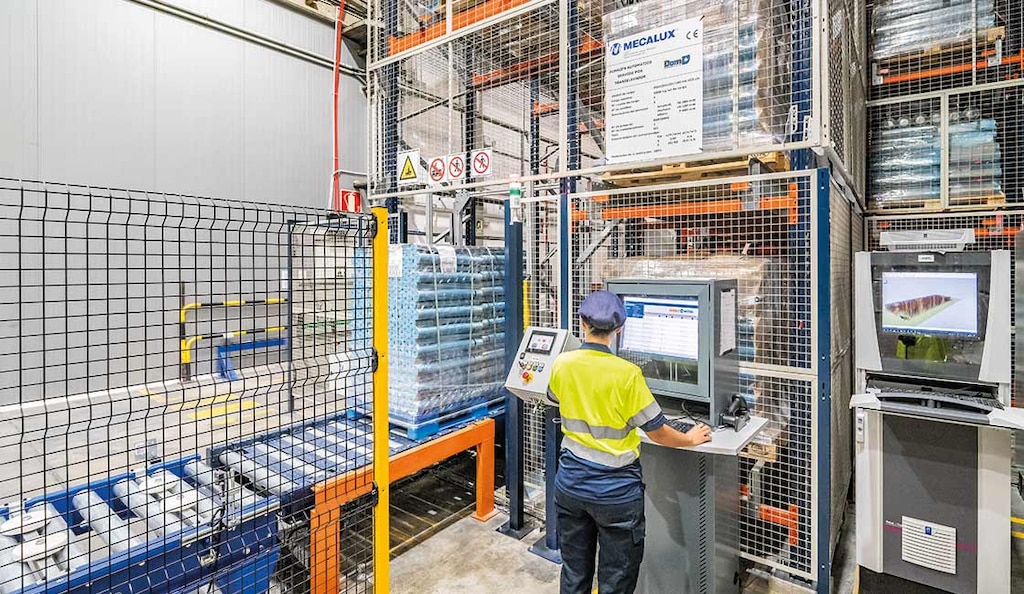
- Warehouse and inventory management. IoT sensors monitor facility conditions, track inventory, and coordinate automated systems such as conveyors, autonomous mobile robots (AMRs), and stacker cranes. The data collected can integrate with the WMS to optimize slotting, material flow, and order picking. René De Koster, Professor of Logistics and Operations Management at the Rotterdam School of Management, notes: “In logistics facilities, data capture began with RF devices. Currently, numerous businesses employ augmented reality glasses to interact with their surroundings.”
- Freight transportation. Geolocation devices allow vehicles and loads to be tracked throughout their journey, providing real-time shipment locations and estimated times of arrival. Telemetry systems also gather data on speed, fuel consumption, and vehicle condition, while sensors can track crucial load variables such as temperature and humidity. This information helps refine routes, anticipate incidents, and maintain suitable transportation conditions. According to Carl Marcus Wallenburg, Professor of Logistics at the WHU – Otto Beisheim School of Management, the IoT, along with other technologies, is “empowering 3PLs to enhance their operational speed and responsiveness.”
- Predictive maintenance. Sensors installed on logistics assets such as conveyors, stacker cranes, AGVs and AMRs, refrigeration equipment, and compressors collect data on vibration, temperature, and energy consumption. AI-driven analysis supports predictive maintenance, helping teams detect anomalies before failures affect equipment availability or interrupt operations.
- Traceability. Industries such as food and pharmaceuticals demand comprehensive product traceability. IoT devices monitor critical variables, including temperature, humidity, and exposure to environmental factors. In cold chain operations, sensors verify compliance with storage requirements during warehousing and transportation.
IoT devices in the supply chain: Infrastructure and platforms
In supply chain and logistics operations, IoT solutions work alongside data-capture technologies, communications infrastructure, and management platforms.
Devices and sensors
- Temperature and humidity sensors: Monitor environmental conditions to maintain the proper storage conditions for sensitive products.
- RFID tags: Identify and locate goods automatically, without a direct line of sight.
- Bluetooth beacons: Emit short-range signals to locate assets, vehicles, or people within logistics facilities.
- GPS devices: Provide location data for vehicles, loads, and assets in transit.
- Smart cameras: Capture images and use computer vision to identify incidents, control processes, and verify operations.
- Barcode readers: Record goods movements and update inventory information in real time.
Connectivity infrastructure
- IoT gateways: Serve as intermediaries between connected devices and management platforms, collecting and transmitting data.
- Industrial Wi-Fi networks: Enable wireless communication within warehouses and logistics centers.
- 5G networks: Provide high transmission speeds and low latency for applications that require real-time communications.
- Industrial protocols and networks: Technologies such as industrial Ethernet, MQTT, and LPWAN networks connect devices, transmit data efficiently, and facilitate reliable communications in logistics and manufacturing environments.
Management platforms and systems
- Cloud platforms: Store and process large volumes of data from IoT devices.
- WMS software: Leverages collected information to streamline receiving, putaway, picking, and order dispatch.
- Advanced analytics and AI tools: Turn data into actionable insights to detect patterns, generate forecasts, and automate decisions.
Integrating these technologies creates digital ecosystems that connect people, processes, and equipment in real time.
Examples of companies using IoT in the supply chain
Businesses across a wide range of industries are incorporating the Internet of Things into their operations. The examples below show how organizations use IoT technology to improve supply chain visibility, operational efficiency, and control:
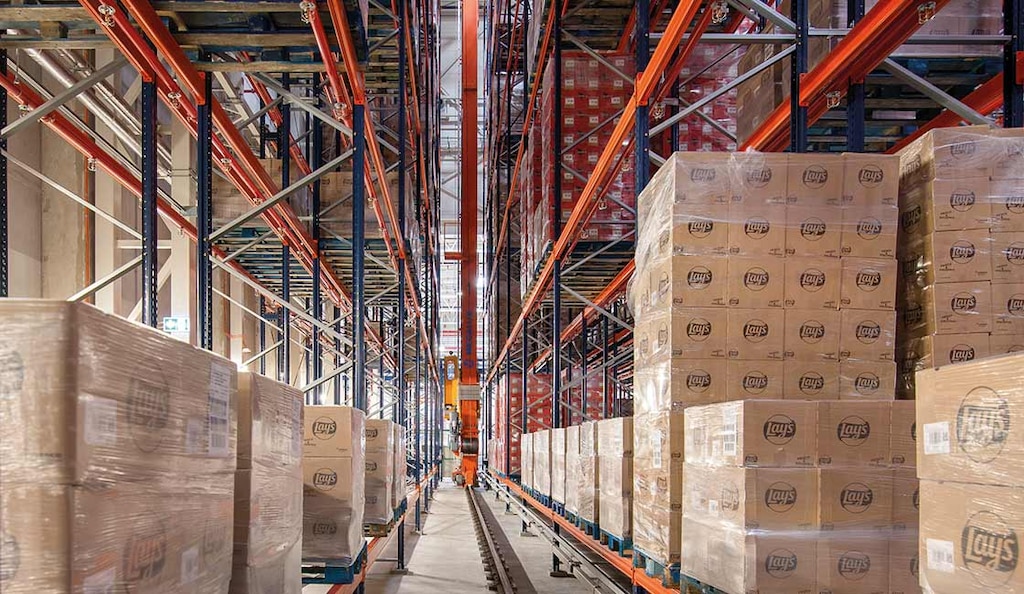
- Retail and distribution. PepsiCo operates a high-tech DC in Poland that supplies several European markets. Its automated storage and retrieval systems handle around 3,500 pallets a day, maintaining a continuous flow of goods between production and shipping. With real-time data, PepsiCo coordinates the storage and distribution of its products with precision and responds quickly to customer demand.
- Food and beverage. Clavo Food Factory manages 5,827 pallets of chilled and frozen food through digital systems that facilitate inventory control. This ongoing visibility of stock has cut operating times by 20%.
- Pharmaceuticals. Multinational company Novartis has opened a new rack-supported building in Poland with a capacity for 14,304 pallets and fully automated operations. Designed to store and manage pharmaceutical products under rigorous conditions, the facility integrates automated processes that ensure a continuous flow of incoming and outgoing goods and minimize handling errors. Automation also helps maintain the conditions required to preserve the properties of medicines.
- Transportation and logistics providers. Luís Simões, a logistics provider specializing in flows between Spain and Portugal, manages a facility with a capacity for 35,433 pallets. Continuous access to information on goods status and warehouse activity supports decision-making and efficient resource allocation, helping the business shorten delivery times for its clients.
The future of IoT in supply chain and logistics
The Internet of Things will play an increasingly central role as technologies such as AI, 5G networks, cloud computing, and digital twins continue to evolve. Key takeaways for IoT in supply chain and logistics include:
- Real-time visibility is vital for effective supply chain management.
- IoT technologies enable product traceability and help monitor storage and transportation conditions.
- Continuous asset monitoring and predictive maintenance allow businesses to anticipate issues.
- Combining IoT, automation, and AI boosts operational efficiency in warehouses, DCs, and logistics networks.
- Companies that integrate physical assets with digital systems will be better equipped to meet the demands of increasingly complex supply chains.
IoT in the supply chain: FAQs
What does the Internet of Things mean?
The Internet of Things (IoT) is a network of physical devices connected to the internet that can collect, transmit, and exchange data. Through sensors, software, and communication systems, these devices monitor assets, processes, and environments in real time, enhancing visibility, automation, and decision-making.
How is IoT used in the supply chain?
IoT technology tracks goods, vehicles, equipment, and facilities throughout the supply chain. Sensors provide real-time information on product location, status, and conditions, facilitating traceability, inventory optimization, transportation management, and predictive maintenance.
What are the four types of IoT?
The four main types are consumer IoT (CIoT), which covers connected personal devices; commercial IoT, used in business settings; industrial IoT (IIoT), focused on factories and manufacturing operations; and infrastructure IoT, employed in cities, energy systems, and transportation networks.
How is AI applied to IoT in the supply chain?
AI analyzes data generated by IoT devices to identify patterns, detect anomalies, and produce forecasts. In logistics, this combination can improve route planning, prevent equipment failures, optimize inventory management, and automate operational decisions, enhancing a company’s responsiveness.
Blockchain and IoT in supply chain: How are they related?
IoT collects real-time data on assets, goods, and operations. In some cases, this information can be integrated with blockchain to strengthen traceability and streamline audits. While blockchain adds transparency and security, it’s not an inherent component of IoT.