


AI in supply chain and logistics
Artificial intelligence in logistics and supply chain is redefining how businesses plan, execute, and manage their operations. Tasks that once required hours of analysis and decisions based on estimates can now be handled by algorithms that process vast amounts of data, recognize patterns, and anticipate scenarios. From demand forecasting and inventory management to freight transportation and warehouse automation, AI is emerging as one of the most transformative technologies shaping modern supply chains.
In this post, we explore what AI is, how it works, and its primary applications in supply chain and logistics. We’ll also examine its impact on future distribution and supply chain operations.
What is artificial intelligence and how does it work?
Artificial intelligence (AI) is a branch of computer science that enables systems to replicate certain human capabilities, including learning, reasoning, problem-solving, and decision-making. To accomplish this, it leverages algorithms that process large volumes of information, identify patterns, and generate insights, recommendations, or responses based on the data analyzed.
Most modern AI solutions are powered by technologies such as machine learning, deep learning, natural language processing, and computer vision. These tools allow systems to learn continuously and refine their performance as they process new information.
Over the past several years, AI has become a strategic technology for organizations across industries. Its ability to turn data into actionable intelligence and support better decision-making is accelerating digital transformation in manufacturing, distribution, transportation, and logistics. According to Capgemini’s AI in action survey, companies that have integrated AI into their operations have achieved an average return on investment of 1.7x. Echoing that finding, David De Cremer writes in The AI-savvy leader that “putting AI to work in augmenting ways can deliver unprecedented financial benefits.”
Artificial intelligence in supply chain and logistics
AI is changing how businesses manage supply chain and logistics operations. By combining data from ERP platforms, warehouse management systems (WMSs), transportation software, Internet of Things ( IoT) sensors, and other sources, organizations gain end-to-end visibility into their operations. Through this integration, they can streamline every stage of the goods flow and make more informed decisions.
The adoption of AI in logistics and supply chain operations is already well underway. A study by the MIT Center for Transportation & Logistics and Mecalux found that AI has been integrated into 60% of warehouses, boosting productivity and leading to new ways of working. Key applications include demand forecasting, inventory management, and process automation. One example is GENESIS, an AI-powered simulator developed by MIT CTL and Mecalux. The platform uses genetic algorithms to optimize inventory levels and transportation strategies across warehouse networks.
Looking ahead, the use of artificial intelligence in supply chain and logistics operations is expected to continue expanding. From demand planning to autonomous warehouse management, AI is poised to become one of the defining technologies of next-generation supply chains.
Benefits of AI in logistics
Applying artificial intelligence to logistics delivers value across virtually every operational area. Some of the key benefits of AI in logistics include:
Greater operational efficiency
Artificial intelligence automates repetitive, low-value tasks, reducing administrative workloads and accelerating processes. As a result, employees can devote more time to strategic initiatives that have a greater impact on the business.
Better decision-making
AI algorithms analyze large datasets in real time and turn them into actionable insights. This empowers organizations to respond more quickly and confidently to changing operating conditions.
Lower costs
More accurate planning and smarter inventory management help contain unnecessary expenses. AI also identifies inefficiencies, minimizes waste, and helps prevent disruptions that can push up operating costs.
Improved customer service
Artificial intelligence facilitates faster, more reliable operations, leading to a better customer experience. Deliveries become more accurate, errors decline, and issues can be resolved more effectively.
A more resilient supply chain
Thanks to its predictive capabilities, AI detects potential risks before they escalate, allowing organizations to take preventive action. This enables companies to adapt more successfully to changing conditions while maintaining operational continuity.
How to apply AI across the supply chain
Adopting artificial intelligence throughout the supply chain should be a gradual process. Before implementing a solution, organizations should identify the operations that can benefit most from automation, confirm the availability of reliable data, and establish clear business objectives. With these foundations in place, companies typically begin by deploying AI in key areas of the supply chain, evaluating the results before scaling the most successful initiatives.
AI in SCM
Because of its significant impact on operations, supply chain management (SCM) is often one of the first areas to benefit from artificial intelligence. AI provides end-to-end visibility, allowing businesses to monitor processes in real time, flag bottlenecks, anticipate risks, and coordinate activities across the logistics network.
AI in supply chain planning
Planning is another area where artificial intelligence delivers rapid results. Predictive models identify potential fluctuations in demand, helping companies optimize inventory levels, purchasing plans, and production schedules. As a result, businesses can respond more accurately to market demand while reducing the risk of overstock and stockouts.
AI in freight transportation
Once planning processes have been streamlined, many organizations extend AI to transportation management. The technology helps optimize routes, shorten transit times, and improve fleet utilization. It also facilitates real-time shipment tracking and empowers companies to respond quickly to disruptions, delays, or changing transportation conditions.
AI in warehouse and inventory management
Warehousing is another priority area for adopting artificial intelligence. Combined with advanced robotics, AI automates storage, order processing, internal material handling, and inventory management. Ongoing technological advances are making warehouses more autonomous, flexible, and efficient, with the agility to respond instantly to changing operational demands. Along these lines, MIT and Mecalux are developing an AI-powered smart replenishment system. The solution analyzes demand, inventory, and available resources to optimize warehouse replenishment, reduce stockouts, and increase order fulfillment efficiency.
Challenges of AI in the supply chain
Despite its many advantages, implementing AI solutions also presents certain hurdles that companies must address to maximize their value:
- Data quality and availability. AI algorithms rely on accurate, up-to-date, and well-structured data to generate reliable results.
- Integration with existing systems. Many businesses operate complex technology environments that need to be adapted before new AI-powered tools can be integrated successfully.
- Organizational transformation. Adopting AI requires investment in technology, employee training, and effective change management to support new processes and ways of working.
- Cybersecurity and data protection. As companies process growing volumes of information, they must strengthen security measures and maintain compliance with applicable regulations.
Implementing artificial intelligence isn’t just a technological effort — it’s also a strategic and organizational one. For that reason, companies should adopt AI gradually and align each implementation with their broader business objectives.

Examples of artificial intelligence in supply chain management
AI adoption continues to accelerate across industries. According to the IBM Institute for Business Value study Embedding AI in your brand’s DNA, 90% of retailers are already using AI, underscoring how quickly the technology is being deployed in sectors where operational efficiency and responsiveness are critical.
Among the companies already leveraging AI in supply chain operations are Amazon and Walmart. Amazon uses AI models to forecast demand and optimize inventory placement across its logistics network. Walmart, meanwhile, relies on artificial intelligence and automation to improve demand forecasting, rebalance inventory, and boost operational efficiency across its global operations.
Other examples demonstrate how these technologies are delivering measurable results in a wide range of industries. Footwear manufacturer Gioseppo modernized its logistics operations with Easy WMS to meet the demands of omnichannel fulfillment and enhance the customer experience. The Mecalux software incorporates AI and business intelligence capabilities that help maximize operational efficiency while facilitating strategic decision-making.
Patatas Meléndez, one of Spain’s leading potato producers and distributors, operates a warehouse equipped with the Automated Pallet Shuttle system and Easy WMS, complemented by a computer vision solution for product selection and grading.
The future of AI in the supply chain
Over the coming years, artificial intelligence will continue to expand its role in supply chain and logistics. In the short to medium term, organizations are expected to adopt more predictive solutions, advanced planning systems, and AI-powered automation tools.
This momentum is likely to accelerate. A KPMG survey found that 57% of companies plan to automate customer service with artificial intelligence. In addition, Capgemini’s Multi-agent AI: 21st century automation revolution report indicates that 82% of businesses expect to integrate AI agents before 2027. These findings reflect growing confidence in a technology that is expected to evolve from supporting decision-making to enabling greater operational autonomy.
Over the longer term, supply chains could become increasingly autonomous, making decisions based on real-time information with minimal human intervention. The convergence of technologies such as generative AI, digital twins, advanced robotics, and IoT will unlock new levels of efficiency, visibility, and adaptability.
Although technological and organizational challenges remain, artificial intelligence is expected to play a central role in the development of logistics and supply chain operations for decades to come.
AI in the supply chain: A strategic asset
Artificial intelligence is becoming a core technology for more efficient, resilient, and competitive supply chain and logistics operations. Its ability to analyze data, automate processes, and streamline decision-making enables companies to navigate increasingly complex business environments with greater confidence. Key takeaways include:
- Identify the logistics processes that create the most inefficiencies to prioritize the AI initiatives with the highest potential impact.
- Establish a strong data foundation before implementing AI-driven solutions.
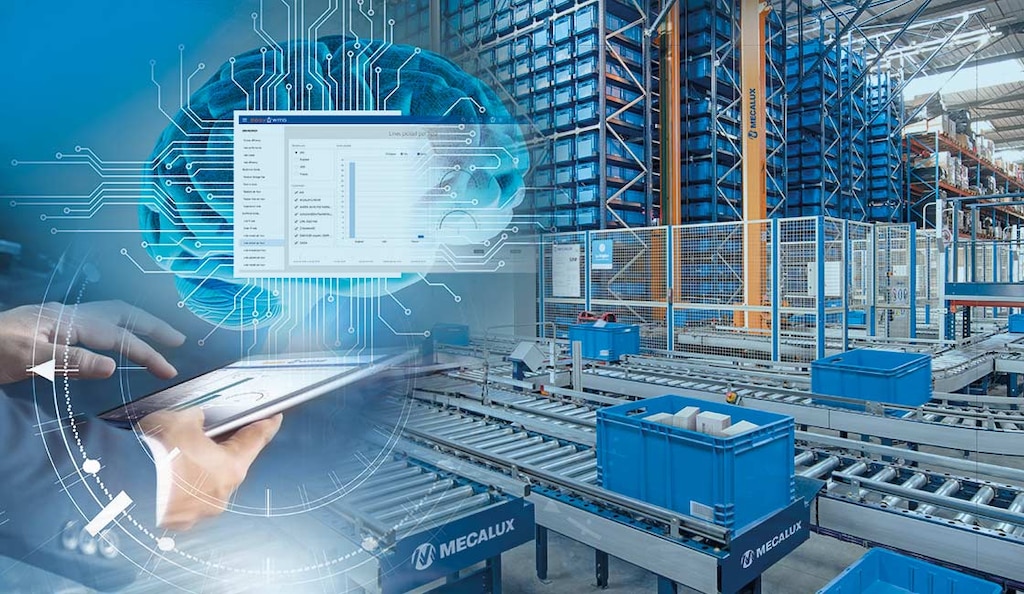
- Combine AI with WMS software and automation technologies to maximize operational benefits.
- Adopt AI in phases, using pilot projects to validate results before scaling successful initiatives.
AI in supply chain and logistics: 5 FAQs
What is the role of artificial intelligence in logistics?
The role of AI in logistics is to streamline and automate processes by analyzing large volumes of data. Its applications range from demand forecasting and inventory management to transportation planning and decision-making, helping organizations improve efficiency, productivity, and responsiveness.
How is artificial intelligence used in logistics?
AI is used to forecast demand, optimize inventory, plan transportation routes, automate warehouse operations, and monitor shipments in real time. It also helps identify disruptions and supports data-driven decision-making for more efficient supply chain management.
How does AI affect supply chain performance?
AI enhances supply chain performance by increasing forecasting accuracy, making better use of resources, and reducing operational errors. Its predictive and analytical capabilities help organizations respond more quickly to changing demand, lower operating costs, and deliver higher service levels.
How can AI make supply chains more sustainable?
AI contributes to sustainability by optimizing transportation routes, reducing energy consumption, and streamlining inventory management to prevent waste. It also allows for more accurate planning, minimizes unnecessary travel, limits emissions, and supports more efficient use of available resources.
What is the relationship between AI and IoT in the supply chain?
AI and IoT in the supply chain are complementary technologies. IoT devices collect real-time data from products, vehicles, and facilities, while AI analyzes that information to generate forecasts, detect potential issues, and facilitate decision-making. Together, they enable greater visibility, control, and responsiveness across the supply chain.