


Supply chain visibility
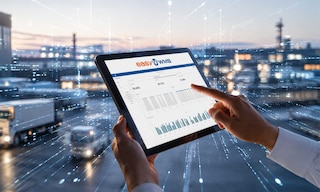
Supply chain visibility has become a priority for companies as they operate in increasingly complex logistics networks. Access to accurate, up-to-date information is crucial for coordinating the various links in the chain and navigating an ever-changing business environment.
In this post, we explain what supply chain visibility is and why it matters. We’ll also explore its key benefits, challenges, and the solutions that can improve it.
What is supply chain visibility, and why is it important?
Supply chain visibility is the ability to obtain a complete, up-to-date view of operations, from sourcing raw materials to delivering products to customers. By integrating data from suppliers, production facilities, warehouses, and transportation providers, companies can see what’s happening at every stage and respond more quickly to disruptions.
Also known as end-to-end or global visibility, this approach combines information generated throughout the supply chain to provide a unified view of operations. It enables organizations to monitor the performance of their logistics network as a whole, identify bottlenecks, optimize inventory levels, and enhance customer service. In an environment shaped by volatility and disruptions, reliable information is paramount for increasing efficiency, mitigating risks, and making data-driven decisions.
However, supply chain visibility shouldn’t be confused with traceability or transparency. Visibility provides an up-to-date view of operations to support decision-making. Traceability makes it possible to track products, materials, or batches across the stages of the supply chain. Transparency, meanwhile, refers to the extent to which this information is shared clearly with customers, business partners, or regulators.
Benefits of supply chain visibility
The value of supply chain visibility lies in its ability to provide reliable information about operations. Access to real-time data offers numerous strategic advantages, including:
- Greater operational efficiency. It facilitates coordination among the different links in the chain and speeds up decision-making.
- Lower costs. Companies can optimize inventory levels, minimize errors, prevent stockouts, and make better use of available resources.
- Risk and disruption management. By detecting setbacks such as delays, material shortages, or bottlenecks, organizations can assess their impact, anticipate the consequences, and take action to maintain operational continuity.
- More accurate demand forecasting. Reliable inventory, order, and sales data improve forecasts and help businesses align their plans with projected needs.
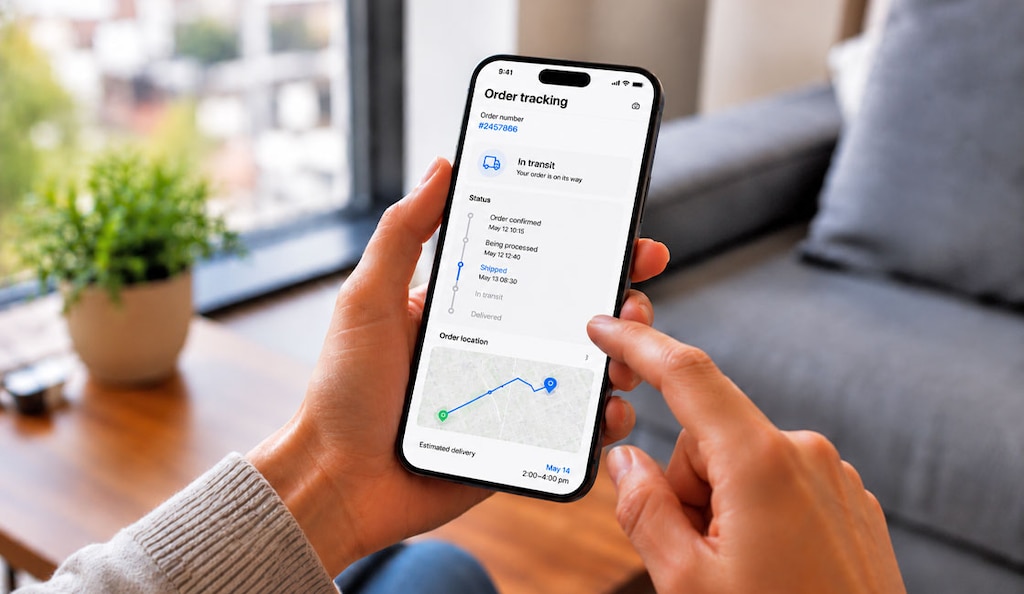
- Higher customer satisfaction. Good supply chain visibility facilitates order tracking and reliable service.
- Progress toward supply chain sustainability. Using resources more efficiently helps reduce waste, support corporate responsibility, and meet certain legal requirements.
Key supply chain visibility challenges
Achieving end-to-end supply chain visibility presents several technological and organizational challenges. According to a McKinsey survey, although 95% of companies have visibility into risks associated with their direct suppliers, only 42% also monitor tier-two suppliers and those further down the chain. The main obstacles include:
- Fragmented, isolated data. When information is spread across multiple systems, departments, or businesses, it can become siloed. This makes it difficult to obtain a unified view of operations without a platform that centralizes data.
- Limited technology integration. Using applications that do not share data prevents organizations from obtaining global visibility. However, integrating WMS (warehouse management), ERP (enterprise resource planning), and TMS (transportation management) systems allows them to exchange data automatically.
- Lack of collaboration among companies. Supply chain visibility requires the commitment of all parties involved. For example, if a supplier fails to report a delay or a carrier doesn’t update a shipment’s status, the entire supply chain is affected.
- Manual processes. Entering data manually slows workflows and increases the risk of errors. Inventories managed with spreadsheets or paper records cannot provide a reliable, real-time view of inventory levels.
How to improve supply chain visibility
To gain a complete view of operations, businesses can take the following steps:
Digitalize workflows
This is the first step toward enhancing visibility in the supply chain. Replacing manual processes with digital tools makes it easier to record, access, and manage information faster and more accurately. Digitalization also lays the groundwork for connecting data generated across multiple operations.
Integrate all systems
It’s essential to centralize as much data as possible, even when they come from different sources. Connecting the WMS with the ERP, TMS, MES (manufacturing execution system), and other platforms enables information sharing and coordinates the various supply chain processes.
Automate data capture
Effective visibility depends on accurate information being recorded and available at all times. Automating data capture with identification and monitoring technologies such as barcodes, RFID, and the IIoT (Industrial Internet of Things) improves their reliability.
Share information across the entire supply chain
Data must flow among departments, suppliers, manufacturers, retailers, logistics providers, and distributors. The goal is for all parties to work with current information, as smooth communication fosters coordination.
Measure results with KPIs
The strategy should include supply chain KPIs (key performance indicators) to evaluate the level of visibility achieved. These may include the order/shipment availability rate, data refresh frequency, and percentage of integrated information sources. Companies can supplement these KPIs with operational metrics such as inventory accuracy, completed deliveries, and order picking time.
Supply chain visibility software and other solutions
Supply chain visibility requires solutions that can collect, centralize, and share data generated during operations. Rather than depending on a single application, it involves connecting systems that manage different processes. ERP software provides information about business resources, a WMS manages inventory and warehouse operations, a TMS covers transportation, and an MES oversees manufacturing.
Integration platforms connect these systems and consolidate information from various links. Analytics tools then help interpret the data and uncover patterns, deviations, or potential issues. Combining these solutions leads to more comprehensive end-to-end supply chain visibility.
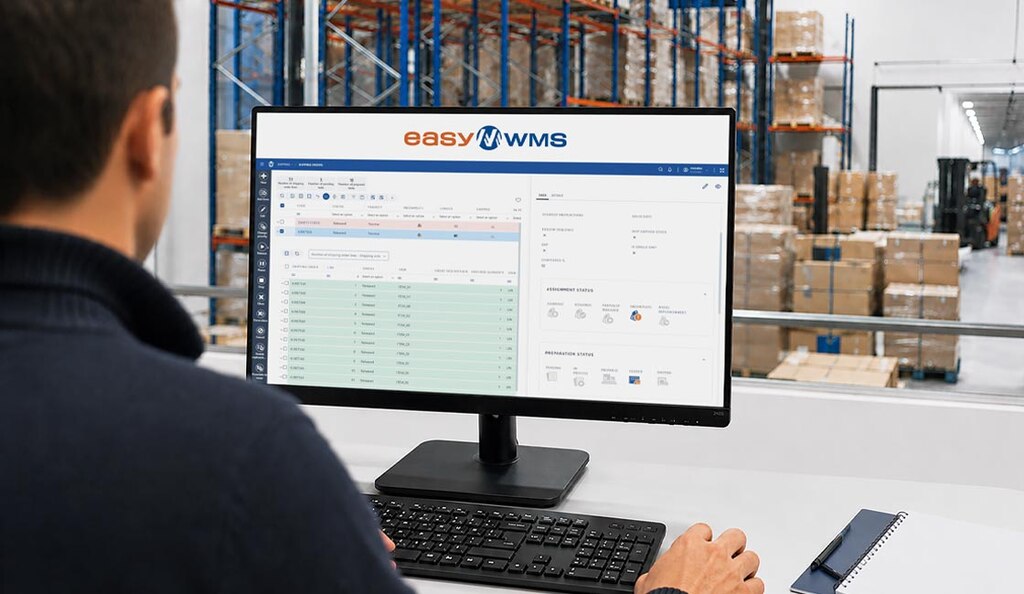
In the warehouse, for instance, Interlake Mecalux’s Easy WMS provides perpetual inventory control and real-time insight into operations, from receiving through order picking and shipping. Its integration with ERP systems and other business applications promotes data sharing and connects facility processes with the rest of the supply chain. This makes it possible to detect issues in advance and coordinate different activities.
Examples of companies with end-to-end supply chain visibility
Global visibility covers multiple supply chain processes and stakeholders. A PwC survey found that 87% of digitally advanced organizations have integrated capabilities end to end, helping them drive performance in several key areas. The examples below show how digitalization connects information from inventory and production through transportation and final delivery.
Global inventory visibility and real-time traceability
Online fashion retailer Espace des Marques has doubled receiving productivity, tripled shipping output, and reduced picking errors through digitalization. After implementing Easy WMS in two of its warehouses, the company gained a comprehensive view of its inventory, which helped raise service levels. It can now ship around 8,000 orders a week to brick-and-mortar stores, website customers, and marketplace shoppers.
Integrating warehouse and production
Sika France subsidiary Dexel implemented Easy WMS and its WMS for Manufacturing module in two of its facilities in France. The goal was to closely track plant operations and streamline the supply of materials to production lines. To coordinate warehouse and manufacturing processes, the Mecalux solution was integrated with Dexel’s MES. This connection enables the facilities to see when each production line needs materials. Easy WMS receives a bill of materials from the MES detailing the goods, packaging, and accessories required to manufacture each product.
Visibility across ecommerce, carriers, and end customers
Motocard, a leading European distributor of motorcycle apparel and accessories, uses Easy WMS to support omnichannel fulfillment and prepare orders for stores and home delivery. “Thanks to the Multi-Carrier Shipping module, Easy WMS knows in advance which shipping provider will deliver each order. It generates and prints a custom label as soon as the box is closed,” says Warehouse Manager Xavier Jounou. The solution also creates a tracking number so customers can check their shipment’s location at any time.
The future: More predictive supply chains
Supply chain visibility is evolving more and more toward predictive logistics. AI and digital twins can help businesses anticipate potential disruptions, simulate scenarios, and identify risks before they affect operations. At the same time, sustainability and regulatory requirements are creating a greater need for reliable information about suppliers and processes. Data and system integration will be vital for building more resilient, adaptable supply chains. Companies should therefore:
- Gain a unified view of the entire supply chain
- Use real-time information to identify issues
- Connect inventory and warehouse operations with production, transportation, and other links in the chain
- Involve suppliers and partners to achieve end-to-end visibility
Supply chain visibility: 5 FAQs
What is end-to-end supply chain visibility?
Supply chain visibility provides real-time insight into operations from the supplier to the end customer. Also known as end-to-end or global visibility, it helps organizations anticipate issues, optimize resources, and make data-driven decisions.
What is the difference between supply chain traceability, transparency, and visibility?
Visibility shows what is happening across the supply chain in real time to support decision-making. Traceability reconstructs the journey of products, materials, or lots. Transparency involves sharing this information clearly and verifiably with customers, partners, and regulators.
How does a lack of visibility affect logistics?
Without complete visibility, coordinating warehouses, carriers, and suppliers becomes more difficult. Scattered information, poor system integration, and manual processes slow decision-making and increase the risk of delays, errors, and stockouts.
Which tools and technologies provide real-time visibility?
WMS, ERP, and TMS solutions provide real-time insight into supply chain activities. Integrating them helps businesses centralize and exchange information, providing a more comprehensive view of operations.
Which KPIs measure supply chain visibility?
Metrics that track visibility include the order/shipment availability rate, data update frequency, and proportion of integrated information sources. Its impact can also be assessed with KPIs such as inventory accuracy and on-time deliveries.