


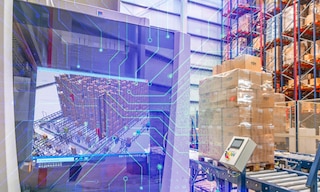
What is a digital twin? How it works, benefits, and logistics applications
Digital twins create virtual replicas of assets, systems, and processes, enabling organizations to monitor operations, simulate scenarios, and make better-informed decisions. By combining real-time data, advanced analytics, and AI, this technology is becoming a core tool for manufacturing and logistics. In this post, we explore what a digital twin is, how it works, its benefits, and its logistics applications.
What is a digital twin?
A digital twin is a virtual replica of a physical object, asset, system, or process that mirrors its behavior using data from the real-world environment. Conventional digital models are often static representations used to design or document a product. A digital twin, by contrast, remains continuously connected to its physical counterpart and constantly updated with real-time information.
The purpose of a digital twin is to monitor, simulate, predict, and refine the performance of physical assets and processes. Because it stays connected to the real world, it provides up-to-date insights that help companies better understand their operations, anticipate potential issues, assess scenarios, and make more effective decisions.
The term digital twin gained popularity in the early 2000s to describe virtual models that could reflect the status and development of physical assets. According to Chirag Shah, Professor of Computer Science at the University of Washington, “Many systems that we now describe as agents or digital twins have existed for years in industries like finance, healthcare, and retail.” Since then, the technology has become a key tool for digital transformation across industries such as manufacturing, automotive, energy, infrastructure, healthcare, and logistics.
Visually, a digital twin can take many forms. Some appear as dashboards featuring operational indicators and analytical charts. Others use interactive 2D models or 3D environments to show the status of machinery, facilities, or entire processes in detail.
Benefits and disadvantages of digital twins
By bringing together historical and real-time data, digital twins provide a clearer view of how assets and processes perform. Key digital twin benefits include greater operational visibility, deeper insight into asset performance, and more informed decision-making.
Yeming Gong, Professor of Management Science at France’s Emlyon Business School, says, “With digital twins, companies can identify bottlenecks and check which processes have deficiencies to make operational improvements.” Their ability to simulate scenarios before applying them in the physical environment also lets organizations gauge the potential impact of changes and make decisions with greater confidence.
However, implementing a digital twin does present certain challenges. It requires reliable data and infrastructure capable of collecting and integrating information from multiple sources. Strong governance is also fundamental for maintaining quality, consistency, and security over time.
Integrating different systems and applications is another common hurdle, since the digital twin must connect equipment, platforms, and technologies that don’t always share the same standards or data formats. The necessary technology investment can also be substantial, particularly for complex initiatives or projects spanning multiple processes.
How does a digital twin work, and how do you implement one?
While a digital twin’s architecture varies by project, most implementations include these elements:
Digital twin software
The first step in creating a digital twin is choosing a platform that virtually replicates the physical asset and manages all associated information. This software centralizes data from multiple systems, providing a comprehensive operational view for monitoring, analysis, and scenario simulation.
Depending on the organization’s needs, the platform can integrate with solutions such as an ERP program, warehouse management system (WMS), MES software, or predictive maintenance tools. Selecting a solution that’s compatible with the broader technology ecosystem is crucial for the project to scale and evolve over the long term.
Data collection through IoT sensors
To reflect actual real-world conditions, a digital twin must regularly receive information from the physical asset. These data come from Internet of Things (IoT) sensors installed on equipment, machinery, vehicles, or infrastructure.
The devices gather real-time information on factors such as temperature, energy consumption, location, and production rate. Through this continuous data flow, the digital twin remains aligned with the current state of operations. The combination of IoT and digital twins is one of the foundations of Industry 4.0, linking the physical environment to its digital representation on an ongoing basis.
Data processing and analysis
Once collected, data must be validated and turned into useful information. Rather than simply storing this information, the digital twin analyzes it to uncover patterns, identify issues, and reveal opportunities for improvement.
It draws on technologies such as cloud computing, big data, and advanced analytics tools, which can handle large volumes of data and monitor key performance indicators (KPIs). AI and machine learning can also anticipate future behavior and generate automated recommendations.
This ongoing analysis gives companies a deeper understanding of their assets and processes, speeding up decision-making and increasing operational efficiency.
Scenario simulation and prediction
Simulation is one of the most valuable digital twin capabilities. Using historical and real-time data, these virtual replicas re-create different scenarios and analyze their potential outcomes without disrupting live operations.
By simulating scenarios, businesses can test process changes, evaluate the effect of rising demand, or assess new strategies before putting them into practice. This helps reduce risks, make better use of resources, and enable data-driven, confident decision-making.
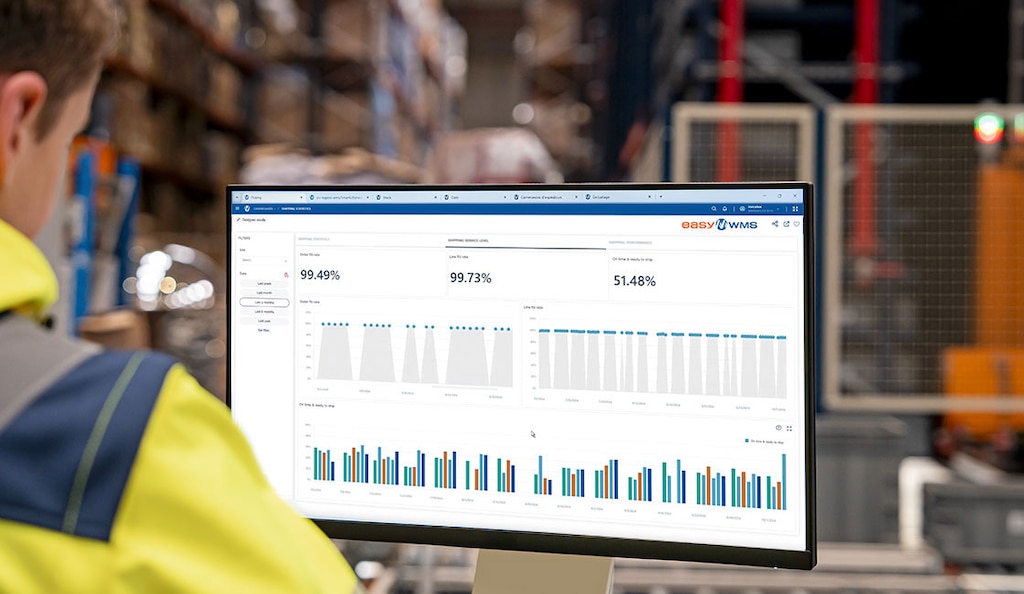
3D digital twin visualization
Three-dimensional visualization has become one of the most recognizable features of digital twins. 3D models can depict facilities, equipment, and processes intuitively, making it easier to understand operational status and how different elements interact.
Still, not every digital twin needs a three-dimensional representation. In some cases, a 2D view supported by dashboards and analytics tools is enough to monitor system performance. The choice between 2D and 3D digital twin models depends on the operation’s complexity, the level of detail required, and the project’s goals.
What are the 4 types of digital twins?
Digital twins can be classified according to the object or system they model. Although categories vary by source and industry, they’re generally grouped by their application and the degree of complexity they represent.
Component twins
These are the most basic type. They replicate a single part or component within a broader system. For example, an electric motor’s digital twin can track variables such as temperature, vibration, and energy consumption to detect anomalies and anticipate potential failures.
Asset twins
An asset twin represents several components working together within the same functional unit. This approach examines how they interact and reviews their combined performance to facilitate maintenance and optimization decisions.
System twins
System twins model groups of assets that operate as an integrated whole within more complex infrastructure. Their purpose is to provide visibility into interactions among equipment and uncover ways to boost efficiency across the operation.
Process twins
Process twins replicate end-to-end operational flows and show how the different stages of a business activity interact. They’re particularly useful for understanding the overall behavior of production chains, logistics networks, and complex industrial processes.
AI and digital twins
Artificial intelligence is driving a new generation of digital twins with advanced analytical and predictive capabilities. Using machine learning techniques, these solutions can identify complex patterns, detect anomalies more accurately, and refine their forecasts.
While AI adds significant value, it’s not essential for creating a digital twin. A model can operate using predefined rules and conventional analytics tools. However, AI extends its predictive and optimization capabilities.
Digital twin applications in logistics
Digital twins are gaining ground in the logistics sector. These solutions provide an end-to-end view of warehouses, distribution centers, and transportation networks, helping organizations improve operational efficiency.
Along these lines, the MIT Center for Transportation & Logistics and Mecalux are collaborating to develop smarter warehouses using digital twins and the 3D Automated Pallet Shuttle. Through advanced 3D simulation and optimization techniques, users will be able to model a warehouse virtually and evaluate different configurations before real-world implementation. They’ll be able to adjust parameters such as the number of motorized shuttles, the facility layout, and operational flows.
Digital twin applications in logistics range from warehouse management and internal product movement to predictive maintenance for material handling systems and transportation planning.
Warehouse optimization
Digital twins make it possible to create a virtual facility replica and analyze how its areas and resources interact. With this visibility, companies can streamline internal travel paths, fine-tune the warehouse layout, ease bottlenecks, and make better use of available space. Digital twins also provide a solid basis for assessing slotting strategies that assign products to the most suitable locations according to demand and turnover.
Logistics flow simulation
Logistics managers can evaluate operational changes without affecting day-to-day activity. For instance, they can simulate demand increases, changes in order volumes, and new order fulfillment strategies to pinpoint the most efficient option before implementation. These simulations can optimize picking, replenishment, and order dispatch flows while anticipating possible congestion at loading docks or imbalances caused by changes to shift planning.
Predictive maintenance for MHE
Digital twins can help prevent issues involving critical material handling equipment (MHE) such as conveyors, stacker cranes, and autonomous mobile robots (AMRs). Continuous monitoring can reveal early signs of wear, allowing maintenance to be scheduled before a breakdown occurs.
Transportation optimization
The technology can also extend beyond the warehouse to model entire logistics networks. Digital twins enable route simulation, distribution planning, and transportation scenarios designed to increase efficiency and lower costs. When integrated with a transportation management system (TMS), they allow teams to analyze the impact of changes to routes, resource allocation, or truckload volumes before applying them to live operations.
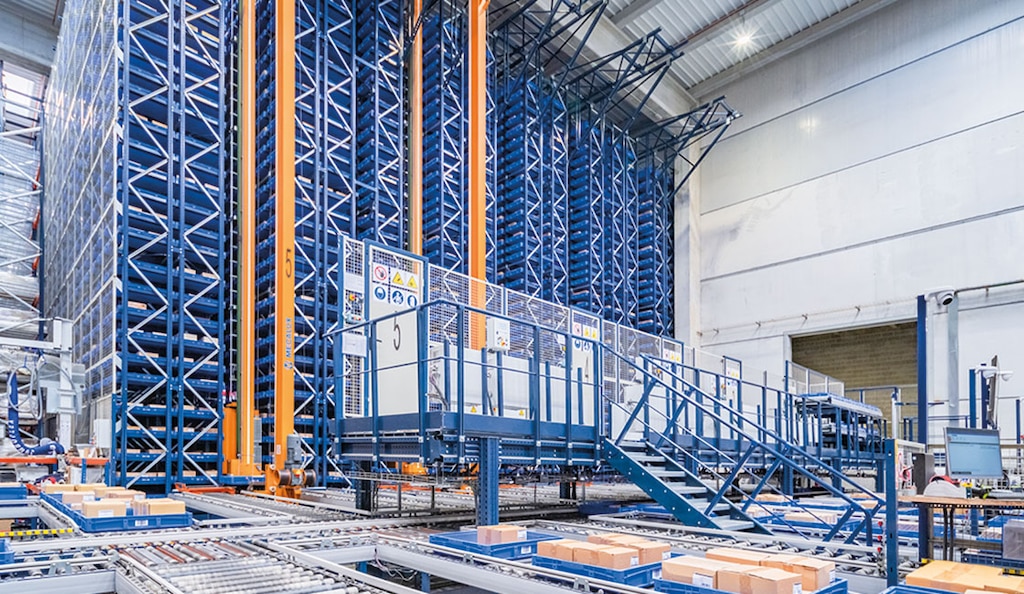
Digital twin examples
More and more companies are adopting digital twins to fine-tune manufacturing and logistics operations. One example is the use of virtual replicas to validate warehouse safety in earthquake-prone areas, as demonstrated at the Rossignol Group’s logistics center in France.
Digital twins can also verify how automated facilities will perform before they go live, as in the rack-supported building operated by Congelados Navarra. In addition, they can test new operating configurations and management strategies through advanced WMS platforms.
The future of digital twins
The potential of digital twins will continue to grow as technologies such as AI, IoT, cloud computing, and advanced communications networks evolve.
In the coming years, digital twins will incorporate increasingly sophisticated capabilities to learn autonomously, generate predictive recommendations, and automate decision-making processes. Their integration with generative AI will make it possible to explore complex scenarios through natural language and give users more intuitive access to operational information.
Likewise, digital twins will be vital to the development of Industry 5.0, where collaboration among people, intelligent solutions, and connected processes will be decisive in advancing business competitiveness and sustainability.
Digital twins: A key tool for streamlining operations
Digital twins connect the physical and digital worlds, giving organizations a more accurate view of their assets and processes. By combining real-time data, simulation, and AI, they support more informed decision-making and greater operational efficiency. Here are the main takeaways on digital twins:
- IoT sensors, data platforms, and advanced analytics tools are indispensable for monitoring operations in real time and leveraging the technology’s full potential.
- Digital twins help identify bottlenecks, uncover opportunities for improvement, and make more effective use of resources.
- Scenario simulation makes it possible to assess operational changes before implementation and limit risk.
- This technology supports predictive maintenance and early issue detection in equipment and facilities.
- Digital twins can be applied across multiple sectors, from manufacturing and energy to logistics and infrastructure management.
- Advances in AI and connectivity will expand digital twin capabilities and accelerate adoption in the years ahead.
Digital twin FAQs
What is the definition of a digital twin?
A digital twin is a dynamic representation of a physical asset, system, or process that reflects its status and performance using data from the real-world environment. This virtual replica allows users to visualize the behavior of monitored elements, explore different scenarios, and gain insights that can improve operations.
How are digital twins used in manufacturing?
Companies leverage digital twins to monitor equipment and facilities, improve processes, prevent failures, and test changes before implementation. By combining real-time data with virtual models, they increase operational efficiency, lower costs, and raise productivity across manufacturing environments, warehouses, material handling systems, and transportation.
What technologies or tools does a digital twin need?
A digital twin requires a software platform capable of creating and managing a virtual replica, as well as IoT sensors that collect data from the physical environment. It also typically incorporates technologies such as cloud computing, big data, AI, and advanced analytics tools to process the information gathered.
What is the difference between a digital twin and a simulation?
The key difference is that a digital twin maintains a continuous connection to the physical asset through real-time data, whereas a simulation is usually based on assumptions or static information. This ongoing update allows the digital twin to reflect the current status of the represented system.
Who created digital twins?
Digital twins don’t have a single creator. The concept began to take shape in the late 20th century and became widely known in the early 2000s. While Michael Grieves is considered one of its leading proponents and theorists, the idea has evolved through contributions from numerous researchers, disciplines, and organizations.