


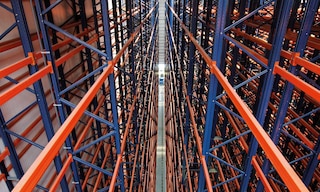
High-bay storage: Make the most of your warehouse’s vertical space
High-bay storage has proven to be an optimal way to increase the number of slots in a warehouse without expanding the building. As e-commerce grows, product ranges diversify, and industrial real estate costs rise, more companies are turning to solutions that optimize warehouse height.
In this post, we explain what high-bay storage is and the benefits it provides. We’ll also explore solutions that utilize vertical space to the fullest and see how they’ve enabled companies across multiple industries to make better use of their facilities.
What is high-bay storage?
High-bay storage consists of maximizing a warehouse’s usable volume with storage systems that leverage vertical space. Instead of being limited to the available floor area, these solutions take advantage of the building’s height to increase storage capacity.
Growing interest in high-bay storage systems is driven by several factors, including rising industrial real estate prices, the need to manage more SKUs, the expansion of e-commerce, and the difficulty of resizing existing buildings. In many cases, going vertical is more cost-effective than constructing a new facility.
High-bay storage can be used for both pallets and boxes, although each need calls for specific solutions. Palletized goods are typically stored in high-bay pallet racking, automated storage and retrieval systems (AS/RS), or rack-supported buildings. When order picking is the main operation, mezzanine floors, multi-tier shelving, and AS/RS for boxes make use of the building’s height while facilitating associates’ work.
Benefits of high-bay storage
Making full use of your facility’s height does more than enable you to store more goods. It also improves cost-effectiveness and prepares warehouse operations for future growth.
- Greater storage capacity. The main advantage is that the number of available locations increases without expanding your building’s footprint. Depending on the system, capacity can rise significantly by leveraging previously unused height.
- More efficient use of space. While warehouse floor area is limited, volume is often underutilized. Designing a storage system around your facility’s height optimizes every available cubic foot and delivers a higher return on investment.
- Lower expansion costs. When enough vertical space is available, you can often postpone building a new warehouse or leasing additional facilities — avoiding the associated costs.
- Improved operational efficiency. Putting your warehouse height to work means you can concentrate goods in your facility without distributing them across several sites. Centralizing inventory simplifies management, facilitates tracking, reduces product movements between sites, and streamlines order fulfillment and shipping.
- Scalability. High-bay storage supports business growth. Many solutions can be expanded with additional levels, aisles, or capacity without completely modifying your existing facility.
High-bay storage solutions
Several solutions can make the most of your warehouse’s vertical space. The right choice depends on the type of goods handled, operations performed, and level of automation required.
High-bay pallet racking
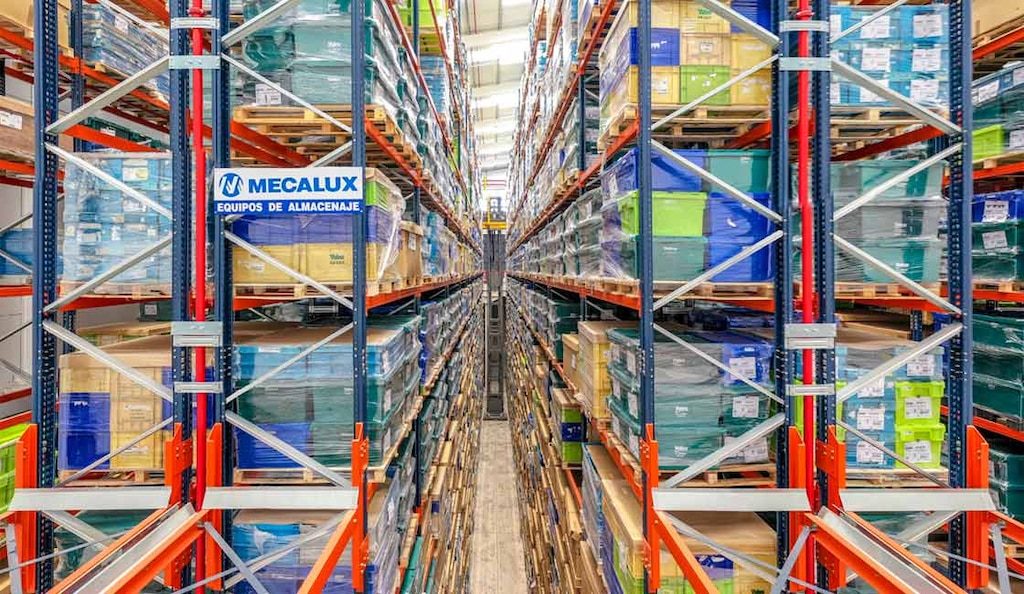
Selective pallet racking can reach heights of more than 50' when combined with suitable material handling equipment, such as turret or reach trucks.
These high-bay storage racks provide direct access to every item, considerable flexibility, and excellent use of warehouse space, particularly when storage aisles are narrow.
Multi-tier shelving
This system grows upward through several working levels directly integrated into the racking. Elevated walkways multiply the usable area available for picking without adding on to your facility. Associates and goods move between the different levels via stairs, elevators, or conveyors to streamline order fulfillment.
Multi-tier shelving is suitable for picking-intensive warehouses such as e-commerce centers and operations with an extensive catalog of small items.
Mezzanine floors
Mezzanine floors make use of your warehouse’s available vertical space by creating new levels above the existing floor. These steel structures, made up of beams and columns, add space quickly without expanding your facility.
They can accommodate picking, storage, order sorting, production, and office areas.
Rack-supported buildings
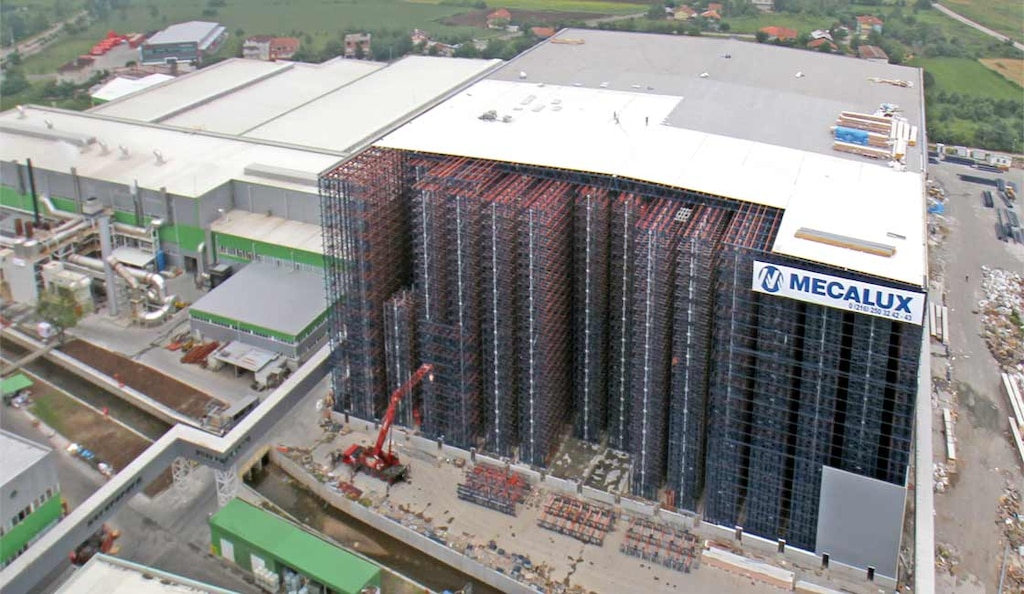
In a rack-supported building, the racking forms part of the warehouse structure and supports both the roof and the side walls. This configuration makes it possible to construct high-bay storage facilities — up to 150' high — while maximizing capacity. These buildings are generally combined with AS/RS solutions to manage large product volumes.
Automated storage and retrieval systems
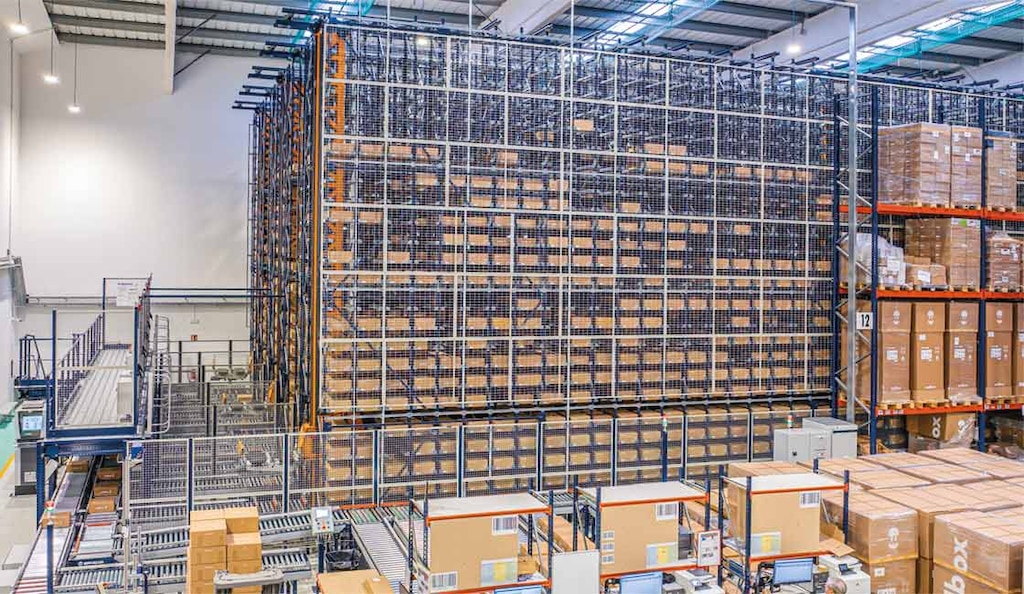
AS/RS are among the solutions that make the best use of available height. With stacker cranes, goods are stored and moved quickly and accurately, even in high-bay storage facilities, maximizing usable volume.
AS/RS solutions are available for both pallets and boxes (mini-load systems). They increase capacity, reduce errors, enhance traceability, and boost productivity.
High-bay storage success stories
Companies in a wide range of industries already leverage their warehouse height to gain space and improve operational efficiency.
Tecolsa and Just: High-bay racking to add capacity
Tecolsa installed 62-foot-high narrow-aisle racking in two warehouses next to its plant in Martos (Spain). This solution enabled the business to optimize its floor area and vertical space to manage 7,500 SKUs and ship around 18,000 spare parts daily to customers in Europe, the US, and China.
Cosmetics company Just operates a warehouse in Buenos Aires (Argentina) equipped with 46-foot-high pallet racking with capacity for 3,800 pallets — even more than originally planned. Direct access to every location facilitates production replenishment and finished-goods management.
Decathlon and Motoblouz: Multilevel solutions to streamline picking
The new Decathlon distribution center in Brazil features a three-floor mezzanine standing 33' high, where associates pick small products. The system holds 175,620 boxes and has expanded capacity by 124%. According to Thiago do Nascimento, Logistics Manager at Decathlon Brazil, “This solution triples the usable storage area: the mezzanine houses about 85% of our inventory.”
In France, Motoblouz, a specialist in motorcycle equipment, installed multi-tier shelving that creates four picking levels. A conveyor system connects all floors to the consolidation area, speeding up order fulfillment. The solution has quadrupled capacity within the same footprint.
PepsiCo and Wallbox: Automation for managing goods at height
PepsiCo’s first automated warehouse in Poland stands 66' high and holds 9,000 pallets of raw materials used to manufacture products such as Lay’s and Doritos. “The four Mecalux stacker cranes ensure 3,500 uninterrupted movements a day. Automation has also eliminated human errors in logistics processes, optimizing costs,” says Maciej Pietrusa, Warehouse Manager at PepsiCo Poland in Środa Śląska.
In Barcelona, Wallbox automated finished-goods storage with a 33-foot-high mini-load system. By taking advantage of vertical space, the company stores 43,700 boxes in just 8,288 ft². The AS/RS consists of five aisles served by stacker cranes for boxes. It dispatches more than 6,000 electric chargers per day, combining substantial storage capacity with fast, efficient order fulfillment.
Hayat and Libus: Rack-supported buildings to maximize capacity
Hayat Kimya built one of Europe’s largest rack-supported buildings in Izmit (Turkey) to keep pace with its international growth. The 151-foot-high warehouse holds 161,000 pallets, demonstrating how these facilities make the most of available space, even in large-scale projects.
Meanwhile, Argentine manufacturer Libus operates a rack-supported building with 56-foot-high selective pallet racking arranged across five aisles. Equipped with turret trucks, the system stores 2,340 pallets of raw materials and finished goods, maximizing capacity without sacrificing direct access to products.
High-bay storage: An investment in capacity
Making the most of vertical space is one of the best ways to unlock capacity you already have without adding on to your footprint. The right solution will depend on your goods, operations, and company targets, but all serve the same purpose: getting the most out of the available volume. The main takeaways on high-bay storage are:
- Using vertical space increases storage capacity without expanding the warehouse.
- Concentrating more goods in one facility simplifies inventory management and improves operational efficiency.
- Solutions are available for both pallet storage and picking, from high-bay racking and multi-tier systems to automated and rack-supported warehouses.
- Automation facilitates the use of vertical space by managing goods quickly, accurately, and with complete traceability, even in high-bay facilities.
- Designing a warehouse around its volume — rather than just its square footage — helps operations absorb business growth and respond to future needs.
High-bay storage: 5 FAQs
What is a high-bay storage system?
A high-bay storage system is a solution designed to make use of a warehouse’s existing vertical space. Examples include racking, mezzanine floors, and automated storage and retrieval systems (AS/RS). Their goal is to increase storage capacity without expanding a building’s footprint, optimizing available volume while improving efficiency.
Which industries benefit most from high-bay storage?
Virtually any industry can benefit from high-bay storage. However, it’s particularly useful in the ecommerce, distribution, automotive, food and beverage, cosmetics, retail, and manufacturing sectors. Companies with a large number of SKUs often use high rack storage or multi-tier shelving to maximize picking operations.
What types of goods can be stored in high-bay racks?
High-bay storage accommodates pallets, boxes and other small storage units, and individual items intended for picking. The system depends on the products’ weight, dimensions, turnover, and characteristics, as well as the warehouse operations to be performed.
What factors should be considered before implementing high-bay storage?
Analyze your building height, goods, inventory turnover, material handling equipment, expected warehouse flows, and future growth potential. It’s also worth assessing whether automation could provide additional productivity and capacity benefits.
What role does automation play in high-bay storage?
Automation makes the most of high-bay facilities through stacker cranes and AS/RS solutions that operate quickly and accurately. In addition to increasing storage capacity, these technologies improve traceability, reduce errors, optimize goods flow, and boost warehouse throughput.