



Ecommerce return rate: Definition, formula, and how to reduce it
The ecommerce return rate is a critical metric for businesses that sell online. However, as ecommerce logistics becomes more complex and return volumes rise, costs can climb, profitability can suffer, and the customer experience can deteriorate. That’s why tracking this metric is a priority for companies committed to delivering excellent service.
In this post, we explain what the ecommerce return rate is, how to calculate it, and what factors to consider when analyzing it. We’ll also show you how a warehouse management system can help lower it.
What is the ecommerce return rate?
The ecommerce return rate measures the percentage of products sold that customers send back to a store or online business. It’s calculated based on the total number of units sold during a specific period and serves as a key performance indicator (KPI) in online retail and logistics.
Monitoring this metric is essential because a high ecommerce return rate drives up warehousing and transportation costs, cuts into profits, and can damage customer satisfaction. It may point to issues with merchandise quality, inaccurate descriptions, sizing errors, or unmet expectations. Although apparel, jewelry, and accessories tend to see more returns than other product categories, keeping them in check helps lower logistics costs and deliver better service across industries.
Ecommerce return rate vs. rate of return
Although these terms may sound interchangeable, their meaning depends on the context. In ecommerce, the return rate measures the percentage of products consumers send back after purchasing them. It’s a KPI for assessing customer satisfaction, catalog quality, and reverse logistics. In finance, however, rate of return (RoR) refers to the profit or loss generated by an investment.
When assessing an online store’s performance, it’s important to distinguish between product-return metrics and those that measure financial performance. They serve different purposes and rely on different calculations.
How to calculate the return rate in ecommerce: Formula
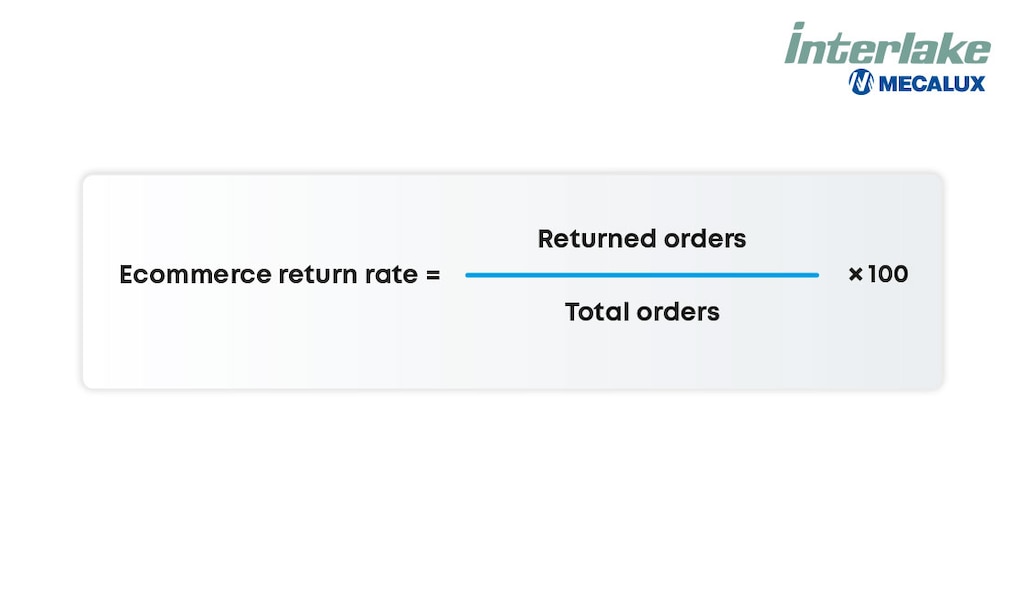
The ecommerce return rate is a percentage companies can calculate based on the number of products or orders. In either case, divide the returns recorded during a specific period by the total number of products or orders sold, then multiply the result by 100. In this post, we’ll calculate the figure based on the number of orders.
For example, if an online store receives 50 returns from 1,000 orders in one month, its return rate is 5%. In other words, five out of every 100 orders were returned.
This metric should be interpreted differently depending on the industry and the circumstances surrounding the sale — there’s no ideal rate that applies to every business. For example, online stores may receive more returns because customers can’t examine a product’s actual features before it arrives. It’s also worth tracking related KPIs, such as return reasons, processing times, costs, and the exchange rate (the percentage of returns that result in an exchange rather than a refund).
How to reduce ecommerce return rates
Applying warehouse best practices and addressing certain logistics aspects can help bring down the ecommerce return rate. Here are some of the main areas to review:
Optimize warehouse management
Efficient facility oversight provides greater control over inventory, product traceability, and logistics activities, helping prevent errors. Companies can achieve this by implementing a warehouse management system (WMS) that streamlines workflows, coordinates processes, and facilitates order fulfillment.
Increase picking accuracy
Order picking accuracy helps prevent returns caused by mistakes made during the process. Sending the wrong product, quantity, or SKU can damage the customer experience and generate additional costs. Technologies such as voice picking systems and RF scanners speed up the verification of each step.
Strengthen quality control
Conducting quality checks before orders are shipped enables companies to identify defective, incomplete, or damaged products before they reach their destination. These inspections help prevent returns, increase customer satisfaction, and reveal recurring issues so businesses can take corrective action.
Use appropriate packaging
Suitable packaging is essential for ensuring that goods arrive at their destination in perfect condition. Flimsy boxes, insufficient protective materials, and packaging that doesn’t match product characteristics raise the risk of damage in transit and, consequently, returns. This aspect is especially important for electronics and perishables, where any damage can make an item unusable or unfit for consumption.
Offer fast shipping
Fast shipping can improve the shopping experience as long as delivery times are realistic and reliable. In addition to speeding up deliveries, companies should provide customers with up-to-date information on shipment status. When merchandise arrives within the expected time frame, consumers are less likely to return it or seek alternatives from another retailer. The DHL 2026 E-commerce trends report states that 7 out of 10 shoppers would abandon their carts if their preferred delivery or return options were unavailable at checkout.
Ecommerce return rate reduction strategies
In online retail, many returns result from a mismatch between customer expectations and the merchandise received. Beyond optimizing warehouse processes, addressing other areas of a business can help bring the rate down. For example, online retailers need a useful product page with as much relevant information as possible. This is especially important in the fashion industry, where detailed size guides, images from different angles, and other particulars can help customers make confident choices.
According to a study published in the International Journal of Information Management by researchers from the University of Zaragoza, an intuitive shopping experience with sufficient information supports consumer decision-making. Product descriptions, images, and other content should accurately reflect an item’s features.
From a logistics standpoint, businesses should offer several delivery options and enable real-time order tracking. The return policy should be clear, easy to find, and accessible before customers complete their purchase.
How can a WMS help minimize ecommerce return rates?
Implementing a warehouse management system can help many companies lower the number of returns. Some of the main benefits include:
Enhanced logistics traceability
A warehouse management system such as Interlake Mecalux’s Easy WMS provides product traceability throughout the logistics process, from receiving through dispatch. By recording and monitoring every movement, companies can track the location and status of each item and identify incidents. As a result, operations become more reliable, and returns caused by logistics issues decline.

Fewer order picking errors
Automated order picking minimizes errors associated with manual goods handling. A WMS guides warehouse associates through the fulfillment process, adapts the strategy to the facility’s characteristics, and verifies that the correct items and quantities are ready for shipment. This helps reduce customer complaints.
Real-time inventory management
Real-time inventory management provides an up-to-date view of product availability and helps companies keep their levels current. This visibility prevents issues such as selling out-of-stock merchandise, supports more reliable customer service, and lowers the number of incidents that can lead to returns.
Integration with ERP and ecommerce platforms
Integrating ERP and WMS solutions with ecommerce platforms syncs order, inventory, and SKU data across all systems. It eliminates errors caused by manual data entry, prevents stock discrepancies, and enables more efficient order management.
Ecommerce return rate: A vital KPI
Lowering the ecommerce return rate depends on a combination of logistics processes and a shopping experience that meets customer expectations. Regularly analyzing this KPI and addressing its main causes can bring down costs, boost satisfaction, and increase profitability. Companies should therefore:
- Identify the reasons for returns and look for solutions.
- Prevent order fulfillment errors through accurate picking.
- Provide complete information on product pages.
- Improve warehouse management with a WMS.
Ecommerce returns rate: 5 FAQs
What is the definition of ecommerce return rate?
The return rate represents the percentage of items customers send back after purchasing them compared with the total sales volume during a specific period. This metric helps companies assess the impact of returns on logistics operations and overall business performance.
What is a good ecommerce return rate?
There’s no ideal figure for every online retailer. The percentage varies according to the industry, product type, sales channel, and return policy. For example, fashion companies generally record higher rates than electronics or food retailers because of factors such as sizing and customer preferences. Rather than targeting a specific figure, businesses should focus on addressing errors and preventable issues. This metric shouldn’t be confused with the rate of return (RoR), which measures the profitability or loss of an investment.
Why does the ecommerce return rate increase?
The ecommerce return rate rises when orders fail to meet customer expectations, or incidents occur during the logistics process. Common causes include picking errors, damage in transit, and incomplete product information.
How do returns affect profitability?
Returns negatively affect profitability because they drive up logistics costs and require more time and resources to process each order. Addressing the issues behind them can benefit operations and overall performance.
How do returns affect customer satisfaction?
Returns often indicate that a product failed to meet customer expectations or that an issue occurred during the purchase process. Keeping returns in check through efficient warehouse management and accurate information enhances the customer experience.