


Energy efficiency tips for distribution centers and warehouses
Following distribution center energy tips can help companies optimize use of energy across their facilities. As businesses increasingly prioritize supply chain performance, initiatives focused on conserving energy and making smarter use of resources are becoming crucial.
In this post, we examine the main factors that influence resource consumption and outline 10 ways to improve energy efficiency in distribution centers and warehouses.
Why is energy efficiency important in distribution centers?
Energy efficiency has become a priority for distribution centers (DCs) and other logistics facilities. Amid volatile energy prices, the goal is to use power more effectively. This means carrying out the same operations with fewer resources without compromising productivity or service quality.
According to the International Energy Agency (IEA), industry has accounted for two-thirds of the rise in global energy demand since 2019. Logistics operations rely on numerous types of equipment running continuously, making DCs and warehouses particularly energy-intensive environments. Lighting, HVAC and refrigeration systems, forklifts, and technology infrastructure are just some of the sources of energy consumption.
The benefits of efficient energy management extend beyond financial savings. It lowers costs and emissions, supports environmental targets, and advances companies’ decarbonization and sustainability strategies — critical priorities in the logistics and industrial sectors.
10 distribution center energy tips
Increasing energy efficiency doesn’t hinge on a single solution. It requires a combination of measures tailored to each facility’s needs. Here are 10 distribution center energy tips that can boost efficiency without affecting productivity.
1. Replace traditional lighting with LED technology
Halogen lamps produce around 20 lumens per watt, while LEDs average close to 100 lm/W and can even exceed 200 lm/W. In practice, this means LEDs provide the same level of illumination while consuming far less energy than traditional technologies. They also have a long service life, limiting the need for replacements and maintenance work — a considerable advantage in large DCs.
In the book Warehousing 5.0, professors Eric Grosse and Christoph Glock note that replacing conventional lighting with LED solutions can deliver energy savings of more than 50%. Depending on the characteristics of the facility, the investment can pay for itself in less than three years.
2. Install motion sensors and smart lighting systems
Motion sensors and smart lighting systems detect the presence of people or material handling equipment and adjust illumination to the actual requirements of each activity.
This technology prevents lights from staying on when they aren’t needed, making it particularly useful in storage aisles, reserve areas, and spaces where foot traffic varies throughout the day.
More advanced smart lighting can integrate with Internet of Things (IoT) technologies to collect occupancy data across different warehouse zones and centralize lighting management. This connectivity allows businesses to monitor system status, schedule lighting times, and identify data-driven opportunities for energy savings.
3. Implement automated lights-out warehouses
Automated storage and retrieval systems (AS/RS) handle goods with minimal or even no human intervention. As a result, certain areas don’t require permanent lighting, reducing energy consumption for illumination.
A facility that operates without lighting — also known as a lights-out or dark warehouse─ relies on stacker cranes, conveyors, autonomous mobile robots (AMRs), and a warehouse management system (WMS) to coordinate product movements.
Beyond energy savings, automation enables higher productivity, maximum accuracy, and 24/7 operations. This approach is common in freezer warehouses and other environments with high energy costs.
4. Improve the building’s thermal insulation
Proper insulation is one of the best ways to curb energy use in DCs and warehouses. By maintaining stable indoor conditions, heating, ventilation, air conditioning, and refrigeration systems need less energy to reach and maintain the desired temperature. This, in turn, brings down HVAC-related operating costs.
Roofing plays a key role. A well-insulated roof helps maintain stable environmental conditions inside the distribution center or warehouse. According to the Global Cold Chain Alliance (GCCA), an international association representing temperature-controlled logistics companies, polyisocyanurate insulation boards are among the most widely used solutions due to their resistance to heat transfer and moisture.
Doors are also a major factor in distribution center energy efficiency. The GCCA reports that up to 85% of losses in cold storage warehouses result from air exchange between areas. Industrial doors, such as single-panel vertical doors, help limit this infiltration by providing high levels of insulation and airtightness.
Loading docks can also be critical points. Dock shelters and foam seals create a tight barrier between the trailer and distribution center during loading and unloading. These insulation systems surround the doorway, minimizing outdoor air infiltration and temperature loss. Some models feature side curtains with hooks that cover gaps near the trailer hinges, one of the areas most susceptible to air leakage.
5. Optimize HVAC systems
Heating, ventilation, and air conditioning (HVAC) systems typically account for a considerable share of a building’s energy consumption. In distribution centers, enhancing their performance can generate energy savings while maintaining suitable conditions for employees and goods.
The US Department of Energy found that implementing high-performance control systems can “reduce HVAC energy use in commercial buildings by up to 30%.” These sensors, meters, and software solutions monitor equipment and adjust HVAC settings based on facility requirements.
In the supply chain, one of the most effective measures is regular maintenance to prevent performance dips. For example, programmable thermostats regulate HVAC systems according to occupancy levels and the requirements of each warehouse zone.
6. Use high-density storage systems
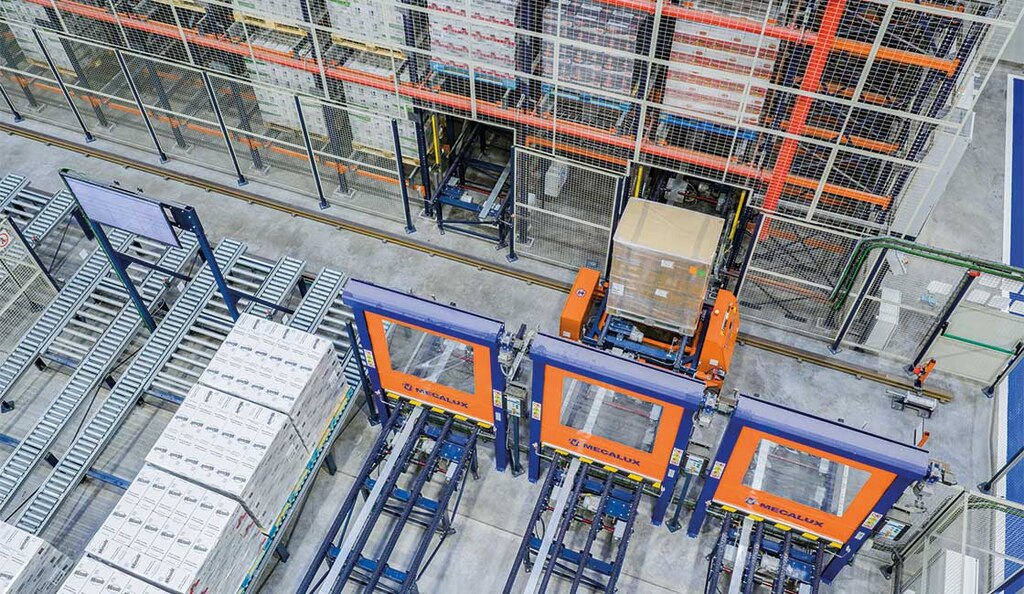
High-density storage systems boost energy efficiency by requiring fewer aisles and housing more products in less space. Making better use of the DC footprint allows organizations to accommodate more goods in a smaller area, lowering lighting and refrigeration costs.
High-density storage also facilitates the implementation of AS/RS solutions. By concentrating more storage locations within the same floor space, technologies such as stacker cranes can handle inbound and outbound goods efficiently while limiting the energy required for operations.
7. Install energy-efficient equipment and machinery
Choosing efficient equipment can have a significant impact on DC operations. Electric motors, conveyors, stacker cranes, and pallet elevators are part of daily operations in many distribution centers, making it vital to control costs without compromising performance.
According to the Electric Motor Systems Platform, an IEA initiative to promote electric motor efficiency, these technologies accounted for 53% of global electricity consumption in 2023. In the industrial sector, that figure reached 72%, highlighting the importance of high-efficiency motors.
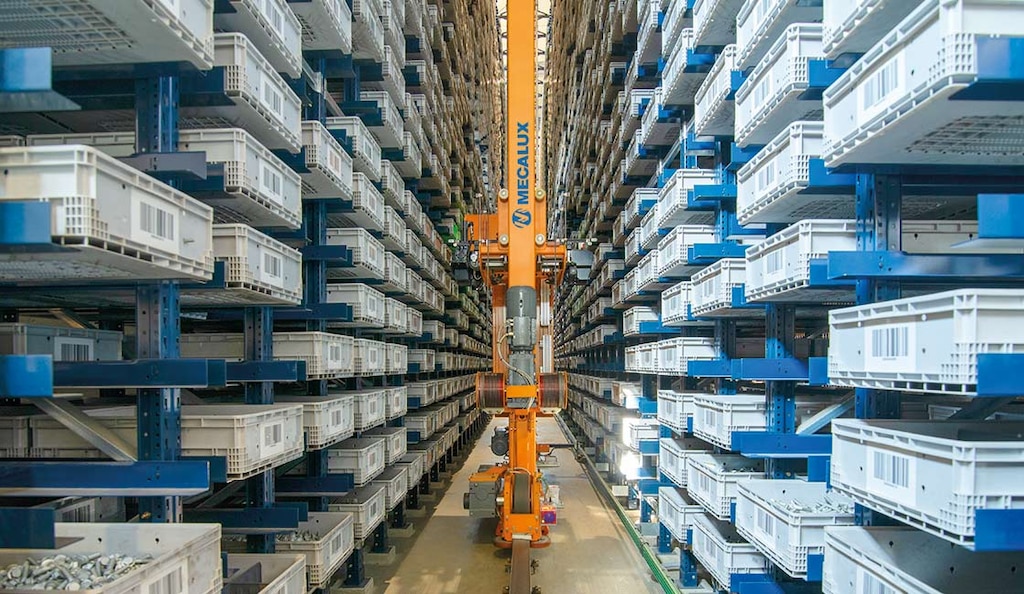
Selecting advanced equipment can bring down operating costs without sacrificing performance. Some solutions incorporate energy recovery technologies. For example, Interlake Mecalux stacker cranes feature regenerative systems that capture energy produced during descent and deceleration; they then feed it back into the electrical grid, delivering energy savings of 15% to 20%.
8. Incorporate solar energy and other renewables
Integrating renewable energy sources can decrease dependence on the power grid and mitigate the impact of price fluctuations. Among the available alternatives, solar power stands out for its ease of integration, as the large rooftops of many distribution centers and warehouses provide ample space for installing photovoltaic panels.
The IEA expects solar energy use to continue growing worldwide through 2030. This trend is driving the adoption of photovoltaic panels for self-consumption in industrial facilities, where renewable electricity generation reduces emissions associated with operations.
A study published in the journal Buildings examined the integration of photovoltaic systems at a logistics park. The results showed that effective solar energy management can help facilities leverage the electricity they generate on-site. In the case analyzed, costs fell by between 9.26% and 17.02%.
9. Automate intralogistics processes
Automating warehouse operations can enhance overall efficiency. Conveyors, AMRs, and warehouse management systems (such as Interlake Mecalux’s Easy WMS) streamline goods flows throughout a facility.
Automating repetitive tasks and coordinating processes with greater precision minimizes unnecessary travel, prevents empty runs, and makes better use of resources. Robotic solutions also boost productivity in storage and internal transport operations.
10. Cut energy use during idle periods
Many distribution centers continue consuming energy even when operations are at a standstill. Lighting, HVAC, IT systems, and auxiliary machinery may remain on outside working hours, resulting in unnecessary expenses.
Practical strategies include switching off lights in unoccupied areas, activating standby modes on material handling equipment, and decreasing HVAC operation. Moreover, tasks such as charging electric forklifts can be scheduled for periods of lower energy demand.
How automation cuts energy consumption
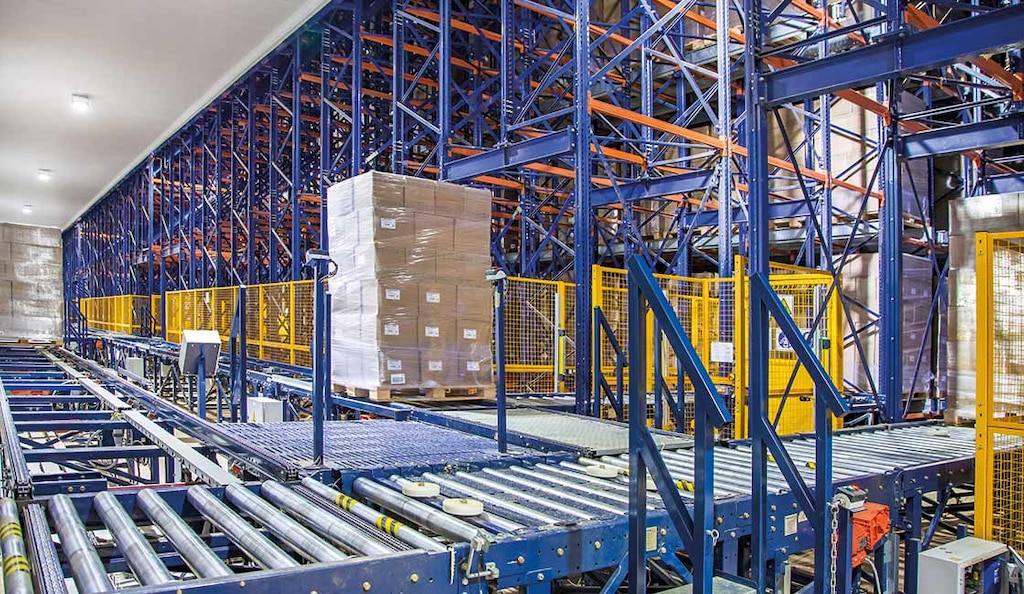
In addition to enhancing a distribution center’s operational capabilities, automation supports smarter energy use. AS/RSs execute goods movements with precision and coordination, minimizing unnecessary travel and enabling greater energy efficiency in intralogistics operations.
Sensors, WMS software, and control systems allow businesses to monitor equipment in real time and adjust resource allocation based on warehouse needs.
Automation therefore serves as a strategic tool for creating more sustainable distribution centers that are better equipped to handle rising costs. Many organizations are already using it to curb energy consumption. Below are several projects developed in collaboration with Mecalux where efficiency has played a central role:
- Bem Brasil. “Mecalux’s Automated Pallet Shuttle system brings us multiple benefits: faster shipping processes, safer food handling, online inventory control, and energy savings,” says the frozen french fry producer. The business operates two freezer warehouses with a capacity for nearly 66,000 pallets of raw materials and finished goods. The combination of the Pallet Shuttle and Easy WMS has strengthened its logistics operations and ensured traceability.
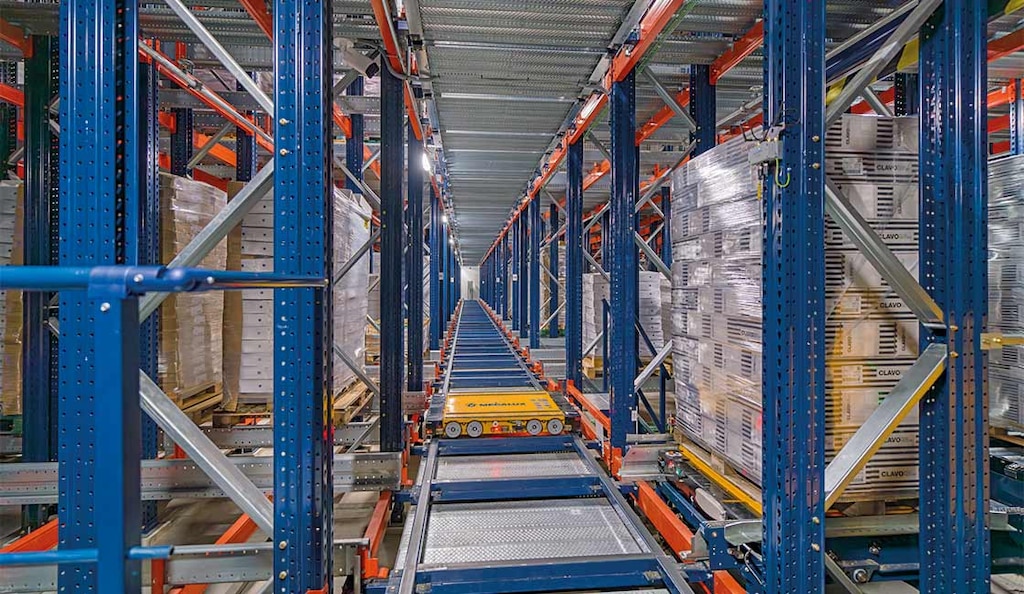
- Clavo Food Factory. The Mecalux 3D Automated Pallet Shuttle speeds up inbound and outbound flows while lowering energy consumption. “We’ve doubled our storage capacity, reduced idle time, and cut costs,” says the producer of chilled and frozen ready-made and ready-to-cook foods. Ten autonomous shuttles navigate the aisles, moving between levels in a coordinated manner to handle each pallet as operations require.
- Cabezuelo Foods. Faced with sustained business growth, this deep-frozen food company implemented a rack-supported building operating at -13 °F. Mecalux’s Automated Pallet Shuttle with a stacker crane distributes cold air across a greater number of pallets. “We automated because we saw it as the best solution to accommodate the growth expected over the next five years,” says the company.
Energy efficiency as a competitive advantage
Energy efficiency is a key component of distribution center and warehouse management. Beyond financial savings, smarter energy use strengthens operational resilience against price volatility and makes logistics more sustainable. Achieving these goals doesn’t depend on a single measure but rather on combining solutions tailored to each facility’s requirements. The tips in this article can serve as a starting point for creating more efficient, competitive, and future-ready distribution centers.
Energy efficiency should be approached as a long-term strategy rather than a one-time initiative. Key practices include:
- Analyze the distribution center’s main sources of energy consumption to identify opportunities for improvement.
- Prioritize solutions that curb energy use without compromising productivity or service levels.
- Optimize lighting, HVAC, and thermal insulation to decrease the distribution center’s energy demand.
- Invest in advanced equipment, high-density systems, and renewable energy sources.
- Leverage automation and digitalization to streamline material flow.
- Combine technology with energy-efficient practices to strengthen overall performance and competitiveness.
FAQs: Energy efficiency in distribution centers
What is energy efficiency in a distribution center?
Energy efficiency in a distribution center means using less energy without affecting productivity or service levels. This involves optimizing lighting, HVAC, material handling equipment, and storage operations to bring down overall costs.
What are the benefits of energy efficiency in logistics?
Energy efficiency in logistics helps cut operating costs and emissions associated with transportation and storage. It can also make companies more competitive, strengthen their resilience to energy price volatility, and support sustainability goals.
What factors affect a distribution center’s energy consumption?
A distribution center’s energy consumption depends on multiple factors, including lighting, HVAC and refrigeration systems, material handling equipment, the level of automation, and the building’s thermal insulation. Facility size, operating hours, and the nature of operations also play a role.
Why do distribution centers consume so much energy?
Distribution centers consume large amounts of energy because lighting, HVAC and refrigeration solutions, material handling equipment, and automation technologies often run for extended periods. Many facilities also operate long hours or around the clock to maintain product availability and meet delivery deadlines.
What is the difference between energy efficiency and energy savings?
Energy efficiency means undertaking the same activity with less energy while maintaining the same performance level. Energy savings, by contrast, focus on minimizing consumption, whether through more efficient technologies or by limiting the use of certain equipment or processes. In other words, efficiency is about making better use of energy, while savings are about consuming less.