



DIFOT: What it is and how to measure it
DIFOT is a metric companies use to track whether they fulfill orders accurately and on time, meeting customer expectations. Monitoring this key performance indicator (KPI) uncovers operational inefficiencies and highlights areas for improvement, ultimately boosting service quality.
In this post, we explain what DIFOT means, what it measures, and how to calculate it. We’ll also provide an example and break down its extended version, DIFOTAI.
What is DIFOT?
DIFOT — short for delivery in full, on time — is a logistics and supply chain KPI that measures a company’s ability to deliver complete orders on the promised date.
This metric is particularly helpful for businesses that manage inventory and order fulfillment, such as retailers, ecommerce companies, and third-party logistics (3PL) providers. In these sectors, punctual and error-free deliveries are essential for customer satisfaction.
Inventory availability, picking and packing accuracy, and coordination with transportation are factors with the biggest impact on DIFOT. Ideally, this metric should be close to 100%.
How to measure and calculate DIFOT
The formula for calculating DIFOT evaluates whether deliveries were complete, undamaged, and sent on schedule:
| DIFOT (%) = (Orders delivered in full and on time / Total scheduled deliveries) × 100 |
To calculate DIFOT, you need to know how many orders reached the end user in full, how many arrived on time, and the total number of scheduled deliveries for a given period. A high DIFOT score indicates that customers receive the right items exactly when expected — a critical factor for improving satisfaction and loyalty.
DIFOT calculation example
Imagine a warehouse manager tracking how many orders were delivered complete and by the promised deadline. They would collect data such as the total orders placed, items shipped, condition at dispatch, shipping times, and whether orders arrived on time.
If 105 orders were scheduled for the day, but two contained picking errors and five shipped late from the dock, only 98 orders would meet the DIFOT criteria. The calculation would be:
| DIFOT (%) = (98 / 105) × 100 = 93.3% |
While 93.3% doesn’t indicate poor performance, it signals room for improvement in warehouse and/or transportation processes, such as picking accuracy or label verification. It could also point to bottlenecks in packaging or dispatch.

DIFOT vs. OTIF
DIFOT is sometimes referred to as OTIF (on time, in full). Both KPIs measure the percentage of orders delivered completely and punctually, but the choice of term can vary by industry or region.
- DIFOT. Focuses on delivery integrity — no missing items, while also considering timeliness.
- OTIF. Emphasizes the order reaching the customer on schedule and in full, popularized by companies like Walmart as a supplier quality standard.
Some organizations use DIFOT and OTIF slightly differently. DIFOT may focus on whether deliveries meet internal shipping standards, whereas OTIF evaluates order receipt from the customer’s perspective. According to the consulting firm Gartner, OTIF is one of the top three KPIs for assessing overall supply chain health.
DIFOTAI
Some companies have developed extended versions of DIFOT to better track performance. One such variant is DIFOTAI, which includes indicators beyond timely and complete delivery.
Companies like Coca-Cola HBC Ireland and Northern Ireland use DIFOTAI to monitor goals. “As a fast-moving consumer goods company, our key metric is DIFOTAI,” says Karl Quinlivan, Logistics Route to Market Manager.
DIFOTAI adds another factor to consider for process profitability when evaluating whether the service was adequate:
- Delivery in full.
- On time.
- Accurately invoiced. This additional variable tracks whether the invoice matches the order and the delivery.
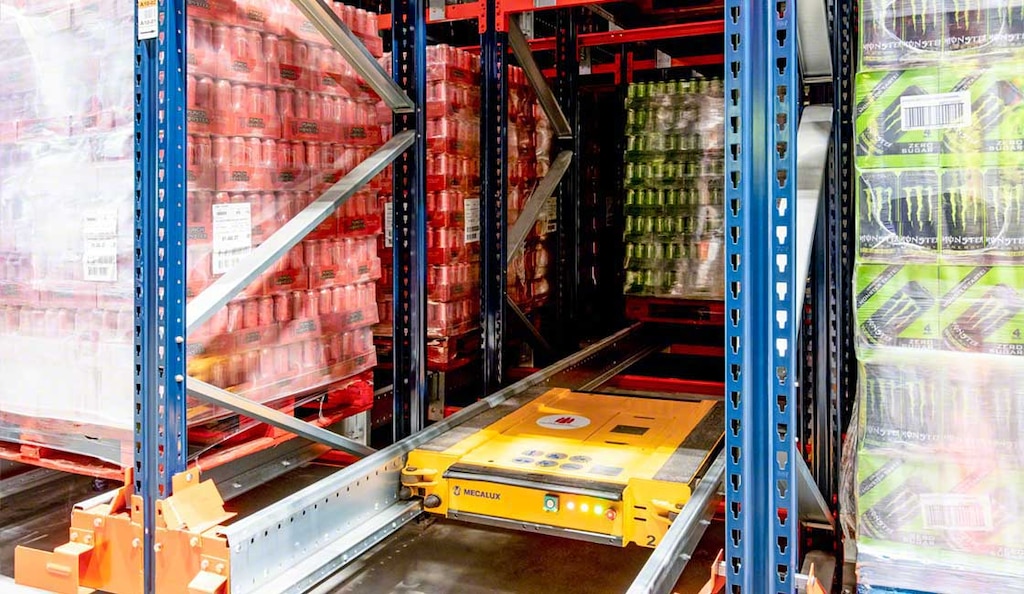
To maintain a high DIFOTAI rate, Coca-Cola HBC installed the semi-automated Pallet Shuttle system in its Knockmore Hill plant, streamlining workflow and housing 9,000 pallets in an optimized space.
DIFOT: A crucial metric
Tracking DIFOT has become a strategic priority for companies focused on improving the customer experience and reducing operational costs. Warehouse efficiency, optimized internal processes, and well-coordinated operations all contribute to raising DIFOT, ultimately ensuring customers receive the right products on time, every time.