


Micro warehousing: The logistics response to ecommerce immediacy
Micro warehouses have emerged as a smart logistical solution for companies that need to move orders through dense cities at top speed. The ecommerce boom and rising expectations around shorter lead times have prompted organizations to set up these compact spaces. Their proximity to end-consumers facilitates last-mile delivery operations and helps businesses stay competitive in a market where fast service drives success.
What is a micro warehouse?
A micro warehouse is a small urban or near-urban logistics facility designed to hold a limited amount of inventory and fulfill orders quickly. These spaces are also known as micro hubs or micro-distribution centers. Micro warehouses sit as close as possible to buyers, so their layout is compact and tailored to tight city locations. Due to their modest capacity, replenishment cycles run frequently to keep stock available.
Micro warehouses often occupy converted storefronts, ground-floor units, or parking structures. Unlike large regional warehouses, these sites don’t aim to accumulate volume; their goal is to boost product availability and speed up order fulfillment in high-demand areas.
Eva Ponce, Research Scientist and Director of the MIT CTL Omnichannel Supply Chain Lab, notes that to address omnichannel distribution challenges, some organizations “are turning to micro-fulfillment centers — smaller, automated facilities often located in the backrooms of stores. These warehouses bring inventory closer to customers, enabling same-day or even two-hour deliveries.”
Advantages of micro warehousing
Micro warehouses bring real benefits for retailers, food companies, and any sector with strong online activity, especially q-commerce.
- Close to end consumers. Their urban locations cut last-mile times, shortening routes and streamlining distribution.
- Fast delivery, including same-day. Proximity to buyers accelerates order fulfillment and supports ultra-speedy service.
- High-rotation stock readily available. These hubs concentrate top-selling items to ensure they’re always on hand within city limits.
- Lower logistics expenses. Shorter travel distances reduce the cost per order and keep operations lean.
- Better buying experience. Faster delivery increases customer satisfaction and loyalty in highly competitive online markets.
- Compatible with new distribution models. Part of the urban warehouse network, micro warehouses integrate easily with omnichannel strategies such as curbside pickup, making the shopping experience agile and convenient.
Challenges of micro warehousing
Micro warehouses speed up distribution, but they’re not without constraints:
- Tight space. Limited room requires disciplined inventory planning and constant rotation. The aim is to store the bare necessities and keep goods moving.
- Operational complexity. Running several small hubs increases coordination demands and adds management layers. Processes must be well-defined and meticulously organized.
- Reliable software needed. To maintain inventory visibility and prevent errors, data from all company facilities must feed into a unified platform; without it, gaps will appear in the logistics pipeline.
- High rent. Soaring urban property costs compel businesses to leverage every square foot, with maximum density and productivity in mind.
- Stockout risk. Small product volumes can run out quickly if replenishment falls behind or demand spikes.
When a micro warehouse strategy makes sense
Micro warehouses work best for companies that count on speed, proximity, and agile inventory control. Their strategic placement close to cities cuts delivery times, keeps top-selling items within reach, and adapts well to volatile demand.
- Ecommerce delivery in record time. Online stores that promise delivery within hours need nodes near customers to meet strict service levels without inflating logistics costs.
- Supermarkets and fresh food. While perishables can travel from distant hubs with proper handling, shoppers expect speedy arrivals. Micro-distribution centers support ultra-quick drop-offs — sometimes within an hour.
- High-rotation retail. Fashion, cosmetics, and electronics handle fast-selling merchandise. A micro warehouse places key items adjacent to customers.
- Businesses looking to reduce their transportation footprint. Shorter last-mile routes cut mileage and emissions, a priority for cities with traffic restrictions or low-emission zones.
In short, if customers demand immediacy and order volumes justify a nearby infrastructure, a micro-distribution hub is a proven way to improve both speed and efficiency.
Micro warehouse layout
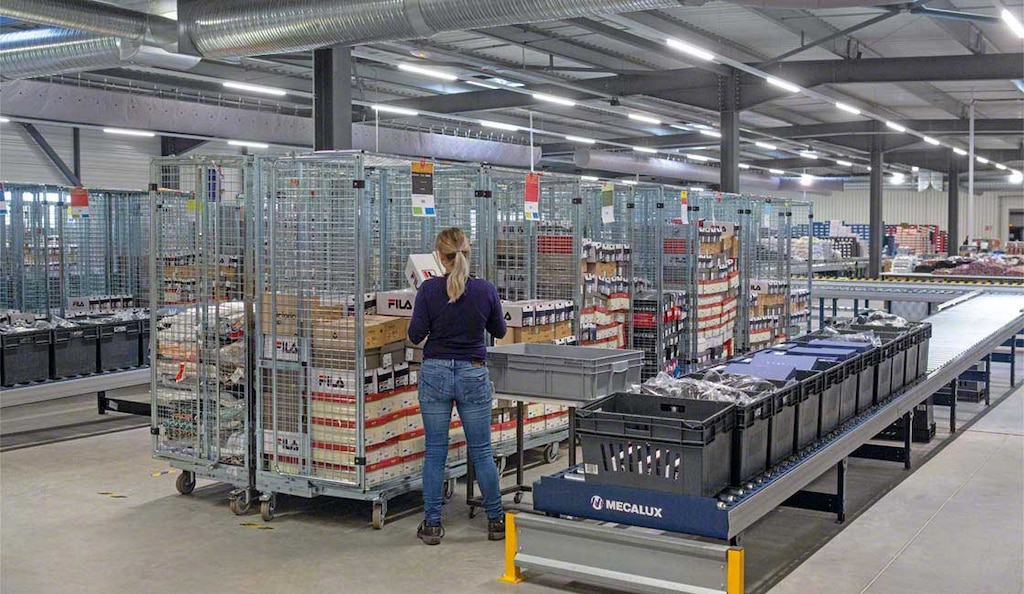
Micro warehouses are designed to make the most of every square foot and enable fast picking. Internal zones are adapted to the limited space and the need for short walking paths.
- Compact receiving area. Inbound flow stays steady but light, minimizing congestion.
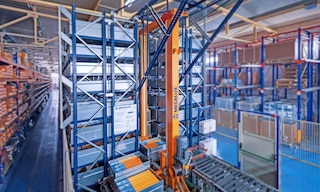
- High-density storage. Depending on the load type, companies may use different systems to maximize the number of items they can house. Light-duty shelving and carton flow racking speed up picks and replenishment. Pallet racking is practical for few units per SKU or mixed box/pallet formats. Meanwhile, automated storage solutions such as mini-load systems increase speed and density, making them ideal for micro warehouses with fast-moving goods.
- Order picking area. The entire layout is designed to keep travel time down. These hubs are typically outfitted with ergonomic, well-equipped pick stations to facilitate fast handling.
- Shipping zone. This space is positioned near the loading docks to connect easily with carriers and avoid unnecessary movement within the micro warehouse.
Some microhubs combine shelving with automated solutions to raise throughput in tight quarters.
Managing inventory across a micro warehousing network
The key to any effective micro warehousing model lies in centralized, real-time inventory management. Every micro-distribution center must know exactly which items are available, their location, and their quantities. With complete visibility, companies can assign each order to the best fulfillment point.
Inventory restocking is also critical. Because space is scarce, replenishment occurs frequently and follows actual demand. Digital information exchanges between the main warehouse and all microhubs prevent both overstocking and shortages.
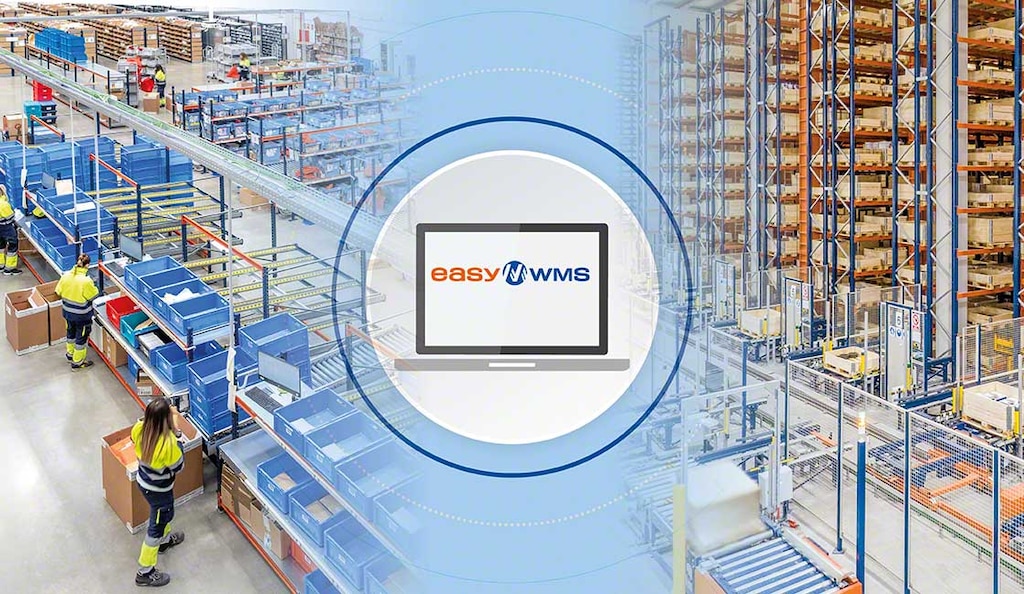
A warehouse management system (WMS) enables this level of control. Easy WMS, for instance, consolidates data, coordinates workflows, and ensures full traceability across the logistics network. With these capabilities, each node can work accurately and efficiently.
Intelligent order prioritization also plays a crucial role. When several micro warehouses operate in one city, selecting the closest site reduces delivery time and cost. This requires seamless communication and up-to-date data.
Distributed order management (DOM) systems support this strategy by choosing the optimal fulfillment point based on available inventory, customer proximity, operational capacity, and company-specific business rules. These capabilities are key to optimizing costs and lead times in omnichannel operations. Interlake Mecalux’s Easy DOM applies these criteria to route each order to the most suitable center within the network.
Micro warehousing: Speed and efficiency in the last mile
Micro warehouses strengthen urban logistics, allowing companies to deliver quickly in crowded metropolitan areas. Their closeness to end customers and their ability to streamline last-mile operations make them a strategic option for many businesses, especially ecommerce retailers. To run micro warehouses effectively, organizations need reliable systems that provide inventory visibility, network coordination, and scalable control.