


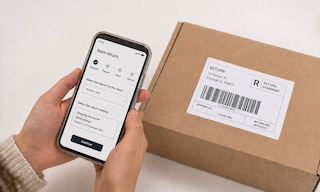
What is reverse logistics: Definition and examples
Reverse logistics has grown significantly in recent years, driven by changing consumer habits and the push toward more sustainable business models. More companies are recognizing the importance of managing product returns, recycling, and refurbishment efficiently. To support these efforts, understanding how reverse logistics works is essential for streamlining operations and enhancing the customer experience.
In this post, we explain what reverse logistics is, the different types that exist, and its key stages. We’ll also provide some real-world examples of how companies put it into practice.
What is reverse logistics?
Reverse logistics refers to the movement of products or materials from the end customer back to the manufacturer, distributor, or a recycling or refurbishment facility. Instead of moving goods downstream through the supply chain, this model handles the flow of merchandise in the opposite direction.
The objective of reverse logistics is to recoup as much value as possible from returned products or, if necessary, dispose of them sustainably while minimizing end-of-life-cycle transportation, storage, and processing costs. Its main stages are returns management, classification, refurbishment, reuse, and recycling or disposal.
The concept of reverse logistics emerged toward the end of the last century as businesses began focusing more on resource conservation and product recovery. Although similar practices existed earlier, this model gained momentum during the 1990s due to globalization, the ecommerce boom, and growing environmental awareness.
Types of reverse logistics
The main categories of reverse logistics are divided according to the origin of returned products and how they’re processed afterward. Broadly speaking, companies distinguish between returns logistics and sustainable (or green) reverse logistics. That said, there are many variations depending on operational requirements:
Returns logistics
Returns logistics encompasses the processes and activities used to manage products sent back by customers. These items are routed to their point of origin, a sorting center, or a refurbishment facility. After inspection and processing, many of these goods can be added back into inventory and sold again.
Green reverse logistics
Also known as sustainable reverse logistics, this category relates to products that have reached the end of their useful life or require specialized processing. It includes recycling programs as well as environmentally responsible waste disposal at dedicated facilities. For some products, repair and reuse activities may also be part of the process.
Other types of reverse logistics
Depending on the operation, reverse logistics can be broken down into more specific categories:
Refurbishment
Refurbishment involves restoring products through inspection, cleaning, and repair so they can return to the market in acceptable condition. Items pass through refurbishment centers, where their condition is assessed. They’re then prepared for resale or reuse, extending their lifespan and reducing waste.
Recycling and waste management
This type focuses on products that can no longer be used. The goal is to recover valuable materials or handle disposal with the lowest possible environmental impact. Items are transported to processing facilities, where they’re sorted, treated, or destroyed according to their characteristics.
Excess inventory liquidation
These processes deal with goods that remain unsold due to seasonality, shifting demand, or other factors. After being returned, this inventory is directed to secondary markets or sold at discounted prices. The aim is to recoup part of its value while freeing up storage space.
Packaging management
Reusable packaging (e.g., boxes, pallets, containers, returnable glass bottles) is sent back to warehouses or specialized facilities for inspection and preparation for future use where possible. This practice minimizes waste, lowers expenses, and improves supply chain sustainability.
Rental returns
Some products are brought back to their point of origin after being temporarily used or rented. These items must be inspected and, in some cases, refurbished before they can be made available again.
Failed deliveries
These are orders that could not be delivered because of incorrect addresses, recipient unavailability, or other issues. The products are sent back to the warehouse, where they’re evaluated and either reshipped, held for further review, or returned to inventory.
The 6 Rs of reverse logistics
Circular economy strategies are often summarized using frameworks such as the 3Rs, 4Rs, or 5Rs, depending on the level of detail. In reverse logistics, however, the model is frequently expanded to 6Rs. This provides a more comprehensive view of the product life cycle, from lowering consumption to recovering energy from waste.
Redesign
This strategy involves developing goods and packaging that generate less waste from the outset. Doing so reduces return volumes, reverse flows, and transportation and storage expenses.
Reuse
Reuse applies to products that can be returned to service without extensive modifications. In logistics, this means sorting and reintegrating items into inventory. Returnable packaging, such as glass bottles, also falls into this category.
Recycling
Recycling breaks down products to leverage raw materials that can be used to manufacture new goods. Items are collected, sorted, and transported to specialized facilities.
Repair
This practice focuses on correcting defects or damage in returned merchandise so it can be used again. Repair typically takes place after an inspection and doesn’t require replacing the entire product or harvesting components from other units. It’s common in ecommerce returns and warranty claims.
Remanufacturing
Remanufacturing involves disassembling a product and rebuilding it with recovered components so it meets standards comparable to a new item. A related practice is cannibalization in reverse logistics. This consists of extracting reusable parts from merchandise that’s no longer in service and using them to manufacture or repair other items. Cannibalization calls for a more complex logistics chain with parts management, inventory control, and coordination among multiple facilities.
Recovery
When products can’t be reused or recycled, they may undergo controlled incineration to generate energy. This process recovers value from waste while minimizing the amount sent to landfills.
Reverse logistics process
Reverse logistics includes all the steps that go into managing product flows from customers back to their final destination. The process begins when an item is returned and ends when it’s either reintroduced into the supply chain or appropriately processed as waste. Compared with the traditional downstream flow, reverse logistics is more complex because return volumes are harder to predict. Plus, goods can arrive in a wide range of conditions. This increases operating expenses and requires companies to adapt their processes and resources accordingly.
Collection and reverse transportation
The process starts with picking up a product or material from a customer’s location, a retail outlet, or a processing center. Establishing a clear returns policy and defining which items are eligible for return can simplify this stage. Transportation routes should also be planned carefully to control costs.
Inspection and sorting
Once products arrive at the warehouse, sorting center, or refurbishment facility, they’re inspected and evaluated. Based on their condition, value, and associated costs, the most appropriate course of action is determined.
Processing and recovery
The necessary processes are carried out, whether reuse, refurbishment, repair, recycling, or disposal. This stage may take place within the warehouse or at specialized facilities. It calls for effective coordination of resources, timelines, and logistics activities.
Reintegration or disposal (waste management)
Finally, products may be returned to inventory for resale or redirected to secondary markets. If they can’t be recovered, they undergo appropriate waste-treatment procedures.
Reverse logistics examples in business
Each industry has its own way of dealing with product returns. The reverse logistics examples below illustrate how businesses tailor the process to their daily operations:
- In ecommerce, many businesses offer flexible return policies. A case in point is footwear retailer Zacaris, which centralized its logistics operations in a facility in Lleida (Spain) equipped with our company’s Easy WMS warehouse management system. Because users can return items within 12 months, inspection, sorting, and inventory reintegration processes must be fast to maintain efficiency.
- In other business models, reverse logistics is built directly into the operating cycle. This is the case of Rent the Runway, the clothing rental company that equipped its warehouse with Interlake Mecalux solutions. In this environment, products are sent back continuously after use, then received, inspected, and refurbished before they can be rented again.
Facility layout for reverse logistics
The warehouse layout design is directly affected by reverse logistics because it introduces additional inbound flows that are less predictable, with products arriving in varying conditions.
Unlike traditional logistics operations, where the flow of goods tends to be more linear, returns require dedicated areas for receiving, inspecting, and sorting merchandise. Facilities also need temporary storage zones where products can remain until their final destination is determined. Warehouses may incorporate refurbishment stations or waste-management areas, making flexibility vital. The layout must support multiple internal workflows while maintaining operational efficiency.
In this context, automation and robotics can streamline internal movement throughout a facility, helping organizations manage reverse flows and increase speed in tasks such as sorting, internal transport, and product putaway.
Reverse logistics software
Reverse logistics relies on technology to oversee returns efficiently from collection through reintegration into inventory or final disposal. Software plays a central role in ensuring traceability, optimizing workflows, and lowering the costs associated with returned merchandise. Key solutions include:
- Warehouse management system (WMS). This software coordinates returns receiving, inspection, sorting, and product storage within a logistics facility. It captures information on inventory, locations, and goods movements, supporting traceability and returns processing. When integrated with other business systems, it synchronizes warehouse data and enhances real-time visibility across operations.
- Transportation management system (TMS). TMS software plans all logistics processes related to moving goods, covering reverse distribution from customers or pickup points back to the warehouse. They organize routes, shipments, transit times, and costs, making return collection easier to coordinate.
- Enterprise resource planning (ERP). ERP systems centralize corporate information, including administrative and financial data, purchasing records, supplier information, and order processing. Their integration with logistics software creates consistency between day-to-day execution and broader business planning.
Combining these technologies increases efficiency and helps organizations manage the complexity inherent in reverse logistics. According to McKinsey, reverse logistics is becoming a competitive advantage thanks to advances in AI and digital tools. The consulting firm also emphasizes that retailers should apply the same level of discipline, investment, and coordination to reverse logistics as they do to forward logistics, treating it as a critical stage in the product life cycle.
Reverse logistics: A step toward greener supply chains
Reverse logistics has become a key component in making supply chains more efficient and sustainable. Beyond managing returns, it involves redesigning processes, adapting warehouse layouts, and integrating technology capable of handling complex product flows. While reverse logistics presents operational challenges and added costs, a well-executed strategy creates opportunities for greater resource utilization and process optimization. Companies that implement these practices successfully can strengthen their logistics performance while advancing toward more responsible, circular business models.
Reverse logistics FAQs
What is reverse logistics?
Reverse logistics encompasses the processes used to manage the return of products from customers to manufacturers or other locations where they can be reused, refurbished, repaired, or recycled. Its purpose is to recoup as much value as possible from returned merchandise or minimize disposal costs and environmental impact.
What are the main characteristics of reverse logistics?
Reverse logistics is characterized by uncertainty in return volumes and timing, the need for inspection and quality control, and coordination across multiple destinations. It’s inherently more complex than forward logistics and aims to balance cost control with sustainability goals.
Why do people refer to the 3Rs, 5Rs, 6Rs, or 7Rs of reverse logistics?
There is no single standardized framework. These models represent different levels of detail in product return strategies. They range from basic concepts such as reduce, reuse, and recycle to broader approaches that incorporate repair, remanufacturing, and energy recovery. The 7Rs of reverse logistics are redesign, reduce, reuse, recycle, repair, remanufacture, and recover.
What are the advantages and disadvantages of reverse logistics?
Reverse logistics helps recoup product value and supports sustainability initiatives. On the other hand, it introduces operational complexity, additional expenses, and less predictable product flows, making supply chain management more challenging.
How can companies reduce reverse logistics costs?
Lowering reverse logistics costs depends largely on effective warehouse organization. Designing a dedicated layout for returns — with areas for receiving, sorting, and temporary storage — and facilitating those processes with a WMS can streamline workflows, eliminate unnecessary handling, and improve traceability for returned products.