


AI in logistics: How to successfully integrate it into warehouse operations
AI in logistics is reshaping how companies manage supply chain operations. Businesses are incorporating these technologies to increase their analytical capabilities, streamline workflows, and enable smarter decision-making. Their implementation is transforming areas such as transportation, demand planning, and warehouse management, where intelligent systems help facilities run more efficiently and respond faster to market shifts.
In this post, we explore the role of artificial intelligence in logistics, how it benefits the supply chain, its most common applications, and how companies can begin integrating it.
What role does AI play in logistics?
Artificial intelligence in logistics is part of the technological wave driving the industry’s evolution in recent years. More organizations are incorporating these tools into their day-to-day activities to accomplish goals such as optimizing demand forecasting, planning shipments, enhancing load management, and distributing goods more effectively across transportation assets. At the same time, AI processes massive amounts of real-time information, enabling faster and more accurate decisions.
Companies with warehouse operations have also recognized the value of artificial intelligence in logistics and supply chain environments. AI-driven systems can learn from collected data (machine learning) and independently make choices that improve performance. This translates into more efficient processes, fewer inventory management mistakes, and better use of logistics resources, helping businesses adapt to changing market demands.
Benefits of AI in the supply chain
Integrating artificial intelligence in logistics and supply chain management provides a wide range of advantages for organizations:
- Cost reductions. Artificial intelligence in logistics optimizes processes, fine-tunes inventory management, and makes better use of available resources. For instance, it adjusts stock levels according to projected demand, preventing both overstock — which drives up storage costs — and stockouts.
- Fewer human errors. AI systems can process enormous volumes of information with high accuracy in a short period, minimizing the risk of mistakes. This can be seen in activities such as picking, where intelligent tools direct warehouse associates to the right products, and inventory management, where discrepancies are detected before incorrect records create bigger problems.
- Greater operational efficiency. The use of AI in logistics boosts productivity by automating repetitive activities and determining, for example, the ideal moment to replenish inventory.
- Faster logistics processes. Through real-time data analysis, AI accelerates logistics operations such as order fulfillment. AI-powered systems can streamline warehouse picking routes by guiding associates along the shortest or most effective path to retrieve items. This cuts travel time and speeds up the completion of every order.
- Improved customer experience. Thanks to artificial intelligence and logistics technologies, delivery lead times become shorter, and product availability increases. Ultimately, they create a more positive experience for customers.
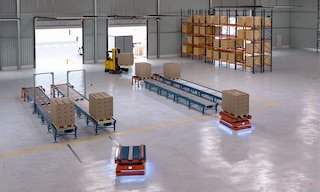
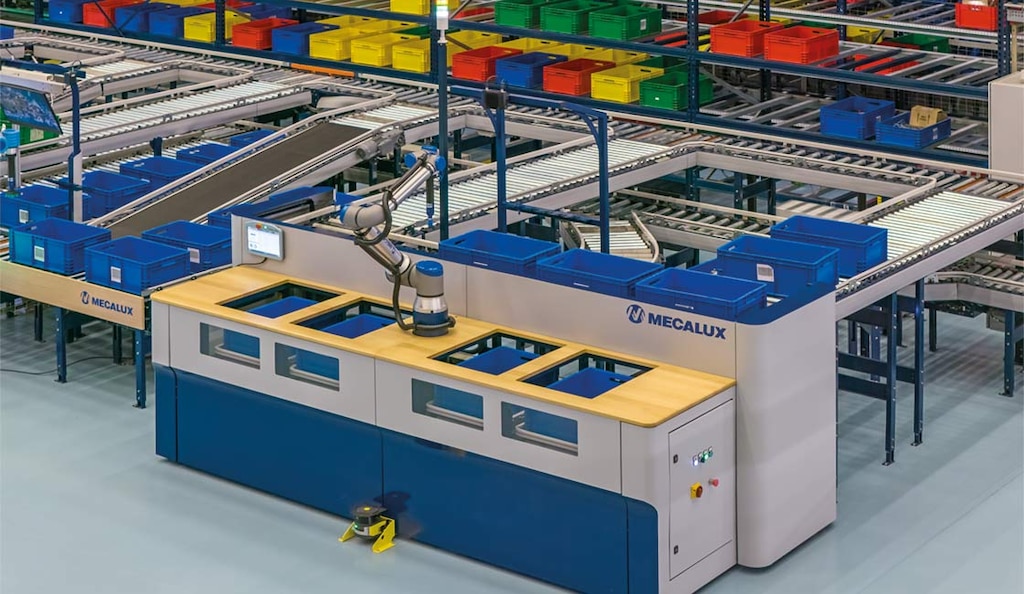
- Warehouse automation and robotics. Robots and automated systems powered by AI assist with activities such as internal goods transport, order picking, and item classification, raising productivity levels throughout the facility.
Applications and examples of AI in logistics
Applications of artificial intelligence in logistics allow companies to refine processes, improve decision-making, and strengthen operational efficiency across multiple areas. Below are some examples of AI in logistics:
Artificial intelligence in warehousing
Artificial intelligence has a significant impact on warehouse operations because it enhances numerous processes tied to picking, packing, and slotting. Robotic systems and AI-driven software can tighten inventory control and decrease order preparation times. In slotting, for instance, algorithms evaluate historical demand data to place high-turnover products in more accessible areas, limiting unnecessary operator travel. Likewise, during order picking, AI can optimize route planning and guide workers through intelligent systems, accelerating the process while reducing mistakes.
AI also automates certain warehouse tasks through smart solutions that assist associates with transporting and handling goods. According to the joint MIT–Mecalux report on the state of AI in warehousing, this technology is having a growing effect across different operational areas, improving performance.
Impact of AI in transportation and logistics
AI in logistics and transportation analyzes traffic information, weather conditions, and delivery restrictions in real time to determine the most efficient itineraries. Consequently, companies can fine-tune route planning and shorten transit times. This technology enables carriers to avoid congestion, lower fuel consumption, and cut emissions.
Procurement and demand planning with AI
Artificial intelligence can identify consumer behavior patterns, forecast changes in demand, and even anticipate future sales. To accomplish this, it leverages historical business data (along with other information sources) and projects trends into upcoming months. This capability is especially useful for adjusting inventory levels and preventing supply shortages.
AI for predictive maintenance
Predictive maintenance relies on sensors that collect information about equipment conditions to anticipate failures before they occur. Artificial intelligence examines the data in greater depth, uncovering patterns and anomalies that support more precise identification of issues. This allows companies to schedule maintenance work ahead of time and avoid unexpected disruptions in operations. Among other advantages, predictive maintenance boosts efficiency and extends equipment lifespan.
How to integrate AI into the supply chain today
To successfully implement AI in logistics and supply chain operations, businesses should follow several key steps:
- Analyze current operations. Understanding supply chain data before beginning makes it easier to identify the areas where intervention will deliver the greatest impact.
- Create a roadmap. Companies should define clear objectives that outline what they expect to achieve by adopting artificial intelligence in their supply chains.
- Find the right solution. To accomplish this, it’s advisable to work with warehouse and supply chain specialists familiar with deploying AI-based solutions.
- Implement the technology. The next step involves introducing the technological infrastructure required to integrate AI and manage the information generated by these systems.
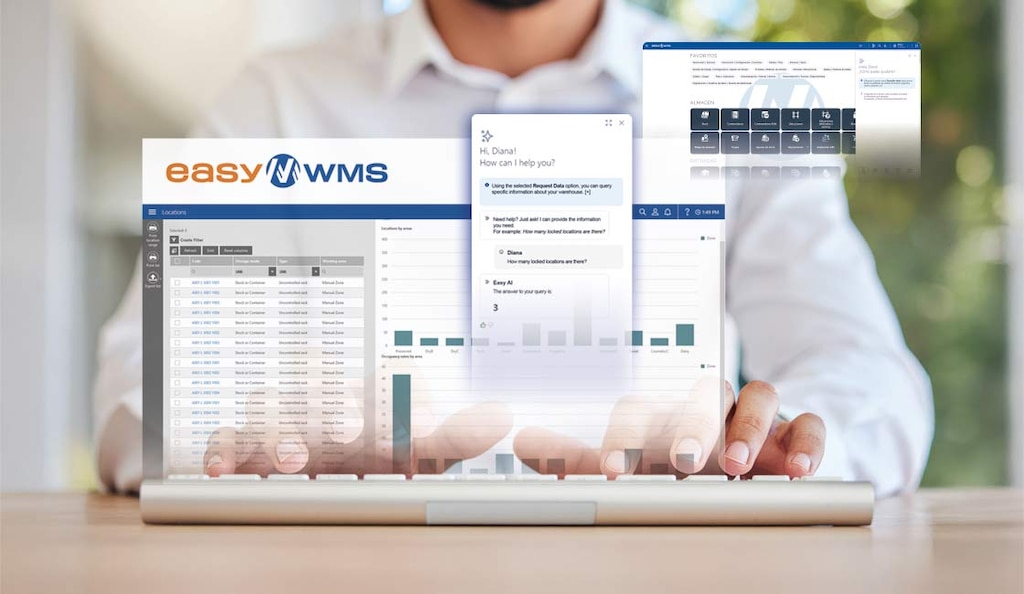
- Monitor results and adapt. Tracking supply chain activity allows businesses to make adjustments and anticipate new situations. This becomes simpler with a warehouse management system such as Easy WMS, which centralizes and organizes operational data. In addition, AI-powered tools like Easy AI — which incorporates generative AI capabilities — analyze operational information to support decision-making. The Mecalux Group’s GENESIS simulator can also model different logistics scenarios, helping organizations respond more flexibly to changing conditions.
Dr. Matthias Winkenbach, Director of Research at the MIT Center for Transportation and Logistics (CTL) and the Intelligent Logistics Systems Lab — created through the collaboration between MIT and Mecalux — recommends starting with operations where AI has already delivered proven results. He advises prioritizing areas such as inventory control and slotting, as well as automating and optimizing order picking processes and picker routing within facilities.
AI in logistics and industry: A strategic ally
Artificial intelligence has become a key tool for optimizing supply chain management across multiple sectors. Retail, ecommerce, manufacturing, and distribution companies are already using this technology to respond faster to market changes and lower operating expenses. In this context, all signs indicate that AI in logistics and industrial environments will continue gaining prominence, driving more advanced and adaptable organizational models in the years ahead.