


Stacking pallets in a warehouse: A guide for safe practices
Stacking pallets allows warehouses to organize unit loads on top of one another, making better use of available space. Its effectiveness depends on factors such as the type of goods, the stability of the column, and the equipment used to handle the pallets. As a result, not all loads can be stacked in the same way.
In this post, we’ll explain what pallet stacking is and how to perform it safely. We’ll also look at how the process can be automated and the most common mistakes to avoid.
What is pallet stacking?
Pallet stacking involves placing pallets on top of each other safely to optimize storage space and facilitate material handling in warehouses and distribution centers. This method can be used for both empty and loaded pallets. However, when stacking full pallets, it’s essential to account for their strength, weight, and overall stability.
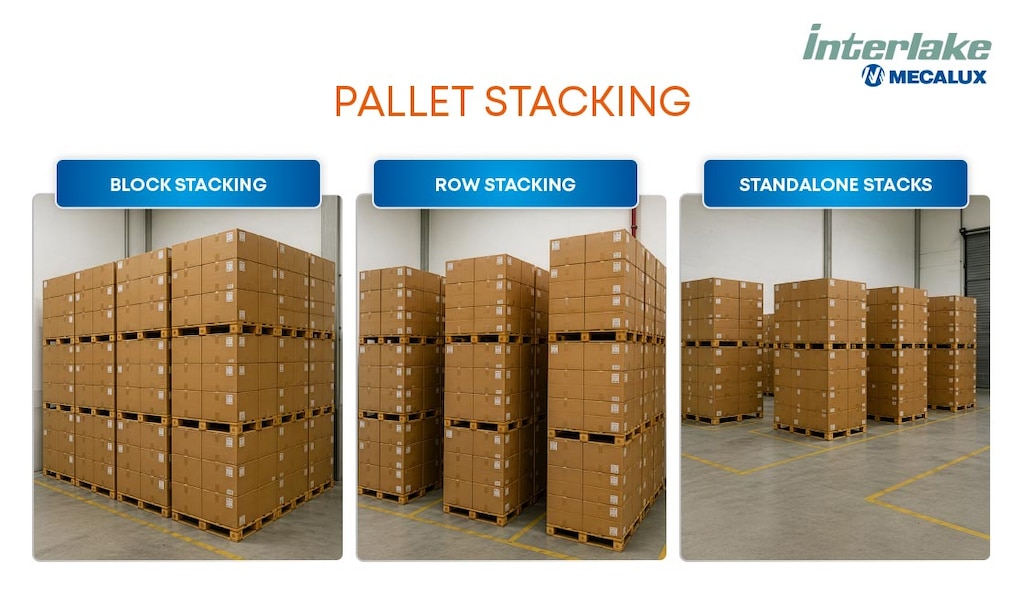
There are several types of pallet stacking, depending on how these columns are laid out in the warehouse. The most common configurations include:
- Block stacking: Pallets are arranged in compact columns.
- Row stacking: Pallet columns are arranged in rows with space between them.
- Standalone stacks: Pallet columns are isolated and accessible from all sides.
The most suitable arrangement depends on your available space, how often inventory has to be accessed, and your warehouse’s safety requirements. A stable stack makes better use of floor space and helps prevent accidents. However, if you need direct access to every SKU or more capacity, it may be worth considering other storage systems.
How to stack pallets correctly
Before stacking pallets on top of each other, check that they are clean and in good condition. Once you’ve confirmed there are no cracks, deformations, or other defects, group pallets of the same type and size to create more uniform stacks. The loads should also be prepared so that their weight is distributed evenly across the pallet, with heavier products placed at the bottom to improve overall stability.
Whether you’re stacking loaded or empty pallets, it’s important to respect a maximum height that keeps the column stable and allows for safe handling. For empty pallets, the maximum number that can be stacked will depend on the manufacturer’s instructions. They should also be stored in designated areas away from traffic routes.
Pallet stacking safety
A stable, secure stack can help prevent hazards caused by loads falling or shifting, along with the potential consequences for warehouse personnel and property. Pay particular attention to the following:
- Stack stability. For maximum stability, avoid mixing different types of packaging. Loads should have a uniform base, be properly aligned, maintain a balanced center of gravity, and remain upright.
- Handling. Whether pallets are moved manually or with stackers or forklifts, trained personnel must carry out these activities in accordance with established safety procedures.
- Preventing falls and accidents. Storage areas must be clean, orderly, and free of obstacles. Inspect stacks regularly and make sure the floor is level to prevent them from tipping over.
- Checking the pallet material. Not all pallet types are suitable for the same stacking conditions. Strength, load capacity, and maximum height may vary depending on whether the pallets are made of wood, plastic, or metal. While wooden pallets are the most common, plastic pallets stand out for their uniformity. Metal pallets are typically used for heavier loads or more demanding environments. In all cases, follow the manufacturer’s specifications.
Pallet stackers and automation
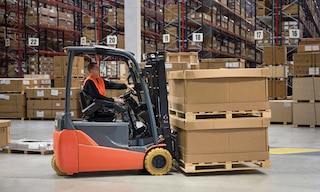
Pallet stackers are machines used to move palletized loads and lift them to various heights. While pallet jacks are designed mainly to transport loads close to floor level, pallet stackers can store them at multiple levels. Depending on your workload, you may choose an electric pallet stacker, recommended for more intensive use and frequent travel, or a manual model for occasional tasks and facilities with fewer pallet movements.
In manually operated warehouses, operators use pallet stackers to retrieve, transport, and store pallets in their assigned locations. In more automated facilities, automated pallet stackers can stack and unstack pallets with less manual intervention. These machines streamline the flow of pallets to production lines or shipping areas. In addition to boosting productivity, they help enhance safety and streamline in-house pallet movements.
Stacking loaded pallets
Stacking full pallets involves placing unit loads on top of one another in a stable manner. However, not all products are apt for this storage method. Whether a load can be stacked depends on factors such as the strength of the goods and packaging, as well as the pallet’s ability to support the weight of the levels above it. When these conditions aren’t met, it may be preferable to use storage solutions suited to the characteristics of the goods, such as pallet racking, or, for long loads, cantilever racking.
Several factors affect stacking safety, including the center of gravity, weight distribution, the type of goods, packaging strength, and the pallet’s load capacity. The maximum stacking height should also follow the manufacturer’s recommendations. Stability can be improved with securing methods such as stretch wrapping, strapping, or protective covers.
Common mistakes when stacking loaded pallets
Errors when handling pallets can cause workflow issues, damage goods, and increase the risk of accidents. Stacking should also be avoided when working with fragile or deformable materials. These are the most common mistakes:
- Mixing different pallet types or unit loads. Using pallets with different dimensions in the same stack can make it harder to distribute the load evenly and reduce overall stability.
- Stacking on uneven surfaces. Pallets should be stacked on a firm, level floor. Sloped or uneven surfaces can cause loads to slide or tip over.
- Exceeding the recommended weight or height. Overloading pallets weakens their structure and makes them more likely to deform, break, or become unstable. Always consult the manufacturer’s or supplier’s specifications to determine the applicable limits.
- Using damaged pallets. Before reusing a pallet, check that it has no broken boards, protruding nails, or other damage that could compromise its strength.
Pallet stacking and other ways to maximize space
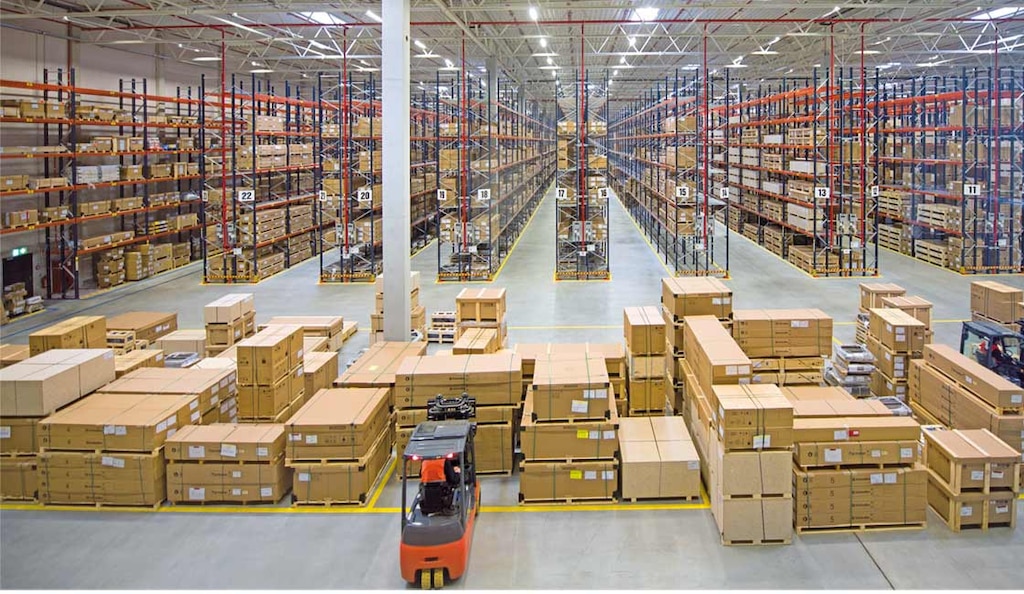
Stacking pallets can make better use of floor space in certain warehouse setups, but it isn’t always the best option. Analyzing your facility’s characteristics and requirements will help you choose the solution that most effectively balances capacity, safety, and efficiency. Keep the following recommendations in mind:
- Assess whether pallet stacking is the most appropriate solution based on your goods and warehouse processes.
- Prioritize load stability and safety.
- Consider pallet accessibility, especially for high SKU turnover.
- Explore storage systems when your goal is to increase capacity, improve access to loads, or automate operations. Examples include selective pallet racking as well as high-density solutions like drive-in racking, mobile racking, and the Pallet Shuttle.
Stacking pallets: 5 FAQs
How many pallets can be stacked on top of each other?
The number of pallets that can be stacked depends on the pallet type and material, the weight and stability of the loads, and the manufacturer’s recommendations. Warehouse conditions and applicable regulations must also be taken into account. For empty pallets, some manufacturers and logistics providers recommend a maximum of 15 to 18 pallets per stack, although this figure may vary.
What is the maximum pallet stack height?
The maximum height depends on the load’s characteristics, the pallet type, and the storage system. To prevent instability and damage, follow the supplier’s specifications and established safety procedures.
Can pallets of different sizes be stacked together?
Although this is possible, it’s not always advisable. Including pallets of different sizes in the same stack can make it harder to distribute the load evenly and decrease overall stability. Whenever possible, stack pallets of the same type and size together.
Is it safe to stack loaded pallets?
Yes, provided that the goods, pallet, and packaging can support the weight of the levels above them. Distribute the load correctly, place heavier items at the bottom, respect stacking limits, and use securing methods such as stretch wrapping or strapping when necessary.
When should loaded pallets not be stacked?
Avoid stacking pallets when handling fragile or deformable materials, if loads are unstable, or when the manufacturer has expressly stated that a product cannot be stacked. In these cases, consider other storage systems that can safeguard your goods.