



What is a PUDO point, and how is it managed?
PUDO points are becoming increasingly popular in omnichannel fulfillment. In today’s on-demand marketplace, adapting to consumers’ preferred methods for picking up and returning orders can make a significant difference. Consolidating shipments at strategic locations helps reduce failed delivery attempts, streamline transportation routes, and boost last-mile efficiency.
In this post, we explain what a PUDO point is, explore its advantages and challenges, and examine how it’s managed from a logistics perspective.
What is a PUDO point?
A PUDO (pick-up/drop-off) point is a designated location where customers can collect and return orders instead of having them shipped to their homes. Rather than waiting for a delivery, shoppers can pick up or drop off their packages whenever it best fits their schedules.
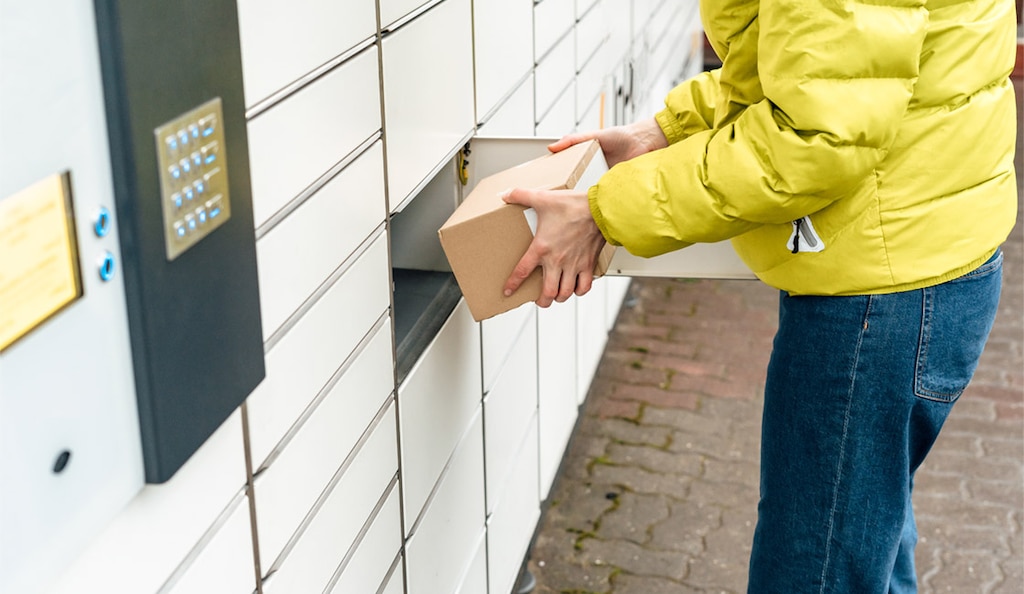
These spaces are typically retail businesses (e.g., convenience stores, electronics shops, pharmacies, and grocery stores) or branches operated by logistics providers that offer staffed pickup and return services during regular business hours. They can also take the form of parcel or smart lockers located at supermarkets, shopping centers, and other high-traffic destinations.
From a business perspective, PUDO points simplify last-mile delivery operations by minimizing unsuccessful delivery attempts. For consumers, they offer greater flexibility by providing convenient pickup and return locations while eliminating the need to wait during specific time windows.
Because they support both pickups and returns, PUDO points are also well suited for reverse logistics. They serve as two-way hubs within the logistics network, meeting customer expectations while enabling efficient operations.
A McKinsey analysis found that this model can lower CO₂ emissions in urban areas. From a sustainability standpoint, encouraging the use of smart lockers can reduce the environmental impact of last-mile deliveries if fewer than 60–65% of customers drive internal combustion engine vehicles to pick up their orders (a common scenario in densely populated cities).
Advantages of PUDO points
PUDO points benefit every stakeholder in the logistics network, from retailers and carriers to end customers:
- Retailers. PUDO points help streamline order fulfillment. Consolidating shipments at designated pickup locations simplifies shipping planning and raises distribution efficiency. By reducing failed delivery attempts, businesses also cut the number of returns to the warehouse and reshipments — two processes that increase operational complexity and logistics costs.
- Carriers. Delivering multiple shipments to a single site makes routing more efficient and eliminates unnecessary trips. A study by Italy’s University of Naples Federico II found that PUDO points improve vehicle utilization while lowering failed deliveries and transportation costs, resulting in higher productivity and greater sustainability.
- Businesses serving as PUDO points. Stores that join these networks can generate additional revenue, although compensation models vary by carrier and service format. For example, Parcel Pending gives US retailers an additional revenue stream by leasing locker space to carriers. Similarly, Mondial Relay in France pays participating businesses per package processed, GLS compensates its Belgian ParcelShops on a per-parcel basis, and InPost pays UK companies a recurring fee for hosting lockers. These retailers may also benefit from increased foot traffic, creating new opportunities for in-store sales when customers stop by to pick up, ship, or return packages.
- Consumers. PUDO points give shoppers greater flexibility when collecting and returning orders by letting them choose from nearby pickup locations with extended operating hours. According to logistics providers such as GLS, many sites offer broad availability. Parcel lockers, for instance, often feature 24/7 access, making it easier to retrieve packages at any time. This model is particularly convenient in urban areas, transit stations, shopping centers, and other high-traffic locations where proximity and speed are key factors.
Challenges of using PUDO points
While PUDO points have numerous benefits, companies should also consider the drawbacks to implementing them:
- Limited geographic coverage. PUDO networks are more common in urban areas, where population density supports more pickup locations. In rural or less populated regions, available sites may be limited.
- Implementation costs. Adopting this model may require investments in systems integration, partnerships with third-party networks, or the development of proprietary infrastructure. However, these costs are often offset by greater delivery efficiency.
- Package size and weight limitations. Some PUDO points, such as parcel lockers, are designed to accommodate packages only up to a certain size, making them unsuitable for large or bulky items.
- Unclaimed orders. If customers fail to retrieve their orders within the specified pickup window, the shipments must be returned to the warehouse or distributed again. This adds complexity to reverse logistics and drives up operational costs.
Types of PUDO points
PUDO points can be categorized based on how they fit into the logistics network and the role they play in order fulfillment:
By ownership
- Retailers. Some businesses use their own brick-and-mortar stores as PUDO points. This approach is common among retailers that allow customers to pick up and return online orders in-store.
- Carriers. Logistics providers may operate their own PUDO point networks through company-owned branches, local service centers, or partner businesses operating under their brand.
- Independent networks. Third-party companies also manage PUDO point networks that connect retailers with carriers. These providers give companies access to an established infrastructure without requiring them to build and maintain their own network.
By location type
- Retail stores. Convenience stores, supermarkets, pharmacies, and other local businesses can serve as staffed PUDO point counters. Here, employees handle package pickup and drop-off.
- Parcel/smart lockers. These automated systems allow customers to retrieve and return packages without staff assistance. They’re normally installed in high-traffic locations and often provide 24/7 access.
- Carrier branches or service points. Run directly by logistics providers, these facilities combine PUDO counters with package handling operations.
By level of automation
- Staffed locations. Personnel assist customers with collecting and returning packages.
- Unstaffed locations. These sites allow customers to retrieve and drop off packages independently without assistance. A prime example is parcel lockers.

Main features of a PUDO point
To facilitate efficient last-mile delivery, PUDO points should meet several requirements:
- Convenient location. They should be close to customers, such as in residential neighborhoods, retail stores, or other high-traffic areas.
- Extended operating hours. A PUDO point should offer wide availability. Parcel lockers, for instance, may be accessible 24/7.
- Storage capacity. These locations need dedicated space to store packages temporarily.
- Ease of use. Whether staffed or automated, PUDO points should make package collection and return quick and straightforward.
- Traceability. Every package receipt, pickup, return, and incident should be recorded to keep all connected systems up to date.
- Security. Packages should be safeguarded through measures such as on-site staff, identity verification, pickup codes, or automated locker compartments.
PUDO point management in logistics
Managing PUDO points involves much more than giving customers an alternative delivery option. From a logistics standpoint, it means coordinating distribution across multiple locations while maintaining a seamless flow of information between systems, carriers, and fulfillment operations.
An integrated technology ecosystem is essential. By connecting their warehouse management system (such as Interlake Mecalux’s Easy WMS) with their ERP, order orchestration, and transportation software, companies gain real-time visibility into each PUDO point. They can consult locations, operating hours, available services, and any operational restrictions.
System integration also enables customers to select their preferred PUDO point during checkout. At the same time, it supports logistics process planning, since the chosen location can influence carrier selection, shipping service, and delivery lead times.
Courier assignment can be handled in several ways. Some companies define routing rules in the ERP based on factors such as destination, shipping costs, or service type. Others manage these decisions directly within logistics software using criteria such as distance, PUDO point availability, or delivery address. Many organizations also rely on multi-carrier platforms that connect various transportation providers and automatically select the most suitable service for each shipment.
Once the customer selects a PUDO point, order processing begins in the warehouse. Associates fill orders following instructions from the WMS. The system then transmits the shipment data to the carrier so shipping labels, documentation, and tracking numbers can be generated. Solutions such as Interlake Mecalux’s Multi-Carrier Shipping Software automate communication with transportation providers. This Easy WMS module exchanges shipment information to ensure every package is correctly labeled with its corresponding tracking number. As a result, carriers have all the information they need when they arrive at the warehouse, helping speed up shipping operations while minimizing errors.
The process must also account for incident management scenarios such as unclaimed orders, returns, shipment status changes, or capacity constraints at specific PUDO point locations. Effective coordination depends on continuous communication among all parties involved.
This is where solutions such as Interlake Mecalux’s Easy DOM distributed order management system become essential. Built for omnichannel environments, the software coordinates orders across warehouses, retail stores, parcel lockers, kiosks, and other delivery points. It centralizes order recording and tracking, provides real-time status updates, and coordinates activities between logistics facilities, carriers, and PUDO points.
Easy DOM is especially useful for determining the ideal fulfillment location (e.g., a warehouse or a retail store) based on the order’s destination. Within this framework, PUDO points become another node in the distribution network, managed through a single platform that syncs operations, enhances visibility, and aligns fulfillment with customer preferences.
PUDO point management in action
PUDO points have become an integral part of the omnichannel strategy adopted by companies across a wide range of industries. For warehouse operations, this means organizing fulfillment processes to route orders efficiently to multiple destinations. The following examples show how a WMS helps coordinate shipments to stores, customers, and PUDO point locations.
- Rent a Book (Belgium). This textbook rental company processes a high volume of online orders, in particular during the back-to-school season. Customers can choose to have their orders dropped off at their preferred PUDO point, while Multi-Carrier Shipping Software customizes package preparation and automates communication with delivery service providers.
- Motocard (Spain). This motorcycle gear retailer combines several sales channels with flexible fulfillment options, including PUDO points. The company delivers online orders in under 12 hours. Easy WMS coordinates order fulfillment and, together with the Multi-Carrier Shipping Software module, manages shipments through different transportation providers based on the selected destination.
- CCV (France). This fashion retailer supplies its brick-and-mortar stores while also supporting ecommerce with multiple delivery options. Mecalux software coordinates order fulfillment and routes shipments to the destinations selected by customers. PUDO point locations include the company’s more than 30 stores throughout France, where shoppers can access a catalog of over 20,000 clothing and footwear items from more than 150 brands.
A new standard for order fulfillment
PUDO points are becoming part and parcel of omnichannel fulfillment strategies. Their ability to improve last-mile efficiency while giving customers greater flexibility makes them an attractive option for businesses looking to streamline their logistics operations. As ecommerce continues to evolve, PUDO points will play an increasingly important role in distribution networks designed to optimize the customer experience.