


Rack labels in warehouses: What they are, why they matter, and key types
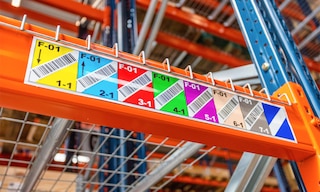
Rack labels are essential warehouse signage elements designed to identify and organize storage locations. They play a central role in maintaining traceability while keeping operations structured and efficient. Typically installed on beams or uprights, these labels clearly indicate where each SKU belongs, helping warehouse associates complete picking and replenishment tasks with greater ease.
In this post, we explain the significance of rack labels, how they’re structured, how they’re created, and the main types found in logistics facilities.
Importance of rack labels in warehouses
Rack labels are a cornerstone of effective warehouse management. They enable rapid identification of storage systems and unit loads, streamline order fulfillment workflows, and support efficient, accurate inventory control. To deliver these benefits, rack labeling should align with five core principles:
Inventory location structure
Using labels for racks is critical when mapping a warehouse. Facilities are divided into storage zones, aisles, levels, and slots. Clear rack location labels ensure every SKU has a defined, easy-to-find position at all times.
Safety
Rack labeling also supports workplace safety. Labels prominently display load limits, hazard pictograms, and level-specific warnings. Nameplates — mandatory rack specification labels — outline design specifications and safe usage conditions for storage systems. Up-to-date signage helps facilities pass rack safety inspections. These verify that structures operate in line with current regulations while protecting both workers and goods.
Speed and WMS integration
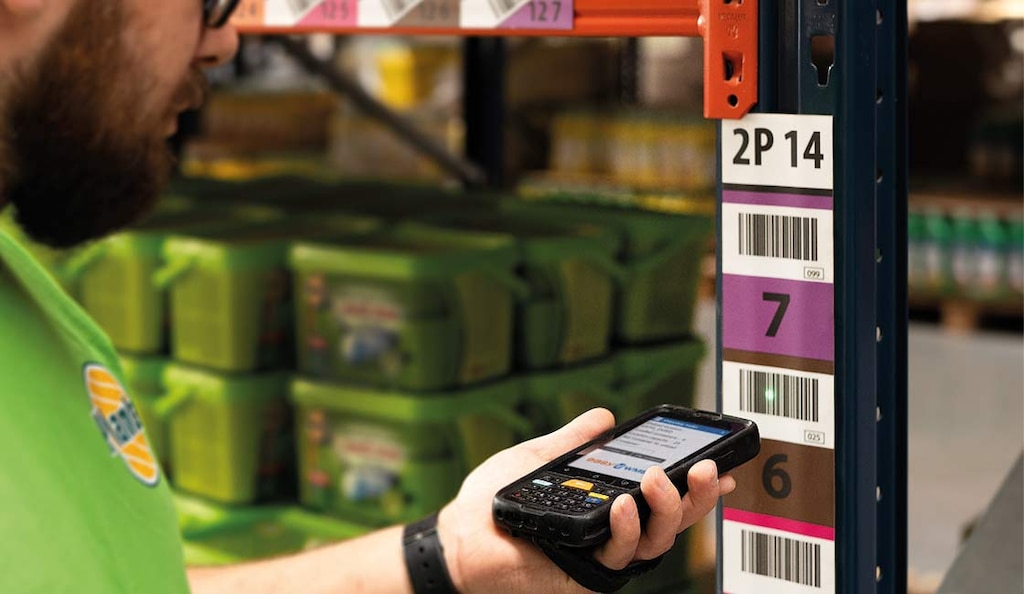
Racking labels form the physical backbone of facility digitalization through a warehouse management system (WMS). This software relies on a digital map that must mirror real-world positions. To ensure reliability, each slot needs a unique rack label that both associates and scanning devices can recognize.
Without warehouse barcode labels, traceability breaks down. The system can’t confirm goods receipt or picking actions in real time because there’s no scannable reference point. In short, labels connect physical product flow with digital records, minimizing manual errors and keeping data synced.
Fewer errors and lower costs
Accurate rack identification labels reduce mistakes in putaway and picking operations. Well-designed warehouse shelving labels shorten travel paths and cut down on returns due to shipping errors. This helps lower logistics costs and improve margins.
Full traceability
Rack labels are paramount for ensuring traceability in a facility. While warehouse labeling is usually associated with product labels (which include information on batch numbers, expiration dates, and/or origin), rack labels warehouse-wide make it possible to pinpoint exactly where each unit sits. This connection is vital in industries like food and pharmaceuticals; quick access to specific batches can be critical in the case of health alerts or first-in, first-out (FIFO) dispatch.
Structure of a rack label
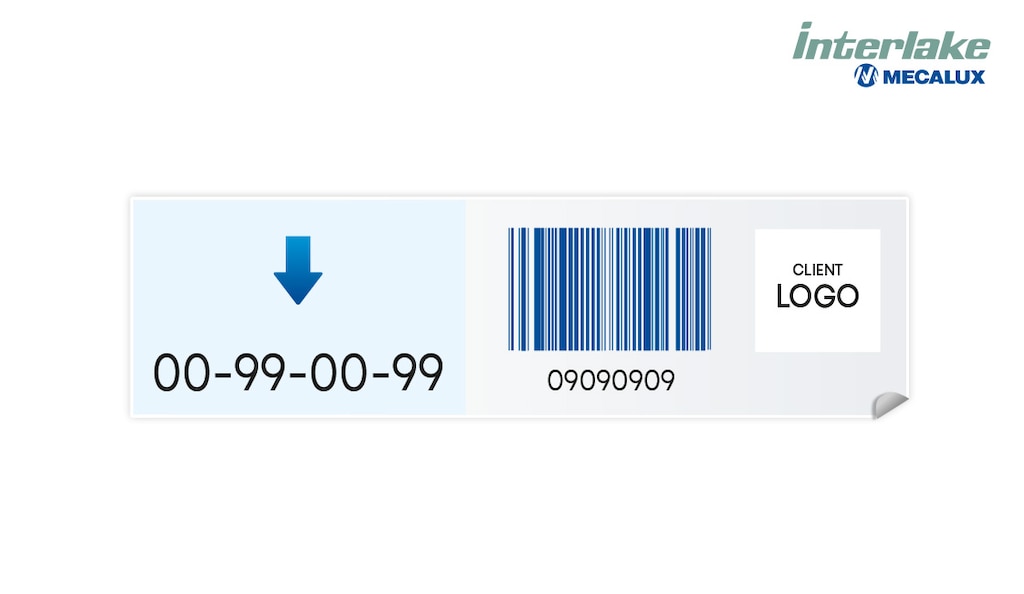
Most pallet racking labels have a horizontal layout to fit beam surfaces. Label size depends on beam height, ensuring characters remain visible from floor level. For larger structures or specific needs, vertical designs may be utilized. Regardless of format, the dimensions and font size must match the reading distance and scanner requirements so that associates can easily capture the barcode.
Although the design of rack labels may vary by operation or company, common elements include:
- Location code. This numeric or alphanumeric sequence helps associates navigate visually via a coordinate. It defines the aisle, level, and exact slot through a structured hierarchy.
- Barcode. The labels incorporate printed bars that follow standardized formats such as Code 128 or GS1-128. When read with RF scanners, the system interprets the data and updates the WMS instantly.
- Directional arrow. This visual indicator shows whether the code refers to the level above or below. Arrows avoid confusion in multi-tier racking and speed up picking and replenishment tasks.
- Color coding. Some warehouse shelf labels employ color combinations to highlight zones or product categories. A supermarket chain, for instance, might designate red for meat and green for produce.
- Client identification. For 3PL providers, adding client names or logos to warehouse rack labels can simplify ownership tracking.
How rack labels are created
Effective rack labeling starts before operations begin. The warehouse must first be mapped, with structured codes assigned to aisles, bays, levels, and slots. Codes should be concise, and high-turnover SKUs should sit in easily accessible locations.
A warehouse management system such as Interlake Mecalux’s Easy WMS simplifies this process by creating a digital twin of the facility. It defines coding standards, ensures compatibility with scanning devices, and assigns verification numbers that associates scan or enter to confirm their location. The system can also generate and print batches of warehouse racking labels.
Although most polyester labels or other durable options are designed for long-term use, updates may be required after layout changes or due to wear.
Types of rack labels
Different types of rack labels are available depending on their material, operational purpose, and environment.
By material
Common rack label materials include matte paper, coated paper, polypropylene, synthetic stock, or polycarbonate. Paper works well in low-intensity settings, while polypropylene, synthetic stock, and polycarbonate options offer greater durability under heavy use.
By operational purpose
Picking shelf labels are small since they require short reading distances. They often have protective covers or high-strength adhesives to handle repeated contact. Pallet rack labels are larger and frequently include directional arrows for clarity. Lastly, specialized zones such as cross-docking and buffer areas may employ floor markings, magnetic barcode labels, or color coding for quarantine sections and returns.
By environment
Before deciding on a label type, it’s crucial to consider the environmental conditions of the rack system. Cold storage requires labels that maintain adhesion and readability at low temperatures. Facilities exposed to chemicals, liquids, and high humidity benefit from waterproof polyester stickers that prevent barcode damage.
Rack labels: The gateway to efficient warehousing
Rack labeling bridges the gap between physical infrastructure and digital warehouse management. Careful planning, the right materials for each environment, and the support of an intelligent WMS help eliminate errors and streamline processes such as picking and replenishment. Ultimately, investing in high-quality warehouse rack labels is a strategic decision that strengthens traceability and drives logistics efficiency.