


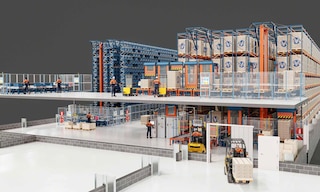
Warehouse mapping: What it is and why it matters
Warehouse mapping is becoming increasingly crucial as logistics facilities evolve into strategic assets critical for business success. Beyond defining the layout, organizing space logically and efficiently is a key step in operational planning. The structuring of the warehouse must also consider the type of products stored, handling equipment used, workflow, and staff.
In this post, we explore what warehouse mapping is, its purpose, and the processes it involves. We’ll also provide the steps and tools to design an effective layout.
What is warehouse mapping?
Warehouse mapping is the process of encoding and logically structuring a facility’s physical layout into a coordinate-based system that warehouse management software can leverage. It consists of identifying and labeling the storage locations and work zones defined in the floor plan. While the layout sets up the infrastructure to streamline flows, cut process times, and avoid bottlenecks, warehouse mapping enables software to execute operations with full traceability.
This mapping assigns specific zones to operations such as receiving, order picking, packing, and dispatch. It also creates location codes that, when paired with a warehouse management system (WMS), pinpoint the exact location of each item, whether in cases, on shelves, or on pallets.
Why is warehouse mapping important?
Accurate warehouse location mapping provides the foundation for maximizing efficiency through slotting. Mapping ensures inventory integrity and traceability, while slotting uses this structure to determine the most strategic storage positions based on size and turnover.
For highly regulated industries (healthcare, pharmaceuticals, food), warehouse mapping isn’t optional — it’s a compliance requirement to guarantee safety and risk control. Mapping facilitates:
- Technical traceability. Perishable products are tracked throughout their journey in the facility.
- Inventory segregation. Chemical and hazardous material warehouses maintain compliance with regulations through logical coding that keeps incompatible items apart.
- Critical condition control. Each unit of stock is linked to a specific coordinate with temperature and humidity settings, allowing for monitoring.
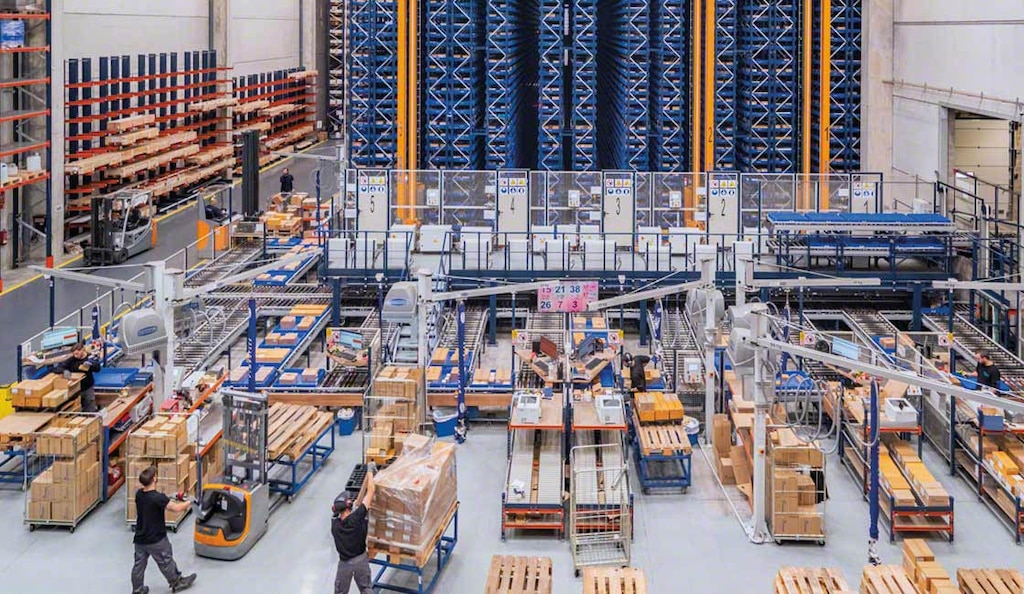
Benefits of optimized warehouse mapping
Whereas the layout denotes physical capacity, warehouse mapping enables operational execution. Its direct advantages include:
- Inventory integrity and traceability. Unique identifiers for each physical location ensure that system records match real stock, eliminating losses from misplacement.
- Fewer location errors. Standardized coding and clear labeling minimize human mistakes during storage and retrieval, making sure warehouse associates work with the correct WMS-verified location.
- Scalable management system. A well-defined location structure allows companies to implement complex logic rules. Without accurate mapping of weight, volume, rack/shelf type, and other pertinent product details, the software cannot automate task allocation.
- Easier auditing and cycle counting. With a logical, coded layout, warehouses can conduct targeted cycle counts, auditing specific areas without disrupting overall operations.
A step-by-step guide to warehouse indoor mapping
To map a warehouse accurately based on an established floor plan, follow these steps to record and organize the information:
- Analyze the physical environment. Validate logistical needs against the current layout, noting flows and critical points so that coding will align with real operations.
- Designate functional areas. Record zones in the system (loading, receiving, storage, picking, packing, shipping). Then, link each to its shelf/rack type and load capacity so the WMS can recognize its physical constraints.
- Establish a coding system. Assign a unique identifier to each location. Use a hierarchical alphanumeric system to denote each zone, aisle, shelf/rack, level, and position, creating a “digital address” for each SKU.
- Create a location master (digital map). Document the configuration in a database or WMS, translating the physical plan into a logical model.
Warehouse mapping software
Efficient location management requires functionalities integrated into warehouse management systems, which have replaced standalone design tools. An advanced WMS lets authorized users parameterize the location master in real time, linking each physical coordinate to its volume, weight, and operational constraints.
For example, Interlake Mecalux’s Easy WMS incorporates digital mapping capabilities to turn physical layouts into dynamic operational models. Key features include:
- Layout configuration and modeling. Easy WMS provides tools to define and modify facilities digitally.
- 3D warehouse visualization. Three-dimensional representations support planning and flow simulation.
- Digital twins. Companies can simulate scenarios and test changes without disrupting operations.
- Heatmap generation. Heatmaps offer advanced analytics, displaying high-activity zones.

Warehouse mapping for operational success
Warehouse process mapping is central to strategic supply chain optimization, as it allows companies to plan and execute tasks efficiently. Moreover, it lays the foundation for informed decision-making and the adoption of new technologies to further improve performance. A meticulously planned facility gives organizations a competitive edge, which is paramount for boosting resilience and cost-effectiveness.
Warehouse mapping in 5 questions
What is warehouse mapping?
It’s the logical coding and configuration of a physical floor plan into a set of coordinates for a warehouse management system. It involves identifying and labeling the storage locations and zones established in a facility’s layout, enabling operations to be executed with full traceability.
What’s the purpose of warehouse mapping?
It ensures inventory integrity and traceability by creating an accurate master data record. In regulated industries, it’s a compliance requirement that guarantees incompatible products are kept separate and critical conditions (e.g., temperature) are controlled through coordinate-based identification.
What processes does warehouse mapping cover?
It entails analyzing the physical infrastructure, applying hierarchical coding (Zone-Aisle-Level), and configuring these coordinates in the WMS. This process turns the physical warehouse layout into a logical model to manage inventory efficiently.
How do you design a warehouse map?
First, analyze your layout and record the operational areas. Next, apply a hierarchical naming system and create the location master in your WMS. Then, install physical labels throughout the facility. Finally, validate traceability, making sure every location and item can be accurately tracked in the software.
What are the main warehouse mapping tools?
Primarily, advanced WMS solutions with real-time parameterization, 3D visualization, and digital twin capabilities. These tools allow logistics professionals to model logical structures and simulate warehouse operations effectively.