



Just-in-time (JIT) inventory management: Meaning and benefits
Just-in-time (JIT) inventory management has become an established method for streamlining procurement while operating with lean stock levels and maintaining business continuity. Volatile demand, rising costs, and the need to respond quickly to customers have prompted many companies to rethink how they manage their goods.
In this post, we explain what just-in-time inventory is, its benefits and drawbacks, the industries that use it, and its role in stock management.
What is JIT inventory management?
JIT (just-in-time) inventory management is a strategy in which supplies arrive precisely when required. It aims to raise efficiency and curb costs by limiting — or even eliminating — the storage of large quantities of raw materials, components, or finished goods. It synchronizes sourcing and production with demand, so each resource is on hand at the point of consumption. In practice, this model depends on reliable demand forecasting and close coordination across procurement, manufacturing, and distribution.
Unlike the just-in-case (JIC) model, where companies keep safety stock to absorb supply delays or fluctuations in demand, a JIT inventory system focuses on maintaining lower stock levels and making the best use of available resources.
Just-in-time inventory management originated within the Toyota Production System. Engineer Taiichi Ohno developed its principles as one of the foundations of this manufacturing model, alongside the concept of jidoka. Eiji Toyoda later promoted its adoption at Toyota, helping to spread the approach more widely.
Advantages and drawbacks of JIT inventory management
A just-in-time inventory system can bring clear benefits to the supply chain. However, it also calls for strong coordination at every stage to prevent sourcing disruptions. Its main advantages include:
- Less inventory becoming obsolete or damaged, as businesses purchase only the materials required to meet current demand.
- Greater flexibility to adjust production plans quickly and respond more effectively to customer needs.
- Lower costs associated with holding large product volumes.
Nevertheless, just-in-time inventory also presents several challenges:
- A higher risk of stockouts when delays or unexpected disruptions occur, potentially offsetting its benefits.
- Greater reliance on suppliers: if they fail to meet agreed delivery schedules, production could come to a halt.
- More complex management, with tighter coordination required among all parties involved.
Ultimately, JIT inventory can boost efficiency, but its success hinges on rigorous planning and a well-organized supply chain.
Where is JIT inventory applied?
Although just-in-time inventory management is rooted in manufacturing, its principles are now used across multiple industries. These are the most common applications:
Logistics and supply chain
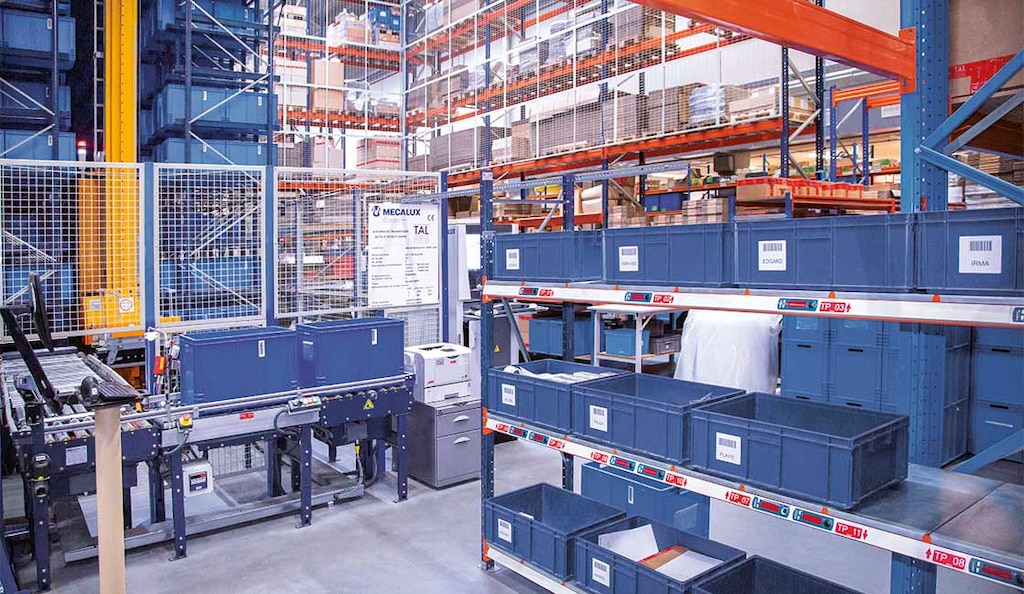
Inventory management is one of the areas where JIT delivers the greatest benefits. In logistics and warehousing processes, the strategy aligns stock levels with demand, optimizes procurement, coordinates inbound flows, and ensures goods are available when required.
Manufacturing
JIT inventory is especially common in the production of complex products with many parts, including automobiles, aircraft, and industrial machinery. Storing such a wide variety of components can be difficult, so suppliers are often located close to their clients to simplify coordination and deliveries.
Freight transportation, distribution, and last-mile delivery
Transportation and delivery service companies apply JIT principles to arrange the pickup, distribution, and final delivery of goods in the shortest possible period. This allows them to respond faster to demand, minimize waiting times, and raise service levels.
Construction
JIT can help schedule the arrival of materials and equipment as each stage of a construction project progresses. As a result, businesses avoid accumulating supplies, make better use of available space, and lower storage-related costs.
JIT inventory management in the warehouse
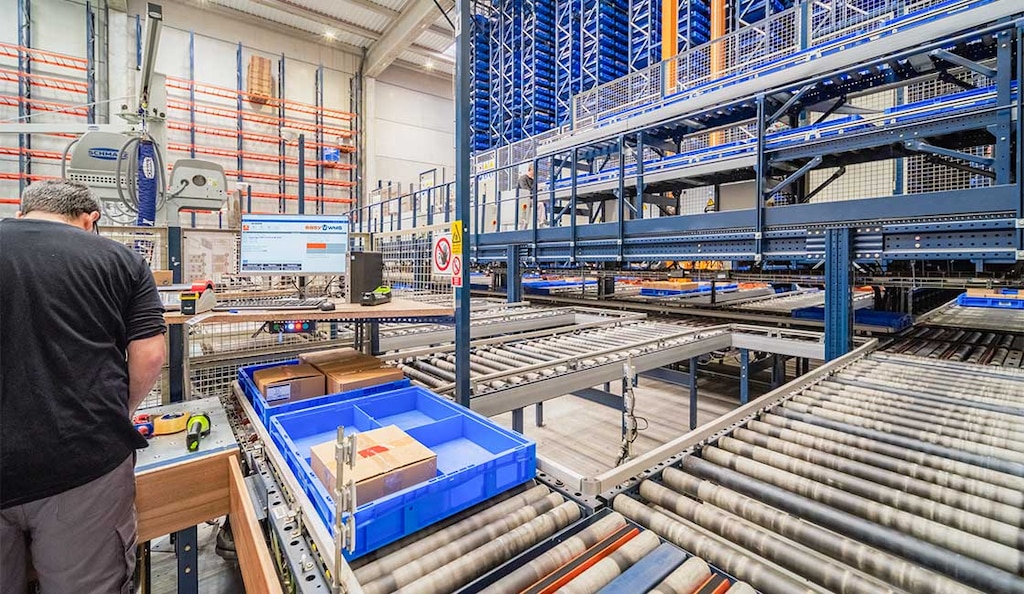
In modern logistics, JIT inventory control works best when supported by a warehouse management system (WMS) and enterprise resource planning (ERP) software. These platforms coordinate material and information flows, synchronize procurement with demand, and provide accurate stock data.
Interlake Mecalux’s Easy WMS, for instance, facilitates JIT by providing real-time inventory visibility and organizing receiving, storage, and shipping operations. Its integration with ERP software keeps inventory data current and aligns the location of goods with company workflows.
To complement this strategy, some organizations utilize the reorder point, a threshold that signals when a new order should be placed. This method helps maintain lean stock levels and mitigate the risk of stockouts.
Examples of JIT inventory
Just-in-time principles can be applied in a variety of production and logistics settings through technologies that streamline goods control and synchronize material flows. One example is office manufacturer Forma 5. Easy WMS manages procurement and inventory for the business, enabling timely component supply.
Another company that utilizes Mecalux software is Dexel, a Sika France subsidiary. At its Salles-du-Gardon facility, Easy WMS orchestrates the just-in-time supply of raw materials to production lines to meet manufacturing needs. Warehouse automation can also optimize processes associated with JIT. Spanish electrical transformer manufacturer IMEFY, for instance, installed an automated rack-supported building to make components more readily available and expand its capacity to produce distribution transformers for customers. Together, these examples show how digitalization and automation can facilitate just-in-time inventory management by synchronizing procurement and production.
Implementing JIT inventory successfully
JIT inventory management can help companies operate with leaner stock levels and greater efficiency. But there’s no one-size-fits-all approach to deployment. Successful adoption depends on up-to-date information, close coordination between the warehouse, production, and sourcing, and several preparatory measures:
- Assess the supply chain to determine whether it can adapt to demand shifts without requiring excessive safety stock.
- Evaluate supplier reliability to ensure delivery times will be met.
- Roll out the method gradually to identify potential issues and fine-tune the approach before extending it further.
- Digitalize warehouse management to maintain accurate inventory control.
JIT inventory management FAQs
What does JIT mean?
JIT stands for just-in-time, a production planning and inventory management method in which materials arrive only when needed. Its purpose is to avoid excess stock and make the supply chain more efficient.
Who invented JIT inventory management?
The just-in-time method originated at Toyota during the development of the Toyota Production System. Taiichi Ohno laid its foundations, while Eiji Toyoda promoted its implementation to make manufacturing more efficient and keep inventory levels low.
How does JIT support warehouse management?
JIT aligns inventory with demand by synchronizing procurement and production. To do this, companies utilize tools such as warehouse management systems, which provide real-time inventory visibility.
What is the difference between JIT and JIC?
The difference between just-in-time (JIT) and just-in-case (JIC) lies in their inventory strategies. JIT focuses on having only the materials required, whereas JIC maintains safety stock to limit the risk of shortages.
Is there a JIT inventory formula?
There’s no single formula for JIT inventory management. However, some businesses using this approach rely on the reorder point to determine when to place a new order for an item. This calculation can help keep inventory levels lean and reduce the risk of stockouts, provided that demand forecasts are reliable and procurement is properly coordinated.