


Turnkey projects: What they are, benefits, and when to use them
Turnkey projects originated mainly in the construction of industrial facilities and residential buildings, where a single provider handles the entire scope from start to finish. Over time, this model has expanded into more technically complex initiatives that require seamless coordination between design, execution, and commissioning to deliver a cohesive solution aligned with defined goals.
In this article, we explain what turnkey projects are, outline their main features, and explore why it’s a good option for companies managing multiple processes, trades, and disciplines.
What is a turnkey project?
A turnkey project is a delivery model in which one provider takes full responsibility for every phase needed to bring a solution into operation. This covers everything from initial planning and technical definition through to final delivery and final handover. For example, in a new turnkey building, the contractor coordinates all related activities (e.g., facility design, full construction, and electrical system installation), ensuring the project is delivered complete.
The concept behind a turnkey project is simple: the client receives a ready-to-use solution, as if they only had to “turn the key” to start operations, without having to manage intermediate steps.
These initiatives rely on turnkey contracts, which define the scope, pricing, and timelines. They apply across a wide range of areas, such as real estate, industrial facilities, logistics operations, and digital transformation projects. In every case, consistency is key in all stages to guarantee a fully operational outcome aligned with expectations.
Types of turnkey projects
Different types of turnkey projects can be found across sectors where coordination between multiple stakeholders is paramount. This model is especially valuable when delivering a complete, all-in-one solution:
- Residential construction. A single company manages the design, permit approval, construction, and delivery of a move-in-ready home.
- Retail spaces. The scope typically encompasses the layout design, build-out, installations, and finishes aligned with brand identity.
- Offices. Workspaces are developed to match operational needs, balancing functionality, comfort, and technology integration.
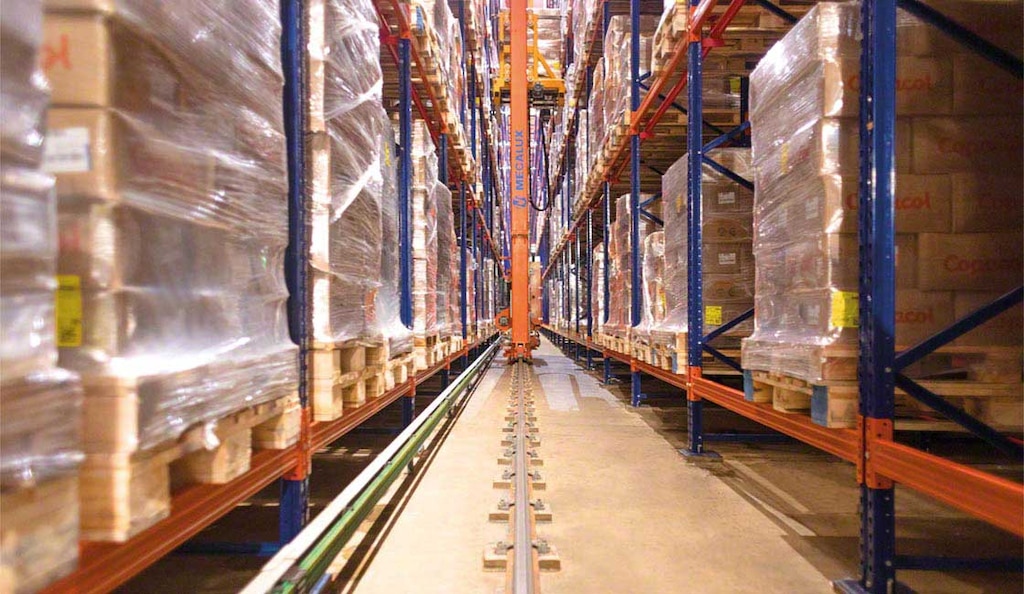
- Warehouses and logistics centers. Turnkey warehouse projects often include automation systems that streamline processes, improve traceability, and maximize storage capacity.
- Industrial and energy plants. These projects frequently follow EPC structures, where one provider handles engineering, procurement, and construction.
- Technology and IT implementations. The turnkey model supports full deployment of digital systems and tech infrastructure ready for immediate use.
Benefits of turnkey contracts
Turnkey contracts offer a clear and structured execution framework, particularly in initiatives involving multiple phases and technical decisions. Assigning responsibility to one provider simplifies management and limits exposure to unexpected issues during development.
- Single point of contact. Instead of coordinating multiple experts and vendors, the client works with one accountable partner, simplifying communication and progress tracking.
- Cost control. A predefined budget reduces uncertainty as well as deviations during execution. This makes it easier to plan investments, align expectations, and make decisions with greater flexibility.
- Faster timelines. Parallel coordination of design, procurement, and construction minimizes delays and supports adherence to project schedules.
- Implementation consistency. An integrated approach maintains uniform quality standards across all stages while enabling stakeholders to identify deviations early on. It reduces coordination errors and aligns outcomes with both technical and client requirements.
- Tailored solutions. Each turnkey facility is developed according to specific operational needs. In addition to removing common issues found in multi-vendor environments, this approach ensures regulatory compliance. It also relieves clients of day-to-day oversight so they can focus on their core business throughout the process.
Turnkey projects in logistics
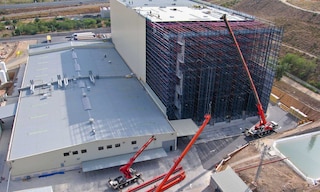
In logistics, turnkey warehouse projects typically involve commissioning highly automated warehouses. A single intralogistics partner is responsible for integrating all phases and delivering a completely operational facility.
The process begins with an analysis of the client’s intralogistics requirements. Based on that information, the provider designs a solution aligned with expectations and executes the full scope. The result is a fully operational logistics facility that meets technical, regulatory, and functional standards. Among the main advantages are simpler management and greater consistency across all stages — both vital to delivering complex solutions reliably.
For example, Mecalux Group projects incorporate not only storage and automation solutions but also fire protection, warehouse lighting, and heating, ventilation, and air conditioning (HVAC) systems. In rack-supported building projects, the scope may extend to the structure and building envelope, including façades.
The turnkey model also applies to software. In such cases, the objective is to meet defined requirements through a pre-scoped solution with agreed pricing. This often involves the development and implementation of a warehouse management system like Easy WMS, along with associated services such as labor, travel, and hardware. This provides the client with greater cost predictability.
Examples of turnkey projects
The Mecalux Group has carried out numerous turnkey projects across industries, adapting to diverse operational needs:
- Cepsa. Mecalux delivered an automated rack-supported building with a 28,630-pallet capacity for this energy company. The project was executed from start to finish, from site preparation and foundations through the installation of all technical and structural elements. The scope covered drainage, masonry and cladding, roof and façade enclosures, carpentry, plumbing, electrical systems, and fire protection. The result is a fully automated logistics facility, up and running from day one.
- Takeda. The turnkey project Mecalux carried out for this pharmaceutical company consisted of a 107' high temperature-controlled rack-supported warehouse with capacity for over 6,500 pallets. The scope included the building’s external cladding (roof and wall enclosures), along with the installation of cooling and inert gas fire protection systems. The solution was rounded out with Mecalux’s Easy WMS warehouse management system, which coordinates operations and ensures strict control of the facility.
- Normon. For this pharmaceutical company, Mecalux commissioned a highly automated logistics solution to strengthen order picking and dispatch capabilities for hospitals, pharmacies, and clinics. The turnkey project scope covered the installation of roof and façade enclosures for the rack-supported building as well as fire protection systems. The solution integrates multiple storage and picking systems capable of handling large order volumes.
- Lantmännen Unibake. The company implemented two automated storage systems for chilled and frozen products, with a total capacity of 15,920 pallets. The frozen area features a 131' high automated rack-supported building with five aisles, with the roof and wall enclosures integrated into the structure itself. Automation enables this bakery and pastry dough producer to maintain continuous operations and ship nearly 100 pallets per hour. It also provides full traceability and leaves room for future expansion.
When is a turnkey model recommended?
A turnkey project approach is ideal when a company seeks simplified management of a complex initiative with predictable timelines and costs. It’s well-suited to multi-phase, multidisciplinary projects, as well as those requiring ready-to-operate delivery or minimal internal coordination. Clear definition of scope, requirements, and objectives from the outset is fundamental, as later changes can impact both schedule and cost.
In logistics, the model proves especially effective when infrastructure, systems, and operations must align within a single strategy. For instance, in warehouse and distribution center development, a turnkey facility integrates building design, workflows, and automated systems seamlessly from day one for smooth commissioning.
Turnkey projects: Control and predictability from start to finish
Turnkey projects have become a reliable option for companies executing complex implementations without the burden of fragmented coordination. In addition to delivering a fully operational result, they maintain continuity across all stages, avoiding misalignment between design, construction, and implementation. In the case of warehouses, success depends on the integration of space, operations, and technology. A turnkey building approach enables consistent, controlled progress and a system built for immediate performance.
Turnkey projects in 5 questions
What is a turnkey project?
A model where a provider delivers a fully completed solution ready for immediate use. The client receives an operational facility with the agreed scope executed from start to finish, without having to coordinate the different phases or parties involved.
EPC vs. turnkey — what’s the difference?
EPC is a type of turnkey contract in which a single provider is responsible for engineering, procurement, and construction. This ensures that the client receives a fully completed, ready-to-operate facility with agreed timelines and costs set out in the contract.
What’s the difference between fixed price and turnkey?
A fixed price defines payment terms, while a turnkey model places delivery responsibility on a single provider. They can coexist but are not the same.
What does a turnkey contract include?
It sets out an integrated project to be carried out by a single provider responsible for delivering an operational result. It typically covers a defined scope, agreed timelines and pricing, and handover ready for operation, along with warranties, acceptance criteria, and risk allocation.
Which industries use turnkey projects?
The turnkey model is most common in sectors that need to coordinate multiple phases and deliver a ready-to-use solution. These span residential and commercial construction, office development, warehouses and logistics centers, industrial and energy plants, and technology or IT projects.