


Pallet grades: A guide to recycled pallet quality
Pallet grades classify recycled pallets according to their condition, structural integrity, and level of repair. After their initial use, these load carriers undergo inspection, repair, and replacement of damaged components before returning to the supply chain, reducing environmental impact and supporting the circular economy. Pallet grades help determine their suitability for applications ranging from automated systems to internal transport and lower-demand scenarios.
In this post, we'll explain how pallet grades classify recycled pallets, what distinguishes each quality level, and how pallet condition affects logistics operations. We'll also look at how to select the right grade for different applications and warehouse requirements.
What are pallet grades?
Pallet grades are a commercial classification that describes a pallet's condition, repair history, and structural quality. This rating system helps logistics providers match recycled pallets to specific operational requirements. These pallets are widely used across industrial and logistics sectors. They’re common in closed-loop supply chains, where pallets are reused within a controlled environment, as well as in internal transport and operations with a low risk of pallet loss or damage.
Their adoption is driven by two main factors: lower costs compared to new pallets and support for sustainability strategies such as pallet recycling and the circular economy. However, certain limitations should also be considered.
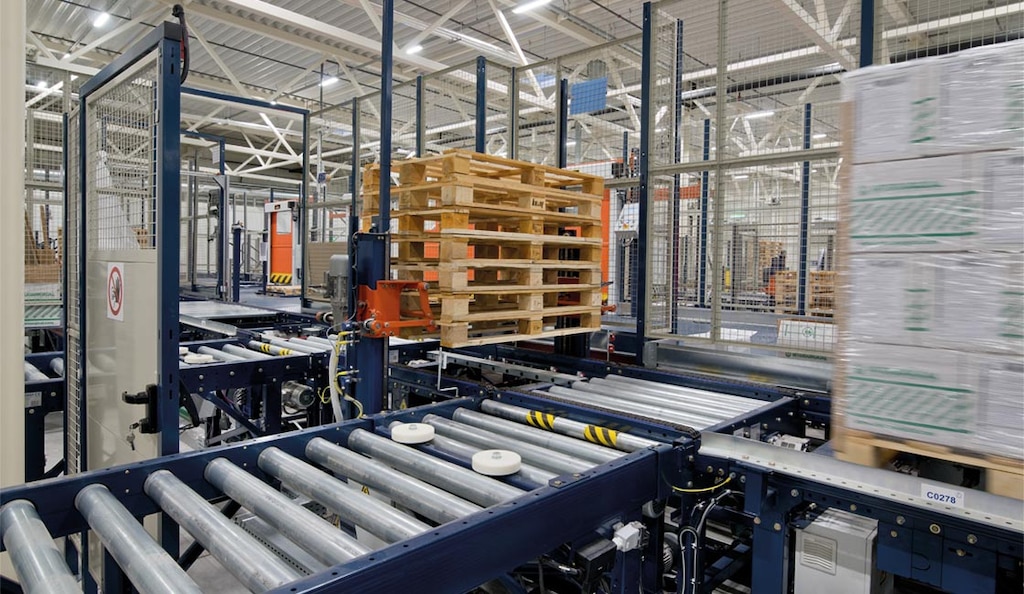
For example, automated storage and retrieval systems (AS/RS) should only use recycled pallets when they meet strict dimensional and structural requirements (Grade A). Flatness, rigidity, block condition, and proper interaction with material handling equipment are all critical factors. Defects on the pallet base or poor-quality repairs can affect the performance of conveyors, stacker cranes, and other automated systems.
Before selecting recycled pallets, it’s advisable to evaluate their condition, the consistency of the pallet batch, and the demands of the logistics flow into which they’ll be integrated.
How are pallet grades defined?
There is no single global standard that establishes the grades of pallets, so classifications can vary between suppliers and markets. In the US, however, grading practices are more standardized — particularly for GMA pallets — thanks to widely adopted industry criteria promoted by pallet associations and major logistics providers. In Europe, classifications tend to be more flexible and often depend on the supplier, resulting in greater variation when assessing recycled pallet quality.
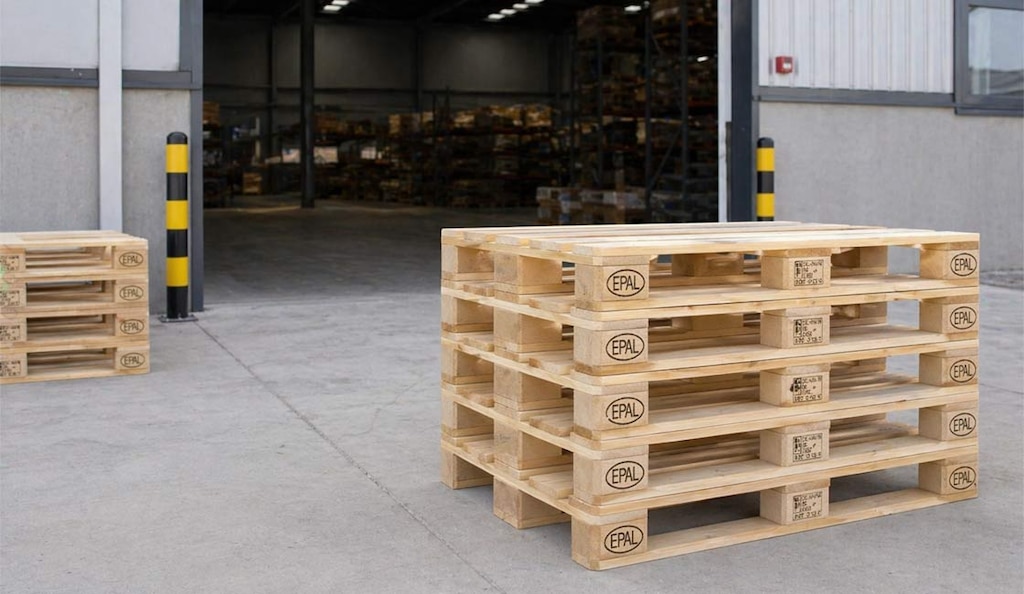
As a result, although labels such as Grade A, Grade B, or Grade C are widely recognized, their exact definitions may differ. That’s why it’s always best to review the supplier's technical specifications, particularly for critical applications, as these pallet grades represent commercial classifications rather than technical standards such as EPAL requirements.
Specifications of the different pallet grades
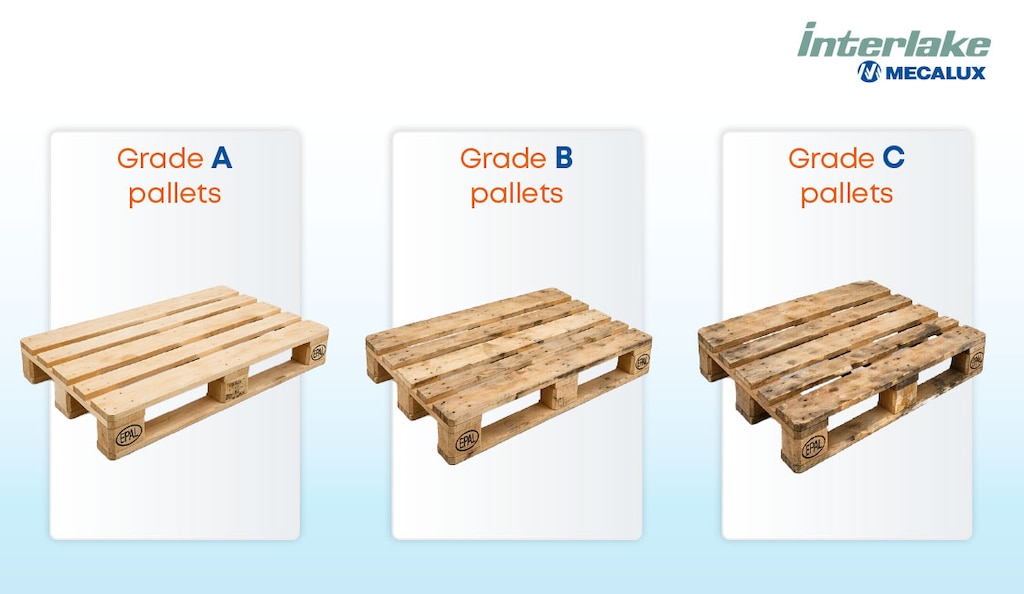
The main characteristics of each pallet grade make it possible to identify quality, durability, and suitability for different logistics applications.
Grade A pallets (premium/near-new)
Grade A is the highest-quality category among recycled pallets. They’ve seen limited use, and repair work (if any) has been minimal and carried out to a high standard. Their condition is comparable to that of a new pallet, with no significant structural damage.
A-grade pallets are suitable for demanding applications where uniformity and dependable performance are required without the expense of purchasing brand-new ones.
Grade B pallets (functional/mid-level)
Grade B pallets show more visible signs of wear and repair than Grade A units. They may include replacement boards or visible reinforcements, but they retain adequate structural integrity for many logistics operations.
By and large, they’re used for internal transport and controlled supply chains where appearance is less important and extreme dimensional precision isn’t required.
Grade C pallets (utility/low-quality)
Grade C is the lowest category among recycled pallets. Although they remain functional, they often exhibit significant wear, multiple repairs, and/or inferior-quality replacement components.
They’re limited to low-demand internal applications, such as static storage or occasional material movements, where operational risks are minimal. However, they may not be suitable for dynamic loads or operations with high mechanical demands.
How to choose the right graded pallets
Selecting the appropriate pallet grade is crucial for maintaining safe and efficient logistics operations. The best choice depends on the material flow, the level of automation, and the demands of the operating environment. Below are the most standard recommendations for each quality level.
High quality (new pallets): Export shipments and automated systems
New pallets provide the highest level of reliability in terms of strength and dimensional consistency. This is especially vital in export operations and automated warehouses, where even small deviations can lead to disruptions. In these environments, the construction quality of wood pallets and compliance with standardized dimensions — such as those of GMA and Euro pallets — are fundamental.
Medium quality (Grade A/B recycled pallets): Internal transport
Grade A and Grade B recycled pallets are well suited to internal material flows and controlled logistics circuits, where balancing cost and performance is a priority. In these environments, minor cosmetic imperfections normally have little impact on operational performance.
Lower quality (Grade C recycled pallets): Secondary internal applications
Grade C pallets are reserved for secondary uses and lower-demand operations, such as occasional internal movements or handling activities with limited impact on the load. They offer an economical solution, although their condition may be less consistent. As a result, careful inspection is recommended to minimize operational risks and confirm suitability for use.
Pallet grades and sustainable reuse
Not all recycled pallets are suitable for the same applications. Proper classification helps businesses match pallet quality to operational requirements while supporting sustainability goals through reuse and extended service life.
In addition to their environmental benefits, recycled pallets help reduce costs and support circular supply chain models. Familiarity with the different pallet grades enables companies to make informed decisions, minimize disruptions, and improve operational performance.
Pallet grade FAQs
What are pallet grades?
Pallet grades are a commercial classification used to assess the condition, repair history, and structural quality of recycled pallets. Each grade (A, B, or C) indicates a different level of wear and suitability for logistics applications. These classifications help companies select pallets that match their operational requirements.
What are the different pallet grades?
Recycled pallets are typically classified as Grade A, Grade B, or Grade C. Grade A pallets are in near-new condition. Grade B pallets show visible repairs but remain structurally sound for many logistics operations. And Grade C pallets exhibit greater wear and are generally reserved for lower-demand scenarios.
What is the difference between Grade A pallets vs. Grade B pallets?
The main difference lies in their condition and repair history. Grade A pallets have minimal wear, few repairs, and a more uniform appearance. B-grade pallets show more signs of wear and visible repairs but still maintain adequate structural performance for standard logistics applications.
Are GMA and Euro pallet grades equivalent?
No, no universal equivalence exists. GMA pallet grades follow more standardized industry criteria, whereas grading systems for Euro pallets often vary by supplier and market. For this reason, technical specifications should always be reviewed before use rather than relying solely on the grade designation.
How do I choose the right pallet grade?
The appropriate pallet grade depends on the application and operating environment. As a rule, new pallets or high-quality Grade A pallets are preferred for AS/RS and other demanding operations that require dimensional consistency. Grade A and Grade B pallets are mostly used for internal transport and controlled logistics circuits. Lastly, Grade C pallets are better suited to lower-demand applications such as static storage or occasional handling tasks.