



Warehouse relocation: A guide to planning and executing an efficient move
Warehouse relocation is a strategic process that goes far beyond transferring goods from one facility to another. It involves rethinking the site, infrastructure, and logistics operations to meet new capacity, efficiency, or growth requirements. Whether driven by business expansion, facility upgrades, or a change of location, a well-planned warehouse transfer helps maintain operational continuity and service levels throughout the transition.
In this post, we explore what a warehouse relocation project entails, the different types of moves that can occur, and their main challenges. We’ll also provide a checklist to assess project scope, explain how to structure a warehouse relocation plan, and highlight the critical role of reinstalling storage equipment.
What is warehouse relocation?
Warehouse relocation refers to the partial or complete transfer of a facility. In addition to inventory, it covers material handling equipment and racking systems that support daily operations. Unlike a residential move, shifting a logistics site calls for technical planning, process coordination, and safety validation.
Companies may decide to relocate their warehouses for a variety of reasons: growing business that demands greater storage capacity, a better location closer to customers or transportation hubs, or the need to adopt new technologies. In many cases, transplanting a facility becomes an opportunity to redesign processes, streamline flows, and prepare infrastructure for future demand.
Types of warehouse relocation
Warehouse relocation can take several forms, depending on the project scope and level of change involved. Not every initiative results in a full logistics migration. Some focus on internal reconfiguration, while others require a complete change of location.
Relocation within the same facility
This type occurs when operations are reorganized within the same building. It could mean repositioning picking areas, modifying internal flows, or replacing storage systems. Even without a change of address, the operational impact could be significant and calls for careful planning to avoid disruption.
Relocation to another facility or site
This scenario entails transferring all or part of the warehouse to a new location. It often includes transporting inventory, dismantling and reinstalling racking, and adapting operations to a different layout. Given its complexity, this option is typically managed as a full warehouse relocation project plan.
Relocation through expansion or site change
Here, the physical footprint of the warehouse changes through building expansion, annexing adjacent structures, or moving operations partially or entirely to another site. As this approach requires redistributing activities and redefining workflows, it’s treated as a comprehensive logistics project.
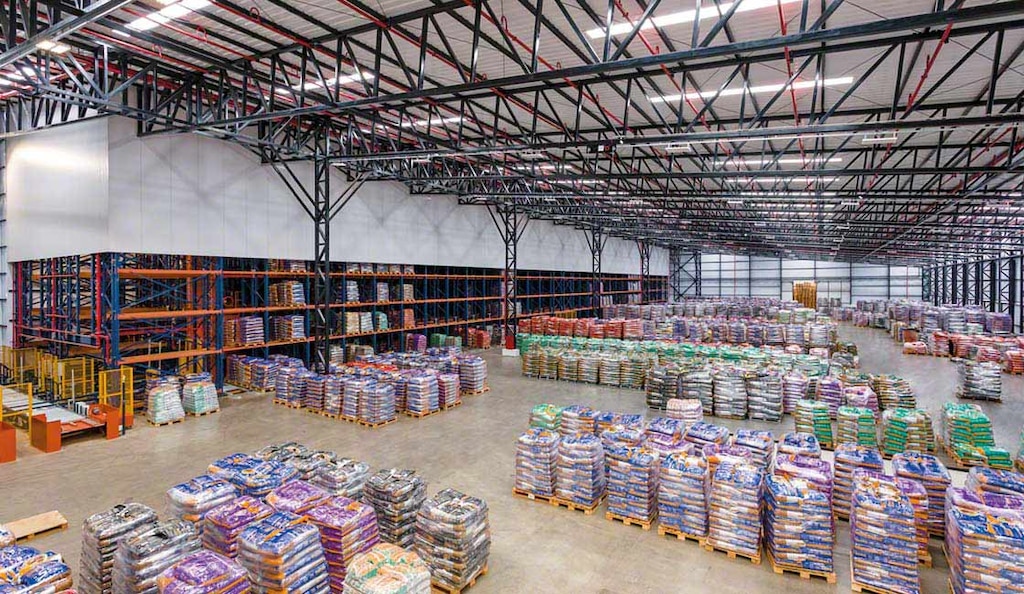
Main challenges of warehouse relocation
Relocating a warehouse presents multiple challenges that can affect operations and service levels if not handled correctly. These are the most common issues:
- Operational disruption: Keeping daily activities running while the warehouse relocation takes place.
- Service level continuity: Avoiding delays in shipping, receiving, and order fulfillment.
- Inventory risk: Preventing damage during handling, transportation, or temporary storage.
- Employee safety: Managing dismantling, transportation, and assembly activities with proper protocols.
- Storage system integrity: Protecting racking, equipment, and automated systems during disassembly.
- Stakeholder coordination: Aligning internal teams, logistics providers, warehouse relocation companies, and specialized technicians.
- Timeline and cost control: Adhering to the plan to avoid deviations (which could lead to delays, overruns, and inefficiencies).
- Commissioning of the new warehouse: Validating systems and processes before resuming normal operations.
Warehouse relocation checklist
Before embarking on a warehouse relocation, it’s crucial to review several key aspects to set the project parameters and reduce risk.
- Relocation objectives and scope. Determine whether the move is partial or total, define timelines, and assess operational impact. This step establishes priorities and clarifies whether the project will be executed in phases or as a single migration.
- Inventory and infrastructure to relocate. Identify product volumes and types, along with racking, automated systems, and other assets to be transferred, as well as their technical constraints.
- Equipment replacement decisions. Consider asset lifecycles and evaluate whether modernization makes more sense than relocation.
- New facility characteristics. Assess the floor space, clear height, load-bearing capacity, building layout, and structural criteria; these factors will shape the new logistics setup.
- Required resources and relocation costs. Define internal staffing needs, potential external suppliers, and a realistic project budget.
- Safety and risk management protocol. Review risks related to personnel, goods, and equipment and establish mitigation measures.
Warehouse relocation plan
A warehouse relocation project is typically structured into phases to ensure an orderly transfer while maintaining operations.
- Planning and design of the new warehouse. Define the optimal layout; select racking, equipment, and management systems; and set a detailed schedule. Carefully plan every detail so that the facility will operate effectively from day one.
- Preparation of inventory and current storage systems. Classify stock, label products, and organize rack and equipment dismantling to limit operational impact.
- Transfer and installation. Move goods and equipment safely, install them according to approved designs, and comply with safety regulations.
- Operational start-up and validation. Test workflows, systems, and equipment before gradually ramping up activity. The goal is to get the warehouse fully up and running without any setbacks.
- Business continuity and coordination. Integrated management reduces risk and maintains continuity throughout the process, ensuring it is orderly, efficient, and safe.

Alternatives to relocation for increasing capacity or efficiency
Capacity constraints or efficiency goals may prompt companies to contemplate relocation. However, alternatives can enable optimization without the hassle or expense of physically migrating. Instead of running a full relocation project, businesses can install high-density storage and automation solutions that maximize available space and improve throughput.
Vitakraft partnered with Mecalux to modernize its pet food warehouse in Castiglione del Lago in response to production growth. By implementing the high-density semi-automated Pallet Shuttle system, the company doubled its storage capacity and accelerated pallet dispatch without reconfiguring or transplanting its facility.
Automation can also raise productivity without interrupting operations. IKEA Components automated its manual facility in Malacky (Slovakia) with trilateral stacker cranes for pallets, integrated with Mecalux’s Easy WMS warehouse management system. These machines are ideal for automating conventional pallet racks easily and affordably, without structural changes or downtime. The integrated logistics solution maintained activity throughout the project, enabling an order fulfillment rate of 99% in the existing facility.
Warehouse equipment relocation
A facility migration entails more than shifting inventory; storage equipment calls for specialized technical handling. Warehouse racking relocation comprises dismantling, transportation, reassembly, and structural validation, all carried out in compliance with current regulations and safety standards.
Automated systems add further complexity; they require mechanical, electrical, and control adjustments, along with functional and safety testing performed by experienced professionals.
In this context, Interlake Mecalux provides warehouse relocation services and modernization support to ensure equipment performance, safety, and efficiency after transfer. Thanks to its extensive experience and technical expertise, transitions take place in an orderly manner without disrupting daily operations.
Warehouse relocation in 5 questions
What is warehouse relocation?
Warehouse relocation is the process of transferring a logistics facility from one site to another. It entails moving inventory as well as storage systems, equipment, and technology while maintaining service continuity and safeguarding goods during the changeover.
What are the main challenges of warehouse relocation?
Key challenges are minimizing downtime, coordinating multiple suppliers, protecting inventory, meeting tight deadlines, and adapting the layout to the new space. Effective management of personnel, IT systems, and regulatory compliance is also critical to avoid errors and cost overruns.
What should a warehouse relocation checklist include?
A moving warehouse checklist should cover an analysis of the new site, a detailed inventory review, transfer planning, racking dismantling and relocation, IT system migration, operational testing, risk management, milestone scheduling, and contingency plans.
How do you plan a warehouse relocation?
Planning starts with an operational and capacity assessment. Objectives, resources, responsibilities, and timelines are defined; the new layout is designed; and execution is coordinated in stages. Each phase is validated before full-scale operation resumes.
What should a warehouse relocation service cover?
A warehouse relocation service should provide prior consulting, end-to-end planning, project management, warehouse equipment dismantling and reinstallation, goods transfer, IT support, operational start-up, and post-relocation assistance to guarantee a smooth transition.