



CPFR: What it is and how it streamlines supply chain coordination
CPFR is an advanced collaboration model that enables manufacturers, distributors, and retailers to jointly coordinate planning, demand forecasting, and replenishment. This collaborative approach aims to break down information silos and align all supply chain stakeholders around shared objectives.
In this post, we explain what CPFR is, its main advantages and limitations, and how to optimize it with digital solutions focused on visibility, coordination, and logistics efficiency.
CPFR definition
CPFR, short for collaborative planning, forecasting, and replenishment, is a structured framework designed to improve these processes through the systematic exchange of information between trading partners.
The model was developed and standardized in the late 1990s by the Voluntary Interindustry Commerce Solutions Association (VICS), a former international nonprofit organization dedicated to promoting supply chain best practices, particularly in consumer goods and retail.
In simple terms, CPFR is a collaborative framework centered around sharing sales, inventory, and forecast data to maximize product availability while minimizing logistics costs. Its purpose is to synchronize critical information and support coordinated decision-making across the supply chain. Trust, transparency, and technology form the foundation of this model.
What is CPFR in the supply chain used for?
CPFR serves to align supply with real market demand through collaboration between companies. It helps anticipate shifts in consumption, plan production, and adjust inventory in line with jointly agreed forecasts. Within the supply chain, the collaborative planning, forecasting, and replenishment model contributes to fewer stockouts, lower surplus inventory, and better customer service levels. It also supports a shared business view, strengthening decision-making based on common data.
Applying CPFR with customers and retailers optimizes demand visibility, inventory levels, and product availability at points of sale. To achieve these outcomes, organizations must establish structured collaborative processes with the rest of the supply chain network.
Advantages and disadvantages of CPFR
CPFR delivers significant value to supply chain management. However, it also presents challenges that companies should consider before adoption. Understanding the benefits of CPFR as well as its drawbacks helps assess its real impact on planning, partner coordination, and operational performance.
Advantages of CPFR
- Increases demand forecast accuracy by integrating shared information and ensuring agreement across trading partners.
- Reduces unnecessary inventory by aligning replenishment plans and stock levels among supply chain stakeholders.
- Promotes coordination and strategic decision-making among manufacturers, distributors, and retailers through structured planning and joint communication processes.
- Fosters long-term business relationships built on shared goals.
Disadvantages of CPFR
- Requires strong commitment and alignment from all parties.
- Involves investment in technology and process standardization among trading partners.
- Can be complex to implement without proper change management.
- May face adoption and continuity challenges if systems aren’t integrated or processes are unclear.

What are the key steps of the CPFR model?
The CPFR model is built on close cooperation between manufacturers, suppliers, distributors, and other supply chain partners. It aims to enhance joint planning, mitigate demand uncertainty, and improve inventory levels. To achieve this, CPFR follows a series of structured steps that combine strategic and operational decision-making, from initial planning to performance monitoring.
Collaborative planning
This phase marks the starting point of CPFR. The participating companies define shared objectives, establish inventory policies, and establish work timelines and responsibilities. They also select key performance indicators (KPIs) to evaluate the process. Robust collaborative planning builds trust between partners and ensures that subsequent decisions are grounded in shared criteria.
Demand forecasting
At this stage, partners develop sales forecasts using historical data, market trends, product launches, and promotional activities. These projections are shared and jointly reviewed to identify potential deviations and agree on adjustments. Demand forecasting increases planning reliability over the medium and long term.
Coordinated replenishment
Replenishment is performed according to agreed forecasts and visibility into actual inventory levels across the supply chain. Orders, production, and restocking activities are then planned in a synchronized way. This approach helps reduce stockouts, limit excess inventory, and streamline material flow.
Execution and monitoring
The final phase consists of executing the defined plans and continuously tracking results. Actual sales, service levels, and target achievement are reviewed. Ongoing monitoring allows the parties involved to detect deviations between plans and outcomes and introduce corrections in future cycles. As a result, CPFR becomes a dynamic process centered on continuous improvement.
How to implement a CPFR strategy
To successfully implement collaborative planning, forecasting, and replenishment, it’s crucial to follow these best practices:
- Select strategic partners with mutual trust and compatible business objectives.
- Define clear processes, including shared rules, roles, and responsibilities.
- Set common KPIs to measure outcomes and detect deviations early.
- Encourage communication and data sharing by guaranteeing the reliable and continuous exchange of sales, inventory, and forecast information among all parties.
- Rely on integrated technology that consolidates and syncs data across organizations to maintain CPFR effectiveness and scale as necessary.
Without a solid technological foundation and clearly defined processes, the collaborative planning, forecasting, and replenishment strategy becomes less efficient and more difficult to manage.
How to optimize the application of CPFR
Streamlined processes and cooperation between partners are vital for CPFR. But its success also hinges on a business’s technological capability to centralize information and automate decision-making. To make the most of its application, companies must leverage digital tools that enable them to:
- Centralize and share sales, inventory, and forecast data reliably and in real time.
- Synchronize replenishment and stock levels across the supply chain while controlling shortages and excess inventory.
- Coordinate logistics process execution, from warehouse operations to final delivery, ensuring agreed plans are implemented.
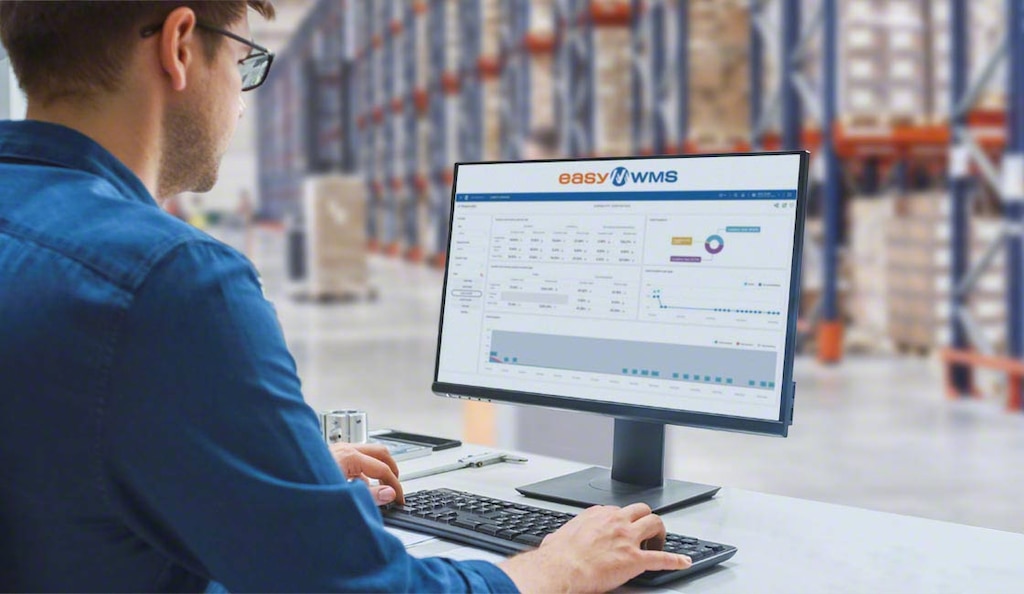
Within a CPFR framework, inventory management and stock visibility play a critical role, as they directly affect the quality of joint planning and reliability of forecasts. That’s why organizations rely on technology that delivers control, traceability, and consistent data throughout the supply chain. For example, a warehouse management system (WMS) such as Easy WMS provides accurate, real-time visibility into inventory and logistics operations. Meanwhile, Supply Chain Analytics tools support demand analysis and decision-making.
Combining these solutions strengthens CPFR by connecting planning and execution through reliable data. Ultimately, it boosts operational performance and reduces errors.
CPFR: A collaborative strategy to maximize supply chain performance
CPFR is an essential method for fostering collaboration across the supply chain and adapting to increasingly demanding markets. Its success depends on partner alignment, data quality, and the use of integrated technology that supports planning, forecasting, and replenishment. Implementing CPFR promotes decision-making based on shared information, creating supply chains that are more coordinated, responsive, and resilient to changes in demand.