



Available-to-promise: What it is, why it matters, and how to calculate it
Available-to-promise (ATP) is a key metric that helps companies determine which product quantities they can commit to customers and for which delivery dates, based on current inventory and existing obligations. In a landscape shaped by omnichannel retail, tighter delivery windows, and fluctuating demand, knowing exactly what can be reserved has become a competitive advantage.
Sound ATP management prevents stockouts, delivery delays, and misalignment between teams. In this post, we explain what available-to-promise is, what it’s used for, how to calculate it, and which tools optimize its management across the supply chain.
What is available-to-promise?
Available-to-promise (ATP) refers to the product quantities a business can allocate to new orders without breaching commitments already made. The calculation considers on-hand inventory, confirmed sales orders, and — depending on the planning model — expected goods receipts or production.
This indicator acts as a bridge between demand and true stock availability versus commitments. With ATP, sales teams know which quantities they can allocate and within what time frames. Available-to-promise is especially relevant in high-rotation environments with multiple sales channels or demanding lead times. In these scenarios, every promise directly affects service levels and operational efficiency.
Available-to-promise vs. safety stock
Safety stock is a buffer designed to absorb demand spikes or supply disruptions. Available-to-promise, by contrast, shows which portion of inventory can be allocated to new orders.
While safety stock remains untouched except in exceptional situations, ATP relies on inventory that’s genuinely free once confirmed orders and strategic reserves have been deducted. This approach enables realistic delivery commitments without jeopardizing service performance.
Available-to-promise vs. capable-to-promise
Available-to-promise focuses on inventory that is available now or expected in the short term. Capable-to-promise (CTP) expands the scope by factoring in future production capacity.
When ATP can’t cover demand, CTP evaluates whether manufacturing or sourcing the product can meet the requested date. It allows businesses to offer alternative commitments backed by actual production or supply capabilities.
What is available-to-promise used for?
Available-to-promise aligns customer commitments with what a company can actually deliver. Primarily, it aims to ensure that planned quantities and dates remain feasible without putting inventory levels at risk.
By relying on ATP, organizations avoid overselling, allocate stock based on real availability, and reduce issues caused by delays or cancellations. It also strengthens coordination between sales, logistics, and production, since everyone works from the same availability baseline.
This metric also enables better planning, supporting data-driven replenishment decisions that improve service reliability and customer satisfaction.

Available-to-promise inventory calculation
Organizations typically calculate available-to-promise in one of two ways, depending on the planning logic in place: pull-based or push-based.
Pull-based ATP
The pull-based approach derives ATP from current on-hand inventory. This method is suitable for environments where demand sets the pace and future production is not factored into the immediate calculation. The basic formula is:
Pull-based ATP = On-hand inventory – Confirmed orders
Push-based ATP
The push-based model incorporates future inventory from planned production or scheduled inbound supplies. This structure is typical in businesses that plan manufacturing or purchasing over mid-term horizons. Here, ATP is calculated by time period:
Push-based ATP = (Beginning inventory + Planned supply) – Orders committed until the next period
Available-to-promise example
A company holds 1,000 units of a product in its warehouse, with 700 already allocated to confirmed orders. At that point, the available-to-promise inventory equals 300 units.
If a new client requests 400 units for immediate delivery, ATP shows that only 300 can be committed on the requested date. The remaining 100 units would need to be scheduled later or assessed using capable-to-promise.
This available-to-promise example illustrates how ATP enables realistic decisions, prevents unfulfillable commitments, and offers alternatives without losing control over inventory or harming service levels.
Tools for optimizing available-to-promise
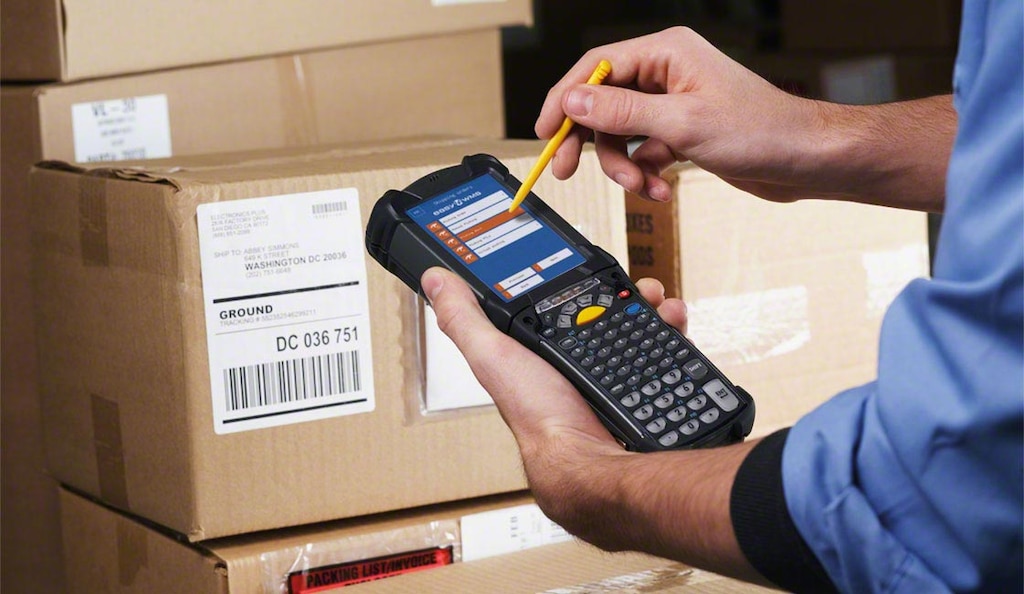
Effective available-to-promise management requires constant visibility into inventory and order status. A warehouse management system (WMS) — such as Interlake Mecalux’s Easy WMS — lays the foundation for calculating this metric by centralizing information on stock and its various states.
Easy WMS provides users with precise insight into stored goods. It distinguishes between on-hand, allocated, reserved, or blocked inventory — critical elements for determining what can be promised to a customer on a specific date. The software can also factor in inbound stock expected before the committed date, provided there are no delays.
Within this framework, the WMS supports calculating available-to-promise through operational reports. One of the most relevant is the grouped inventory report, which displays stock across all possible statuses and offers a consolidated view of real availability. This information is essential for reliable order commitments and stronger coordination between warehousing, planning, and customer service.
The importance of available-to-promise in the supply chain
Available-to-promise is a strategic indicator that ensures reliable delivery commitments and balanced inventory management. Applied correctly, it improves decision-making, reduces disruptions, and strengthens customer service. When supported by an advanced WMS and analytical tools, ATP becomes an operational pillar within an efficiency-driven, well-controlled supply chain.
Available-to-promise in 5 questions
Available-to-promise definition
Available-to-promise refers to the amount of inventory a company can commit to new orders at a given moment, considering current stock and outstanding orders. It helps manage expectations and guarantee product availability for customers.
What is available-to-promise used for?
ATP facilitates customer order allocation while avoiding overselling and delays. It improves customer service, optimizes production planning, and aligns inventory with demand so that delivery promises reflect reality.
What is the difference between available-to-promise and capable-to-promise?
ATP shows how much product can be reserved based on inventory and existing orders. Capable-to-promise (CTP) also considers future production capacity and potential resource constraints. It allows companies to make order commitments even when current stock falls short, as long as production can meet the deadline.
What is the difference between available-to-promise inventory and on-hand inventory?
On-hand inventory accounts for the quantity of products that can be used operationally at a given time, after internal restrictions (blocked items, safety stock) are excluded. ATP inventory goes further by subtracting already committed orders, revealing how much stock can be assigned to new customers without risking existing obligations.
What is the available-to-promise formula?
The ATP formula starts with current on-hand inventory, subtracts quantities committed to existing orders, and adds future goods receipts from planned production or inbound supply. The result reflects what a business can reliably guarantee without exceeding its supply capacity.