


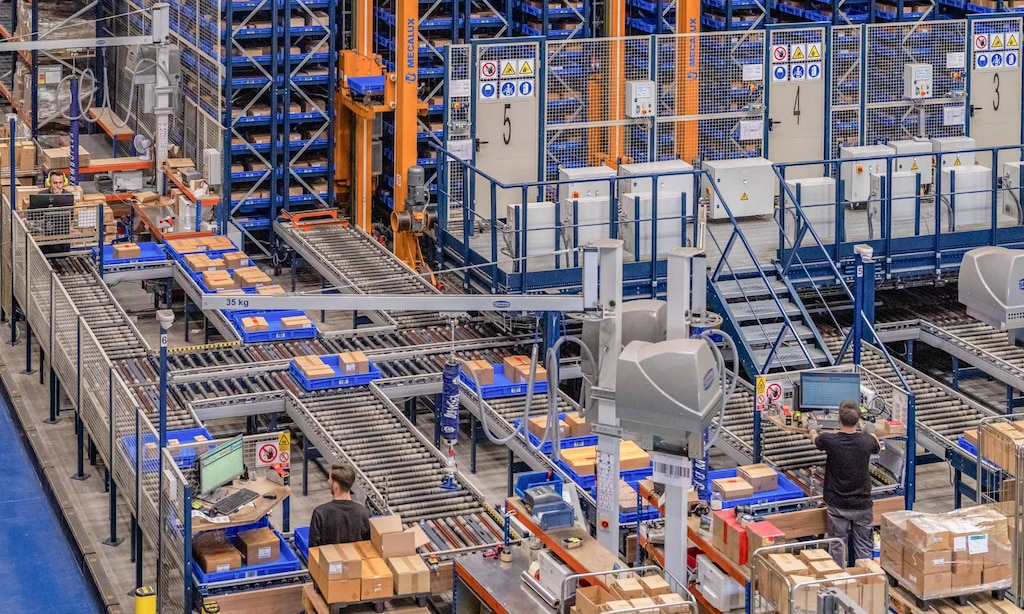
E-commerce growth is set to have a major impact on warehouse automation over the next few years. According to consulting firm Roland Berger, automation systems are poised for significant expansion; with an annual growth rate of 13%, the market is expected to double in size by 2032.
Consumer behavior will play a decisive role in the adoption of automated storage systems through the end of the decade and beyond. Roland Berger forecasts that by 2028, one in four consumers will shop online, up from 14% in 2019. At the same time, delivery lead times — previously a week — could shrink from today’s two days to just a few hours.
These trends are fueling demand for warehouse automation technologies, setting the stage for a strong recovery in the global material handling market. Meanwhile, continuous innovation in autonomous mobile robots (AMRs), automated storage and retrieval systems, robotics, and pallet handling equipment is driving this transformation.
Storage systems and software
More and more warehouses are deploying robotic systems, while software continues to gain traction in the material handling sector. As these facilities grow in complexity, seamless integration of diverse technologies and systems — alongside AI tools — becomes essential. Forklifts, AMRs, storage solutions, picking robots, loading and unloading equipment, and operator-assist tools (such as voice and vision picking) must all work together flawlessly.
This is increasing demand for system integrators and providers capable of coordinating every component. They must master key artificial intelligence (AI), Internet of Things (IoT), and radiofrequency identification (RFID) functions, as well as other technologies that optimize operational visibility. At the same time, cloud-based warehouse management systems (WMSs) are becoming indispensable. Forward-thinking companies are already adopting control towers: digital hubs that connect disparate systems, visualize real-time operational data, and support proactive decision-making.