


The multinational will expand its logistics capacity with a 28,500-pallet automated warehouse linked to its production plant in Michrów, near Warsaw
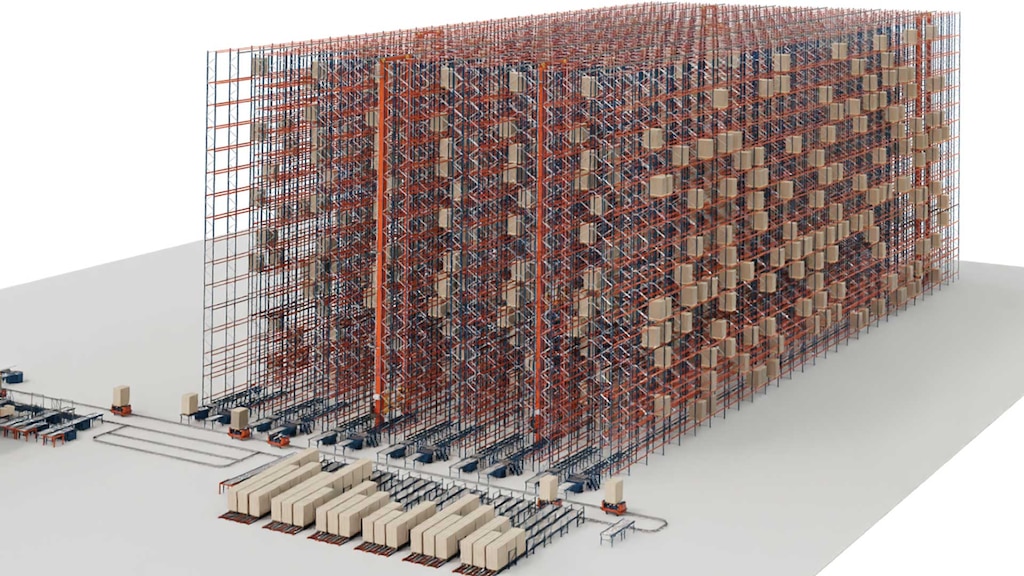
Mecalux will build an automated rack-supported building for PepsiCo in Michrów, near Warsaw. Connected directly to the company’s production plant, the facility will centralize beverage storage. The project follows two other logistics solutions delivered by Mecalux for PepsiCo in Poland: an automated warehouse in Środa Śląska and another outfitted with the Automated Pallet Shuttle system in Grodzisk Mazowiecki.
“Our goal is to reduce the logistics costs associated with transporting products to facilities outside the PepsiCo network,” says Bartosz Bielicki, Project Manager at the multinational snack and beverage company.
The new warehouse will be built alongside the Michrów beverage plant, where PepsiCo produces brands such as Pepsi, Mirinda, 7UP, Mountain Dew, Rockstar, and Lipton Iced Tea. The site is one of the multinational’s five manufacturing facilities in Poland, a key production and distribution hub for Central Europe.
Standing 125' high and spanning 331', the warehouse will store up to 28,500 pallets, the equivalent of more than 1,000 fully loaded trucks. Six double-deep stacker cranes will automate storage and retrieval. A 722-foot-long enclosed bridge equipped with elevators and an electric monorail system will link the plant to the warehouse, automatically transporting goods from the production lines.
More sustainable logistics processes
“The new warehouse will be able to receive more than 200 pallets per hour and dispatch another 200, enabling us to handle around 150 trucks a day. It will also reduce energy consumption by recovering braking energy from the stacker cranes,” says Arkadiusz Chłystek, Senior Project Engineer at PepsiCo.
The Easy WMS warehouse management system will coordinate and streamline the flow of goods in real time. The software will ensure correct FEFO (first expired, first out) stock rotation, a key requirement in the beverage industry.
Once operational, the automated warehouse will centralize inventory alongside PepsiCo’s production facility, reducing reliance on external storage. As a result, the company expects to eliminate around 8,000 transportation movements each year, avoid over 1 million miles of travel, and cut annual CO₂ emissions by approximately 2,200 tons.
The investment forms part of the multinational’s growth strategy and its PepsiCo Positive (pep+) sustainability program, which aims to improve operational efficiency while minimizing environmental impact.
PepsiCo: A global leader in its sector
PepsiCo is one of the world’s largest snack and beverage companies. Its extensive product range includes iconic brands such as Pepsi, Lay’s, and Doritos. The multinational is known for driving innovation in both production and logistics processes, and for adopting advanced technologies across its production plants and warehouses. PepsiCo has demonstrated a growing commitment to sustainability, investing in practices that minimize the environmental impact of its operations and foster a responsible supply chain.