


“Any company not pursuing some form of transformation risks being recklessly conservative”

IN-DEPTH ANALYSIS
By Ian Murrin, Rajesh Jethwa, and Mike Wright
Getting the scope and objectives of a transformation initiative right is no easy task. It is about setting a balance between being too ambitious — where failure can result from not hitting the goals set — and being too timid — whereby the program goals might be met, but the initiative fails to transform the required areas of the organization. As Michelangelo said, “The greater danger for most of us lies not in setting our aim too high and falling short, but in setting our aim too low and achieving our mark.” This balance also has to reflect the culture and capabilities of the company. One person’s ambitious revolutionary plan is another’s cautious evolution, so there can be no absolutes in this particular area of planning.
When President John F. Kennedy delivered his famous 1962 speech at Rice University, he outlined a revolutionary objective when he stated: “We choose to go to the Moon in this decade and do the other things, not because they are easy, but because they are hard.”
Failing to iterate and evolve is the highest possible level of risk that an organization can take
It is important to start with the mindset that failing to iterate and evolve is, in fact, the highest possible level of risk that an organization can take. The rate of change has accelerated considerably since Michelangelo’s time, and the “do nothing” option has its own pitfalls. Any company not pursuing some form of transformation risks being “recklessly conservative,” for which there can be implicit if not explicit repercussions. Undertaking periodic significant change is vital.
In defining the scope and objectives of the transformation, six key areas should be addressed, as they correlate with successful technology‐led initiatives.
Strategic alignment
All transformations need to be tightly linked to the organization’s overall business strategy, and the objectives should be expressed in tangible value terms that reflect and progress that strategy. How ready is the company to embark on a change initiative, given the competing priorities from the top down? What trade‐offs are you willing to make? Is the business strategy sufficiently well‐defined and suitably refined so that it helps clarify the direction of travel?
Personal visibility and accountability
Depending on the scale of the desired change, senior leaders — including the CEO — should personally and visibly endorse the objectives and scope. Although an estimated 400,000 people were involved in making it possible, Kennedy’s speech did a lot to set the tone for the nation’s efforts to land people on the Moon.
Customer-centric goals
The initiative should be defined in the most customer‐centric way possible, ideally based on the specific process and data changes required to improve the customer experience. If there are objectives for major technology platform transformations, they need to be framed in terms of the business value generated rather than the technical changes themselves.

Full stakeholder representation
Within the oversight and governance structures, it is crucial to incorporate representation from a very broad constituency. This can prove controversial, not least because the more external stakeholders involved, the higher the perceived risk. In reality, including outside parties helps ensure that the governance is honest and focused on the customer experience. Vendors, regulators, and customer advocacy groups can all play important roles.
Keep headlines pithy
Think carefully about the number of objectives and the scope, as it can be easy to overload a program with noncritical priorities. Kennedy’s summary of the ambition for the huge, multi‐year Apollo space program was distilled to a single elegant sentence: to send an American safely to the Moon and back before the end of the decade. Specific, aspirational, and time‐based.
Operate from observable data points
All projects and programs require milestones and checkpoints to stay on track, with progress updates communicated regularly. Even “bad” news about failures can be framed positively through the lessons learned and pivots that follow. However, it’s crucial not to rely on opinions about progress. Wherever possible, milestones should be assessed against observable data, not subjective views.
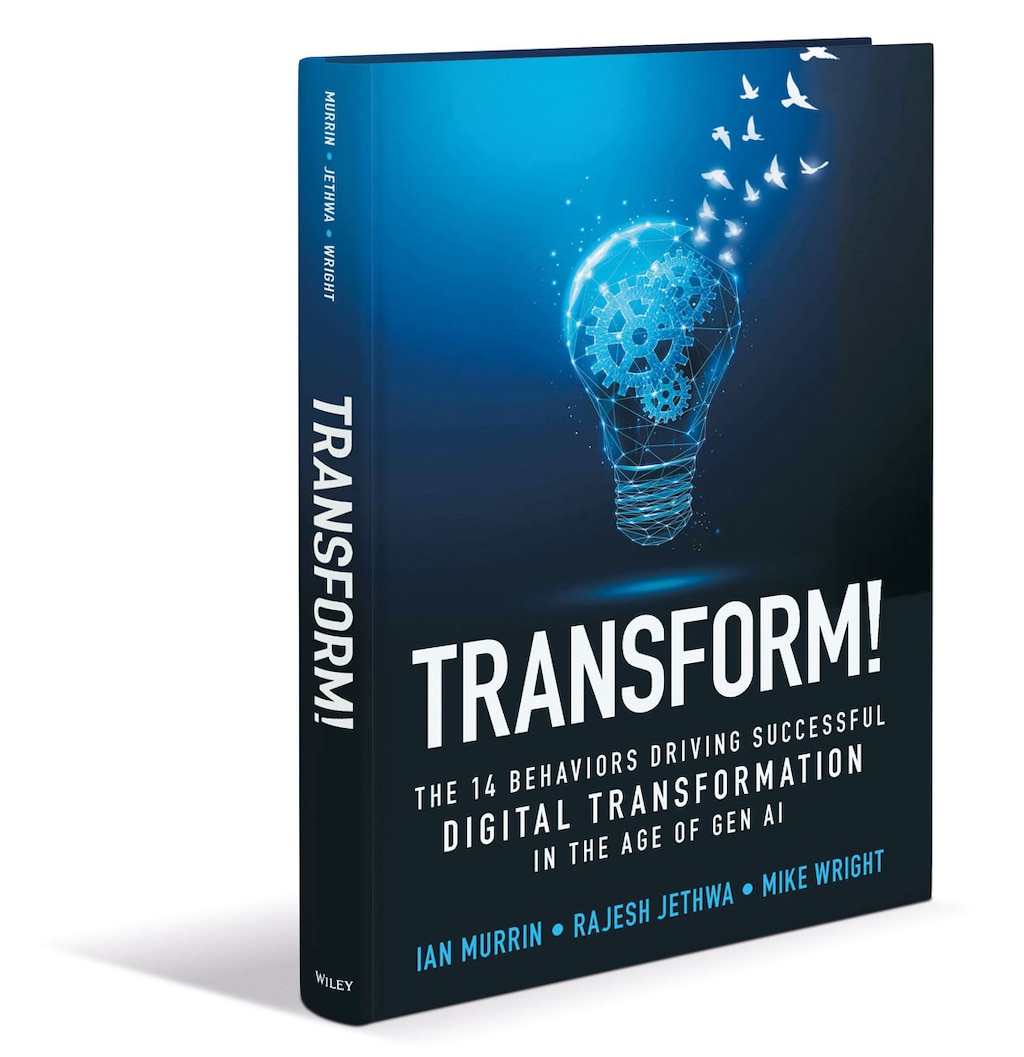 |
Excerpted and adapted from Transform!: The 14 Behaviors Driving Successful Digital Transformation in the Age of Gen AI, Ian Murrin, Rajesh Jethwa, Mike Wright (2025). Copyright John Wiley & Sons, Inc. All rights reserved. Reprinted with permission from Wiley. Transform! is available in hardcover and ebook wherever books and ebooks are sold. It will be released as an audiobook on October 29, 2026. |
 |
IAN MURRIN Technology leader and entrepreneur with a proven track record of founding, scaling, and exiting high-impact businesses. For over 30 years, Murrin has guided technology-led transformation programs for more than 130 of the world’s most prominent financial institutions, hedge funds, energy majors, and commodities traders, including Shell, BP, Glencore, Anglo American, Deutsche Bank, Nomura, and Morgan Stanley. He founded Digiterre in 2000 to bridge the gap between business ambition and technology execution. |
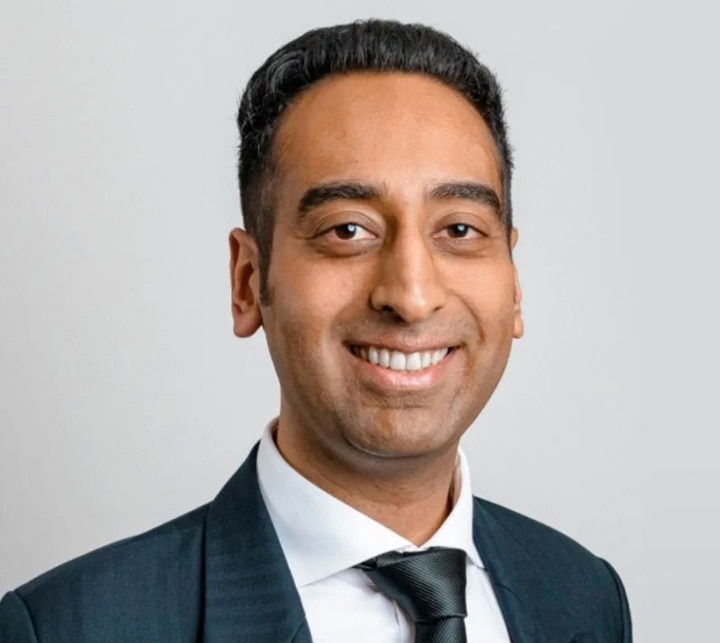 |
RAJESH JETHWA Multi-award-winning Chief Technology Officer delivering tailor-made solutions for global enterprise organizations. Jethwa began his career at Lloyds Banking Group. Later, he led front-office technology for foreign exchange, money markets, and international payments, creating and managing platforms over a 10-year span. As CTO at Digiterre, Jethwa consults with global financial services, energy, and commodities trading firms. He holds an MSci in Computer Science from University College London and is a Fellow of the British Computing Society. |
 |
MIKE WRIGHT Technology leader known for driving innovation and business transformation. Wright has served as Chief Information Officer at McKinsey & Company as well as Head of Technology at Willis Towers Watson, Man Group, and Fidelity International. He led multiple major digital transformations and pioneering Agile initiatives, working closely with Digiterre on innovation projects. Wright has twice been recognized among the UK’s top CIOs and is currently an Associate Non-Executive Director at the UK’s Disclosure and Barring Service. He holds an MA in Biochemistry from Oxford University. |