

AI agents could create up to $450 billion in economic value by 2028 through a combination of revenue growth and cost savings. This is according to Capgemini, which highlights the technology’s potential to manage and execute processes autonomously.
The consulting firm expects that within the next three years, organizations will begin integrating AI agents as part of human-supervised teams — treating them less like tools and more like members of the workforce. Capgemini also identifies AI agents as one of the fastest-growing technologies. In fact, 93% of executives believe that businesses that successfully adopt them over the next year will gain a competitive edge.
Today, 14% of companies have already implemented AI agents, 23% have launched pilot projects, and 31% are preparing for deployment. The greatest impact is expected in customer service, IT, and sales, with potential expansion into operations, R&D, and marketing over the next three years.
Less human intervention
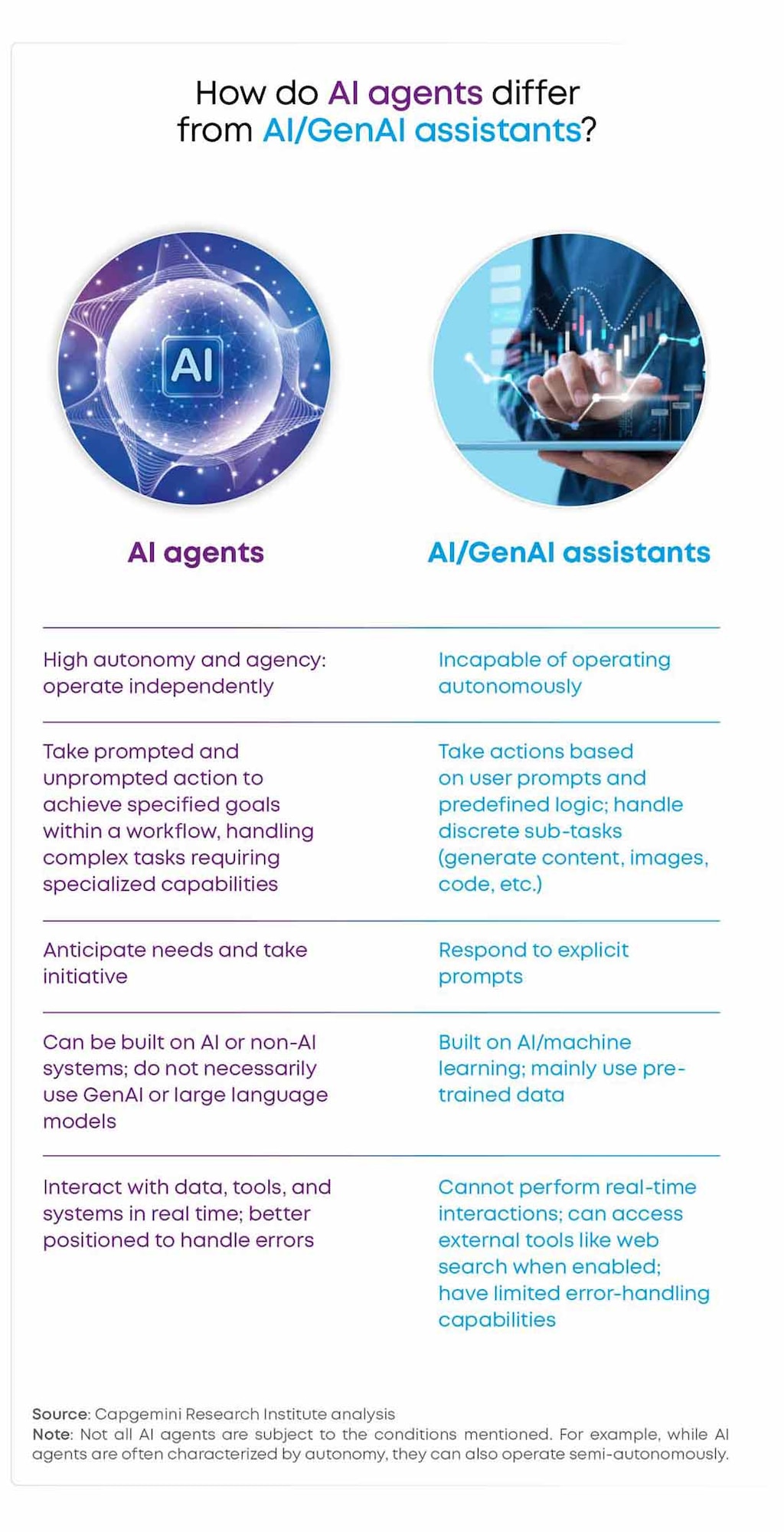
AI agents are programs, platforms, and software systems connected to business environments that make decisions autonomously and take action to achieve specific goals. They may do so with or without human involvement. Recent advancements in AI models and agentic AI enable these systems to break down tasks, solve problems, and deliver successful outcomes. Agentic AI is a broader concept encompassing the systems, tools, platforms, technologies, and practices that power agent functionality. It is also important not to confuse AI agents with AI- or generative AI-powered assistants, as their capabilities and roles differ significantly.