


“The real shift occurs when AI is used to make significant impacts on business margins or market position”

IN-DEPTH ANALYSIS
By Adam Brotman and Andy Sack
As OpenAI CEO Sam Altman said, artificial general intelligence (AGI) is likely going to be here in five years or so. It will be coming at us in a dynamic fashion, affecting everything, and we can’t exactly say when it will arrive or precisely what it will look like. That’s a lot to process.
At the risk of oversimplifying, we see three possible next steps:
- Be a deer in the headlights. Don’t do anything with AI, because soon enough AGI will be able to do anything we can possibly think of in terms of services, technology, or knowledge transfer.
- Look for efficiency. Think about the current AI capabilities and try to do the things you’ve been trained to do to help the business increase productivity, reduce overhead, and so forth.
- Experiment and learn. Start using the latest AI tools in your work now to gain hands-on experience and practice how to operate in the coming age of AGI.
Option one is off the table. You lose if you go that way. Option two is table stakes. Option three is where we choose to focus; it’s the most effective approach, and it’s not just gut instinct that tells us that. It turns out these options weren’t much different during the last great disruption: the advent of the internet. We can look at examples from Web1 and Web2 companies that took option three and how it served them well.
Business leaders can emulate the future right now, with AI still at its current level. That’s because today’s frontier large language models (LLMs) are already capable of more than you think, and the combination of humans and AI can create much of what true AGI might look like. You can already set up your own custom GPT for free, or even train your own model. The key is to put these tools into the hands of your company and customers in a way that will not only increase efficiencies but also advance your product/service experiences. And if you do that now, imagine how well-positioned you’ll be over the next five years as the underlying AI moves up the AGI spectrum levels. It’s a lot, we know. But you can still become AI-first and future-proof your business.
A mindset shift
AI-first individuals use artificial intelligence daily for both professional and personal tasks. They adopt a growth mindset and experiment with new technology platforms. They understand AI’s potential for breaking out of time-held personal limitations, expanding beyond their previously traditional roles. All of this is possible only because these individuals were using AI on a daily basis and as an extension of their own professional and cognitive capabilities.
The real shift occurs when AI is used to make significant impacts on business margins or market position
When a small group of AI-first individuals collaborates, the quality of decision-making, speed, and output improves significantly. AI allows businesses to scale operations fast and efficiently. For instance, chatbots handle customer service inquiries 24/7, while machine learning algorithms quickly analyze vast data to identify trends and opportunities. An AI-first mindset anticipates future trends and integrates this technology proactively to stay ahead, rather than merely reacting to changes.
Just as individuals move from literacy to proficiency and then fluency in their use of AI, organizations follow a similar progression. When C-suites employ it for strategic decision-making, resource allocation, and market positioning, they’re advancing along the AI-first spectrum. The real shift occurs when this technology is used to make significant impacts on business margins or market position, leading to compounding benefits.

Implementing an AI-first playbook
With the right AI-first mindset in place, a leader of an organization can make tactical moves to put that strategy into action. Achieving this requires tangible steps, ingredients, and frameworks that turn theory into effective practice.
The playbook is for leaders of business units, teams, or companies who want to start the journey of transforming their organization to become an AI benchmark. Adaptable to different contexts, this playbook offers a structured approach to integrating AI:
Education and proficiency
Begin with comprehensive AI training programs to build proficiency across the organization. They should cover the basics, applications, and potential impacts on various business functions, providing hands-on experience with related tools and technologies. This first step is critical because it’s a prerequisite for the rest of the playbook as well as for the governance and processes needed to scale AI successfully.
AI council
Establish an AI council composed of cross-functional leaders to drive AI initiatives, ensuring alignment with business objectives and fostering a culture of innovation. Members should be curious, passionate, and AI-literate, or at least committed to developing expertise in the field. It will be important to establish the council’s leadership, roles, meeting cadence, communication protocols, mission, and purview. Having executive sponsorship is critical to its success. It’s also vital to involve IT and Legal in the process, if not on the council itself.
AI use policy
Develop and implement an AI policy outlining ethical guidelines, data governance, and compliance measures, ensuring responsible usage. This policy should also provide clear guidance on how AI can and can’t be used, which tools are approved, and how to collaborate effectively with systems. Having an appropriately comprehensive AI use policy in place gives organizations more freedom to experiment and innovate without running afoul of security, privacy, or ethical considerations.
Roadmap and pilots
Design a detailed roadmap that includes pilot projects to test AI applications in various business areas. These will provide valuable insights and pave the way for broader adoption. Creating the right roadmap starts with auditing and discussing existing AI tools and projects, followed by an assessment of the value and feasibility of potential AI use cases. These cases range from cost savings and internal and external stakeholder-experience improvements to unlocking revenue and product-growth initiatives. Only then can the AI council make an informed call on the best way to prioritize and administer which AI pilots should go forward.
Getting ready for AGI
Given the possibility that this technology — or at least mid-level capabilities — is on the next few years’ horizon, companies and their councils should conduct regular assessments to evaluate progress and readiness for AGI. Anticipating future developments and planning for AGI integration is a sound long-term strategy that helps future-proof organizations. It can also help them better gauge what is possible — or almost possible — using today’s AI systems.
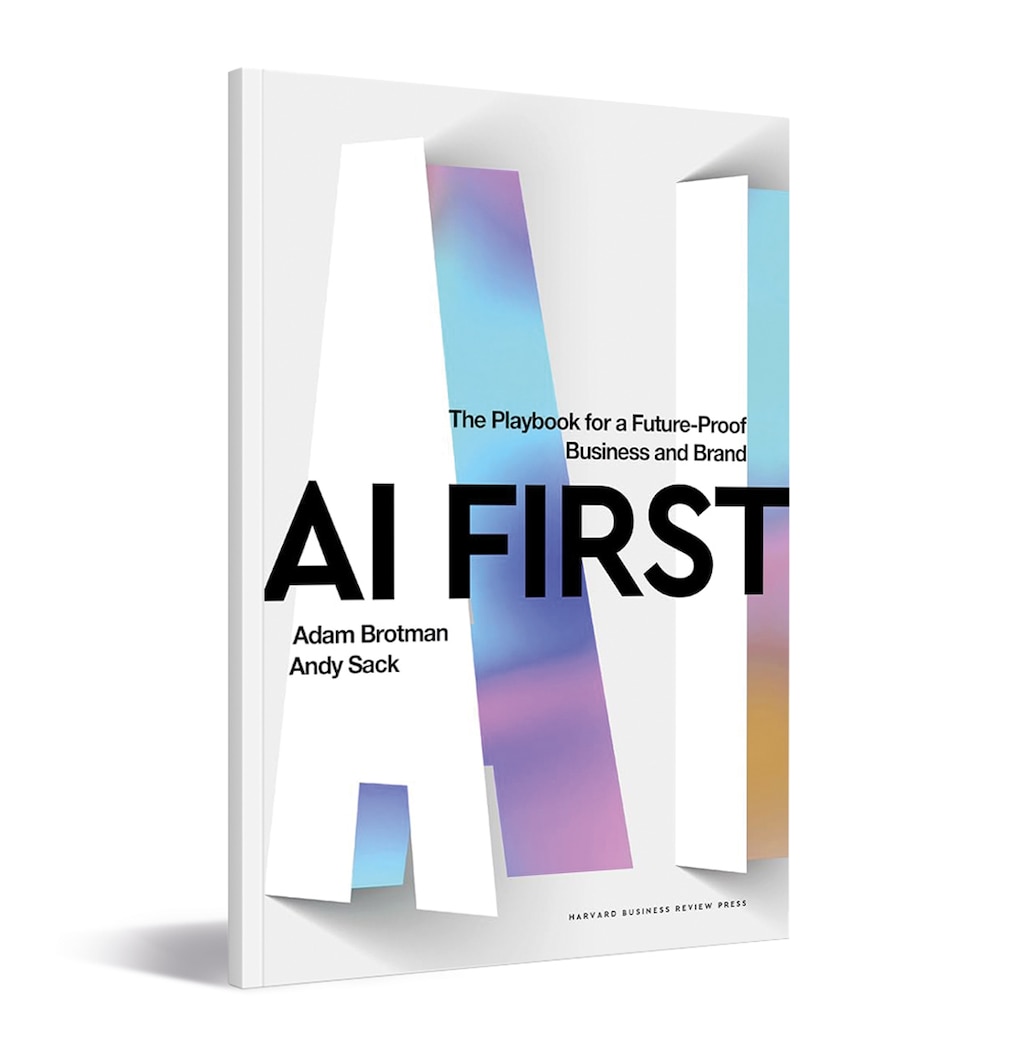 |
Reprinted by permission of Harvard Business Review Press. Excerpted and adapted from AI First: The playbook for a future-proof business and brand. Copyright 2025 Harvard Business School Publishing Corporation. All rights reserved. |
 |
ADAM BROTMAN Entrepreneur with over 25 years of experience leading major tech and consumer brands. He cofounded Forum3, serving clients such as Anheuser-Busch, Crumbl, Starbucks, and Tishman Speyer. Previously, Brotman was President, Chief Experience Officer, and co-CEO at J.Crew. He has been recognized as one of Fast Company’s “100 Most Creative People” and as CDO Club’s CDO of the Year. |
 |
ANDY SACK Entrepreneur and investor with over 25 years of experience in tech, finance, and venture capital. Dubbed the “godfather of the Seattle startup community” by GeekWire, Sack co-founded Forum3 in 2021 to help brands such as Anheuser-Busch, Crumbl, Starbucks, and Tishman Speyer explore and leverage emerging technologies. Before that, he was a consultant for Microsoft, driving digital transformation under CEO Satya Nadella. |