




Interview with Eric So (MIT Sloan) on AI and human thinking
“The best AI systems keep people thinking”
About the expert
Eric So is the Sloan Distinguished Professor of Global Economics and Behavioral Science at the MIT Sloan School of Management. His research examines how artificial intelligence, human behavior, and market incentives interact, with a particular focus on how people interpret and respond to AI advice. He leads the AI in Financial Markets and Decision-Making research group at the MIT Initiative on the Digital Economy. At MIT Sloan, So serves as Faculty Co-Director of the AI Executive Academy and Lead Faculty for the Generative AI Hub for Teaching and Learning. An award-winning educator, he teaches applied AI and quantitative investing and serves as Faculty Chair of the MIT Sloan PhD Program.
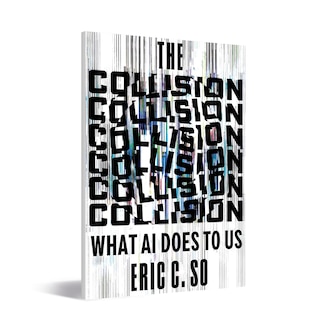
For companies, AI is an irresistible proposition: less effort, more output, quicker decisions. But what happens when the effort we remove is what makes people good at their jobs? In his new book, The Collision: What AI Does to Us, MIT Sloan Professor Eric So argues for a more demanding kind of AI adoption, one that raises performance without letting human expertise go soft.
-
Many businesses are adopting AI to make work faster. But is faster always better?
AI is making us faster at many tasks. It gives us access to incredibly proficient tools that draw on the breadth of human knowledge and can improve the speed of intermediate output. But the argument I make in The Collision is that AI isn’t just changing what we can do. It’s changing who we are as thinkers. The speed we see in output doesn’t necessarily mean we’re better off, either individually or collectively.
There’s a real temptation to move quicker and produce more in less time. But we also have to consider the other side of the ledger: what it costs us when we outsource more of our thinking in the service of speed. AI can make us faster, but whether it makes us smarter depends on how we engage with the tool.
-
Why are humans so tempted to hand over their thinking to AI?
In the book, I introduce the concept of “AI gravity”: the constant pull toward more and more reliance on AI. That pull comes from several forces acting together. One is biological. The human brain accounts for only around 2% of our body weight, but it consumes about 20% of the body’s resting energy use. Mental effort can feel costly, which makes tools that reduce it especially appealing. AI is attractive because it allows us to achieve many things without the mental effort.
There’s also a social and economic drive. In modern organizations, we’re often rewarded not only for what we produce but for how we perform relative to others. If I think my peer is using AI to do more work, faster, I feel pressure to do the same. The threat of falling behind creates even further pressure to leverage AI.
When you combine those forces with the fact that AI can increase short-term productivity, resisting it can feel unrealistic or even naive. That’s AI gravity: a mix of biological, social, and economic pressures that makes AI use very tempting, even when doing our own thinking would serve us better in the long term.
-
What is the “comfort trap” of AI?
The comfort trap refers to technological systems that offer ease. That ease acts as both bait and bind: it draws us in, but it can also constrain us. When technology does the work for us, we lose practice doing it ourselves. Our skills can weaken through disuse, much like muscles do. As we become less comfortable working without the tool, we rely on it more. That can create an ever-tightening spiral in which we lose the ability to act without the AI system.

Eric So explains how companies can avoid becoming overly dependent on AI -
How can companies avoid this trap?
For companies, one crucial step is to avoid measuring employees simply by how much they use AI. Pushing teams to increase their AI usage, or tracking it as a proxy for performance, is not a good metric. If we care about people’s long-term cognitive abilities, we need to make sure they continue to practice the skills that sustain those abilities.
A second step is to design interfaces that encourage people to think. If an AI system immediately gives you an answer, you can become anchored on that first output, even if it’s wrong, or even if you would have known better by thinking independently. Small design choices can make a big difference in whether users stay cognitively engaged. The best AI systems keep people thinking: they improve performance without removing the human effort that builds judgment.
Finally, companies should identify their “signature thinking skills”: the core skills that define their value. For a doctor, that might be diagnostic judgment. For a lawyer, it might be structuring arguments. For a professor, it might be translating concepts across domains. Those skills need to be protected. We should not outsource tasks to AI that help us maintain and sharpen our most important abilities.
-
You describe a factory experiment where partial automation helped people develop quality-control skills. What can organizations learn from that?

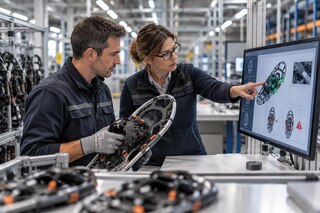
AI can amplify talent, but it can also hide weakness The study looked at people doing quality control on snowshoes. Researchers wanted to understand how different levels of automation affected not just performance but also cognitive engagement. When the fully automated system made the decisions and people simply acted on them, they learned less. Once the automation was removed, they were worse at detecting defects than people trained with partial automation or no automation.
The more hopeful result came when the system offered suggestions but people retained responsibility for the final decision. Once the automation was removed, these participants detected defects just as well as those trained entirely manually. They also reported greater autonomy and a stronger sense of meaning than those trained with full automation, and showed greater behavioral engagement.
The takeaway is that how we design AI support matters. Keeping people actively involved in decisions during training can help them develop critical skills and remain capable when systems fail. Deliberate practice without AI can also help protect those skills, but this experiment’s central lesson is about preserving human judgment while AI is in use.
-
Does AI amplify talent or hide weakness?
One reason AI is so attractive is that it can help less-experienced people produce work that looks much more expert. That can be useful, but it also comes with fine print. In the real world, the output is often not the final step. Professionals still have to go the last mile: stand in front of an audience to present an idea, defend it in a board meeting, or persuade others to support it. Research shows that when AI systems are used simply to generate outputs, people can struggle with that next step because they haven’t grappled with the ideas enough to make them their own.
For experienced professionals, the picture can be different: senior leaders often know where to leverage AI, understand the nuance of their field, and can distinguish between good and bad outputs. In that sense, AI can amplify talent. But it can also hide weakness, especially when the output makes someone appear more capable than they are without AI. The outcome depends on what you’re trying to measure and what you’re optimizing for.
AI can make us faster, but whether it makes us smarter depends on how we engage with it
-
How can managers build calibrated trust in AI?
AI is capable, but it can also be flawed. If people trust it too much, they become overreliant. If they trust it too little, they fail to benefit from what the tool offers. A major problem is first-impression bias. When companies roll out a new AI tool, they often show the highlight reel: the impressive demo, the best use cases, all the amazing things the system can do. They rarely reveal where the system fails or gets things wrong. That creates excessive confidence. People need to see both the capabilities and the pitfalls so they know when to stay vigilant.
Balancing trust in AI becomes even more essential as systems improve. The more capable they appear, the less we feel the need to remain cognitively engaged. If I believe the AI will complete the task perfectly, I stop committing mental resources to checking it. I may simply pass the output along.
Managers should therefore show employees both successes and failures, encourage people to maintain the mastery needed to evaluate outputs, and schedule time for work without AI so teams understand what they’re still capable of on their own.
-
How can we benefit from AI’s abundance of intelligence without compromising our own?
The greater opportunity is to use AI to challenge ourselves, pursue higher aspirations, and tackle frontiers that would once have seemed unthinkable In the book, I offer four principles. First, value the struggle. We often frame it as something bad to avoid, but struggle is critical for forming mastery, expertise, and capability. Just as we understand the value of exercise for the body, we need a similar mindset shift in the age of AI: working through a problem is not something to eliminate. It’s part of what helps us become more capable.
Second, value who you are without AI. That means separating what you can accomplish with AI from what you can do on your own. Much of the real world still happens outside the digital sphere, so it’s in your best interest to make sure you can still perform independently when the technology is unavailable.
Third, treat AI as your cognitive trainer. AI can act as a capable tutor that expands what you know. The challenge is to use it as a thought partner, not just an answer machine, so it helps you strengthen your thinking rather than replace it.
Finally, reinvest your cognitive surplus. Devote the time and mental energy AI saves to learning more and taking on more ambitious challenges. Don’t spend all those gains simply producing more of the same work.
-
What is one rule every AI-powered company should follow?
If I had to give companies one rule, it would be to reframe AI use: not as a way to do the same tasks a little faster, but as a means of expanding what’s possible. Throughout history, the most transformative technologies have done more than make existing tasks more efficient; they’ve enabled us to achieve things that were once impossible. AI has the same potential.
Artificial intelligence can save time and remove rote work. But what matters is what companies do with that saved time. Too often, AI is deployed to produce more of the same output, just faster. The greater opportunity is to use it to challenge ourselves, pursue higher aspirations, and tackle frontiers that would not have been thinkable before the AI era.