


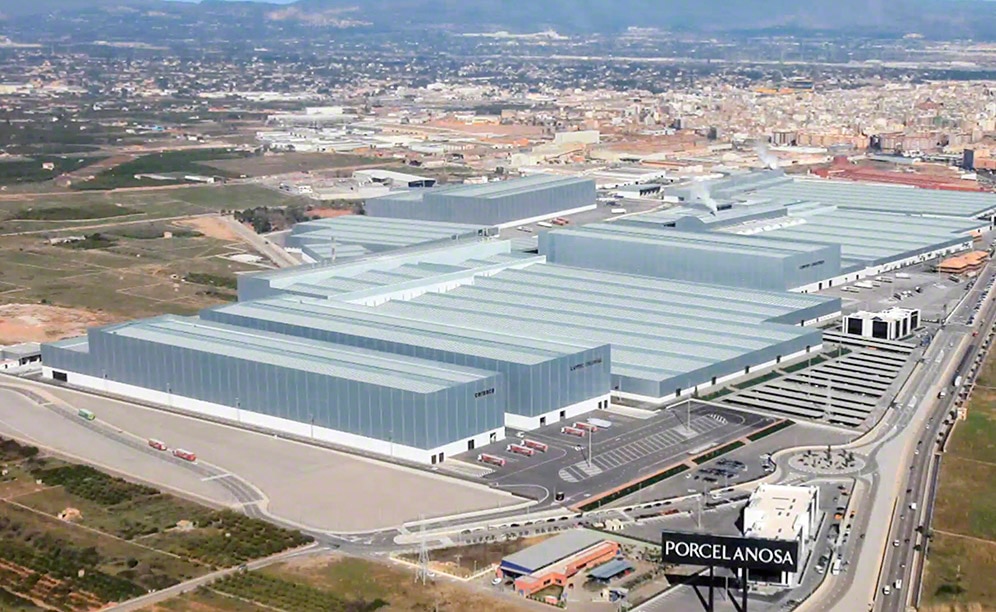
Porcelanosa Group integrates the latest technology into its five logistics centers
Trust, growth, and success: A long-standing partnership between the ceramic tile manufacturer and Mecalux

Porcelanosa Group’s logistics complex in Vila-real (Spain) includes five high-capacity automated warehouses. Known for its commitment to innovation, the company has incorporated the latest technology into all its logistics processes, supporting its expansion and strengthening its international leadership. Mecalux designed and implemented the storage solutions best suited to its operational needs. To meet future market demands, the facilities have also been prepared for expansion, allowing storage capacity to be scaled without disrupting business operations.


About Porcelanosa Group
Porcelanosa Group is a leading Spanish business group and a globally recognized brand. It was founded in 1973 in the town of Vila-real (45 miles from Valencia), with clear international ambitions. At present, it does business in close to 150 countries.
Initially, Porcelanosa Group focused on tile manufacturing, but diversifying its products and services was fundamental to its expansion. Nowadays, it carries an extensive range of natural and ceramic tiles and flooring, ventilated facades, kitchen and bathroom fixtures, faucets, and furnishings, as well as building systems for modern architecture. Eight businesses make up the group: Porcelanosa, Venis, Gamadecor, Systempool, L’Antic Colonial, Butech, Noken, and Urbatek.
Five automated warehouses
Porcelanosa Group’s logistics center in Vila-real is strategically located to distribute the company’s products swiftly throughout Spain and worldwide.
In 2003, Mecalux assembled the Group’s first automated warehouse. Bearing in mind the multinational’s business requirements, projected growth, and corporate strategy, Mecalux proposed building separate facilities for Porcelanosa, Venis, L’Antic Colonial, Noken, and Urbatek. This large-scale project was carried out over a 10-year period.
Mecalux’s technical team worked alongside Porcelanosa Group to design the best solution to meet its needs. The result is an automated warehouse model tailored to each of the Group’s businesses (adapted to the various product sizes, volumes, and turnovers).
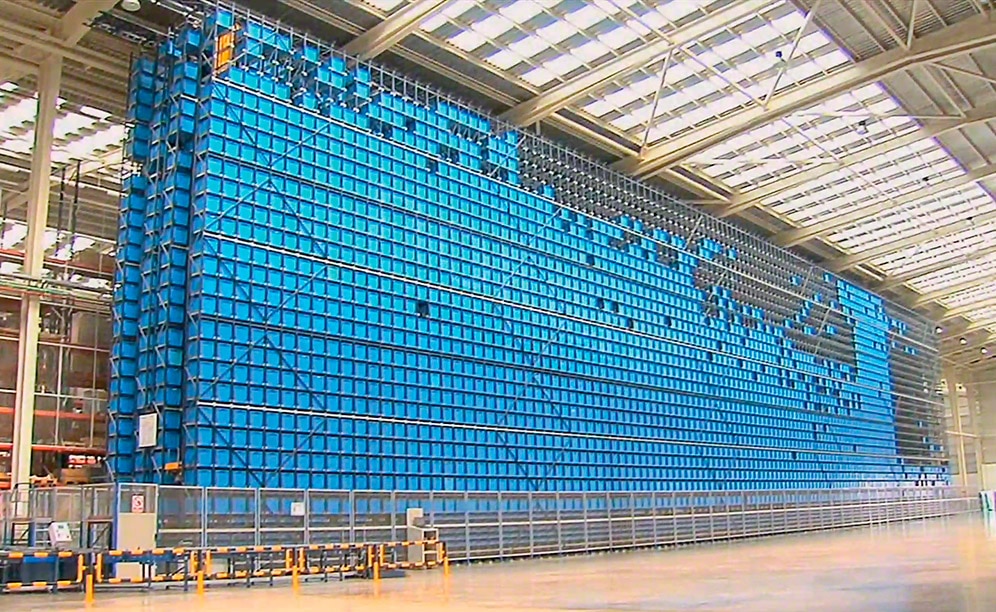
The design stands out for its simplicity: each warehouse is equipped with stacker cranes that store and retrieve goods automatically. Receiving, picking, and shipping operations are performed at the front end of the facility, supported by a comprehensive system of conveyors and transfer cars.
With this solution, Porcelanosa Group has achieved the desired throughput in each of its centers while providing speedy, efficient service. In practice, the only difference between the facilities lies in their storage capacity, as their operations are very similar.
Mecalux and Porcelanosa Group
The two companies have built a close partnership since the 1980s. In fact, Porcelanosa Group and Mecalux have followed very similar paths: both corporations have based their growth on technological development and operate extensive international distribution networks.
Mecalux has equipped Porcelanosa Group’s regional warehouses and distribution centers both in Europe and the Americas.
The first warehouses did not feature the level of automation and sophistication achieved today. They were housed in lower-rise buildings, and associates used man-on-board handling equipment to move pallets. Moreover, order picking was carried out in line with the person-to-goods method. However, Porcelanosa Group’s rapid growth in Spain led to the need for additional facilities, each taller than the last and with greater storage capacity. To achieve optimal throughput levels, the company first had to move toward computerized management and later automate all operations.
Logistics centers in Vila-real
Porcelanosa Group’s logistics centers are spread across a large site. Covering such vast distances meant higher material handling overhead when transporting goods, which needed to be minimized.
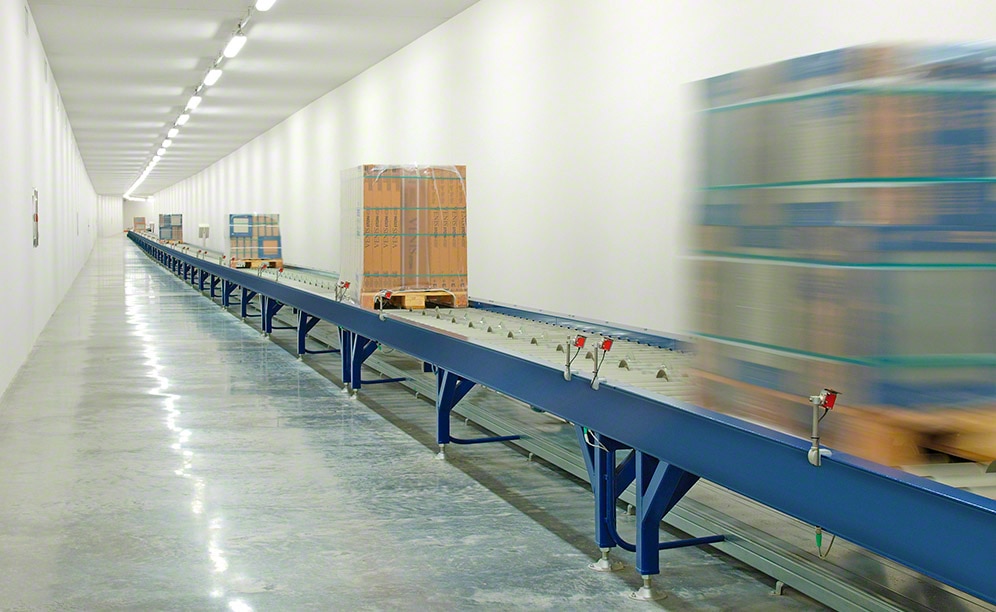
Mecalux proposed that each warehouse be as close as possible to the production dispatch areas. In addition, two zones were connected via tunnels equipped with automatic conveyors, avoiding the constant use of forklifts.
The different projects were completed progressively. The first warehouse, for Porcelanosa, was commissioned in 2003, followed by Urbatek in 2007. The facilities for L’Antic Colonial and Noken were then built, and lastly, the Venis warehouse in 2011.
A significant proportion of the goods stored at the Urbatek and L’Antic Colonial facilities comes from outside the production plant, which is why they are located at one end of the logistics complex. Meanwhile, the Noken warehouse comprises a building near the Group’s headquarters, in the same town.
Four of the five facilities are very similar, each incorporating an automated storage and retrieval system (AS/RS) for pallets. Only the Noken site differs substantially from the others, with its mini-load system (AS/RS for boxes). To better understand how they operate, the following sections describe three of Porcelanosa Group’s five automated warehouses.
Venis warehouse
Opened in 1986, Venis produces ceramic tiles and overlays in a broad array of formats, styles, and finishes. It stands out for the versatility of its designs and its use of cutting-edge technology to manufacture ceramic tiles and porcelain stoneware.
The AS/RS, set up inside a 102' high building, occupies a total surface area of 6.2 acres. However, only two acres have currently been allocated to storage, leaving the remaining space available for future expansion.
This facility is separate from the manufacturing plant, so the connection between the two centers is fully automated via an underground tunnel equipped with conveyors and elevators.
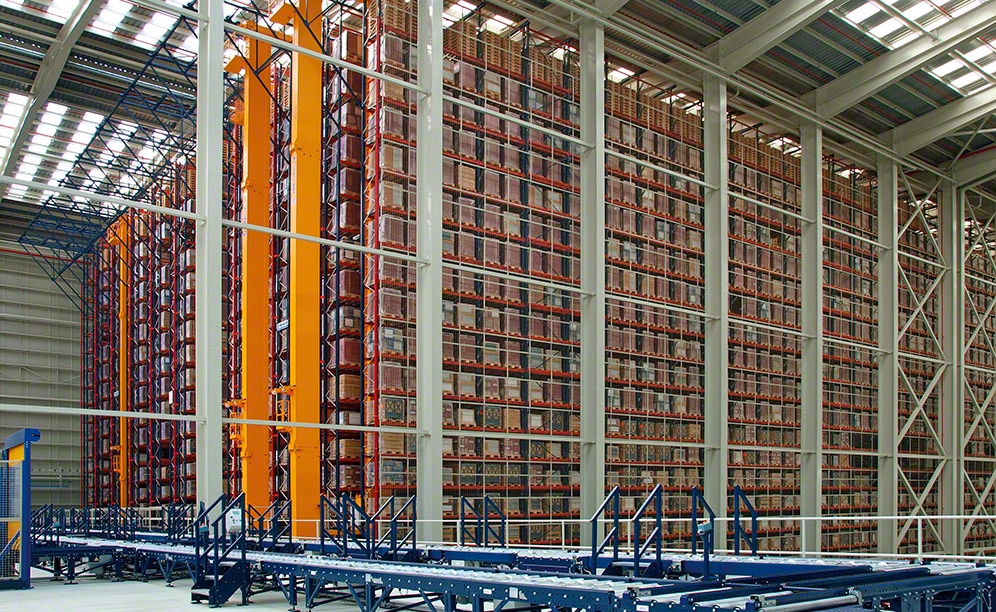
The warehouse consists of 10 storage aisles with single-deep racks on both sides, served by one stacker crane per aisle.
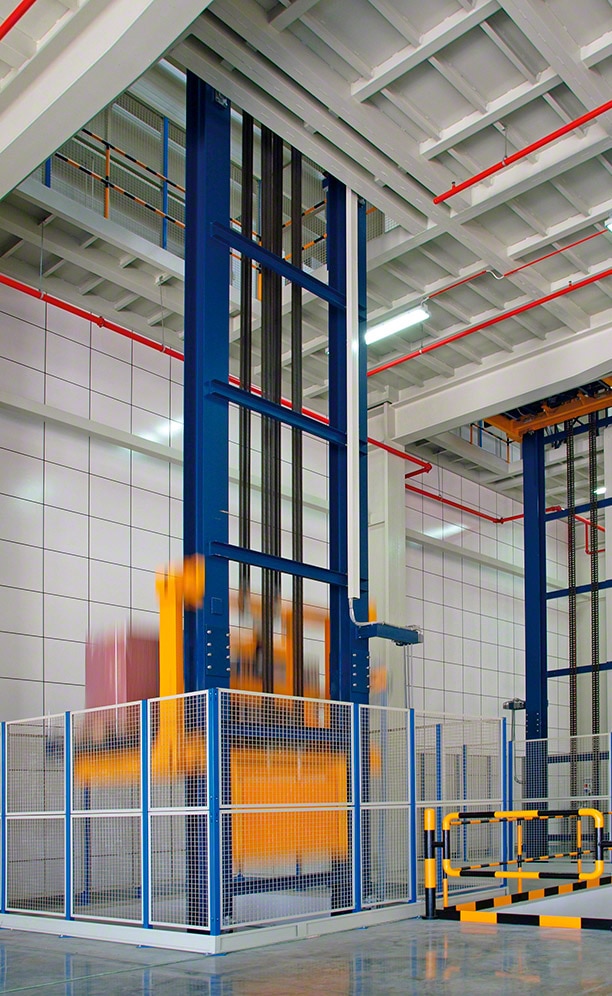
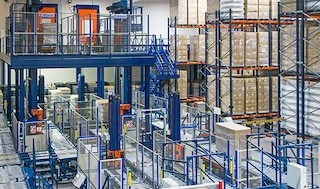
At the end of the aisles, there are two conveyor levels: the upper level handles inbound operations, while the lower level manages outbound flows. A total of eight elevators connect the two floors, ensuring the required workflows. There is a direct inbound line for goods arriving from production, while two auxiliary infeed lines introduce pallets from other facilities and empty pallets. In all cases, pallets must pass a rigorous quality inspection before entering the warehouse.
Picking is the facility’s main operation, with a very high number of orders fulfilled each day. For that reason, an ample picking area has been set up in front of the storage aisles.
Warehouse inbound area
The receiving process begins at the end of the production lines. Roller conveyors running through the underground tunnel automatically transport the goods to the warehouse.
At both the entrance and exit of the tunnel, elevators route the pallets to the corresponding level. Once the pallets reach the warehouse, two elevators move the goods to the upper floor. Each can transport two pallets weighing up to 3,527 lb.
The elevators are outfitted with safety features such as fencing, light curtains, secure maintenance access doors, and automatic high-speed doors for pallet transfer.
The warehouse’s inbound conveyor was installed on the upper floor. It includes a recirculation loop that enables pallets to be redistributed easily in the event of an incident. At the same time, it connects with the other elevators moving pallets from the picking area and the auxiliary inbound points.
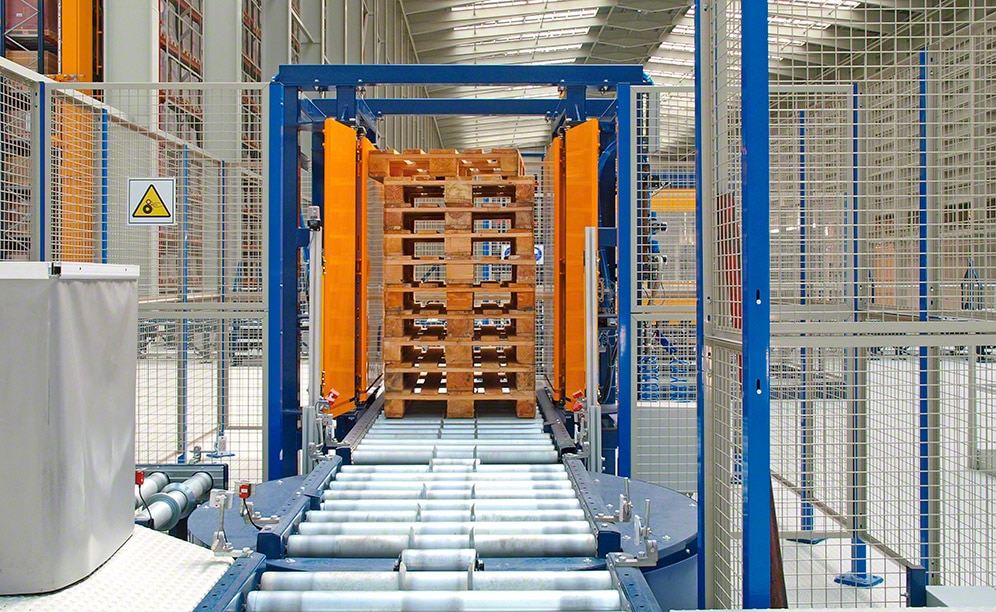
These auxiliary entrances are located on one side of the warehouse and are allocated to products arriving from external facilities, as well as empty pallets generated during picking operations. Empty pallets are stacked and fed into a conditioning station to ensure their size and sturdiness before they enter the AS/RS.
AS/RS features
The AS/RS measures 525' long by 102' high. It comprises 10 aisles with single-deep racking on both sides, featuring 23 storage levels with two pallets stored per bay. Overall, the system provides a storage capacity of 65,320 pallets measuring 31.5" x 47.2", each with a maximum load height of 57.1" and a permissible weight of up to 3,527 lb.
Twin-mast stacker cranes operate at a travel speed of 590'/min, completing a total of 237 combined cycles per hour. These machines ensure a very high throughput without human intervention, eliminating logistics errors associated with manual handling.
The stacker cranes are equipped with an energy regeneration system capable of recovering and feeding back into the power grid approximately 15% of the energy generated during descent maneuvers and travel-axis deceleration.
Picking area
This space is located on the ground floor, directly behind the outbound conveyor system and in front of the storage aisles. It consists of eight aligned pick stations, where up to 32 orders can be filled simultaneously.
Each picking station includes a buffer area for pallets used in this operation, which are supplied as needed. Additionally, the recirculating conveyor system enables goods to be placed on pallets according to stackability criteria.
To make associates’ tasks easier, each station is equipped with a robotic arm for handling heavier packages with minimal effort.
The picking tables holding the source pallets (from which products are picked for each order) and the destination pallets (where items are placed) are raised via a hydraulic system to keep the pallet at an ergonomic working height.
Four elevators transfer pallets containing the remaining goods back to the upper floor for re-entry into the AS/RS. Meanwhile, two double transfer cars manage empty pallets and completed orders. The latter pass through a stretch-wrapping station and are then distributed into two preloading lanes before being dispatched.
A pedestrian tunnel links the picking area with the rest of the warehouse. It runs beneath the transfer car aisle and the conveyors serving the picking stations.
Connections and shipping
Separating inbound and outbound operations across two floors has eliminated interference between the two flows. As a result, pallets move smoothly and continuously in every aisle.
A large staging area was set up for pallets ready for shipment. Consolidated goods are held there temporarily before being loaded onto the distribution vehicles.
The staging area features two blocks (1 and 2), each with six pallet accumulation lanes. This setup significantly reduces vehicle loading times.
L’Antic Colonial warehouse
The wide variety of products handled by Porcelanosa Group has led to specific requirements in some of its facilities. This is the case of L’Antic Colonial, a manufacturer of floor and wall coverings that works with oversized flat-packs (laminate flooring) on 88" x 47.2" pallets.
Mecalux custom-designed all the handling equipment required to move these products and properly place them in their assigned storage locations. The stacker cranes, conveyors, elevators, picking stations, and transfer cars are all double-width.
In addition to the standard pick stations, a separate area was set up to assemble orders containing oversized products, located perpendicular to the aisles where they are stored. The conveyors and transfer cars link the warehouse with the picking stations.
Noken warehouse
For Noken, a company specializing in bathroom products, Mecalux installed a mini-load system (instead of an AS/RS for pallets) due to the small size and low weight of its items, mainly faucets and accessories.
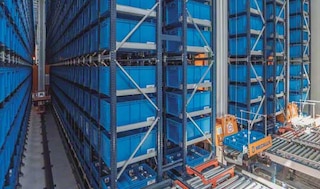
The mini-load AS/RS is composed of two 230-foot-long aisles with single-deep racking on both sides. With a height of 49', the racks feature 30 storage levels and provide capacity for 15,360 boxes. The AS/RS handles two box sizes: 23.6" x 15.7" x 16.5" and 23.6" x 15.7" x 4.7", both with a maximum unit weight of 110 lb.
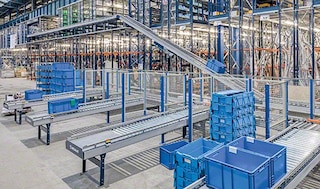
Each aisle is served by a stacker crane responsible for storing and retrieving goods automatically. At the front of the warehouse, a box conveyor system connects the storage aisles with two picking stations and one replenishment station.
Both the conveyors and pick stations are specifically designed to handle the two box formats.
The stacker cranes deliver the goods to the pick stations, where associates retrieve the required items and place them into the corresponding order. A put-to-light system indicates the box into which the items must be put, and the workers confirm the action by pressing the lit button.
Easy WMS and Galileo
Porcelanosa Group’s five facilities are supervised by Mecalux’s Easy WMS warehouse management system. This software coordinates and oversees all operations, including goods receipt (identifying and validating products arriving from production or external suppliers), putaway (according to consumption and product turnover criteria), order picking, and shipping (with pallets grouped by order or destination).
Mecalux’s Easy WMS also helps Porcelanosa Group improve service quality, reduce costs, and increase warehouse profitability. Additionally, its scalable architecture allows the system to adapt to the company’s changing operational requirements.
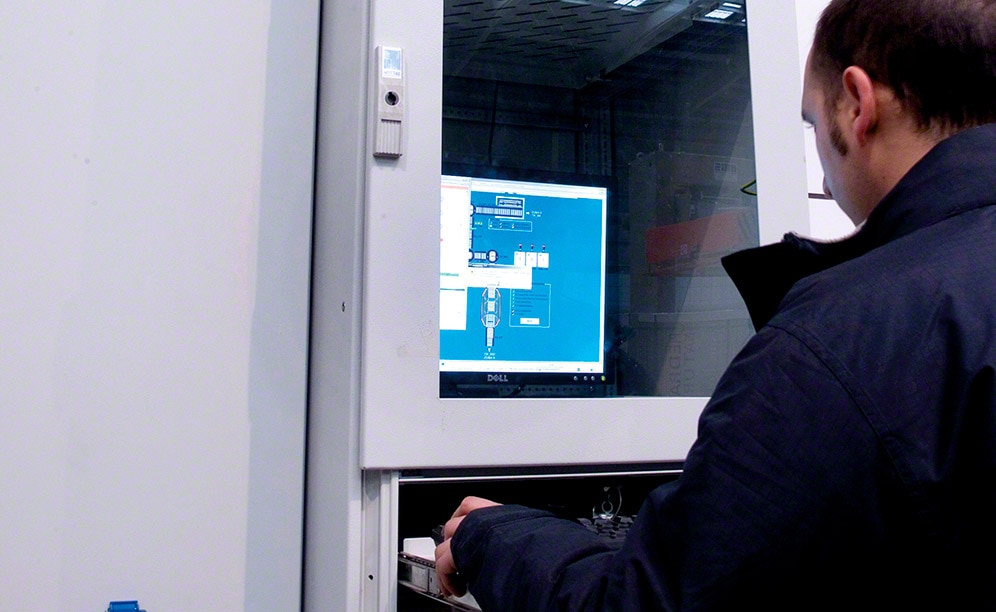
As Porcelanosa Group’s facilities are fully automated, Mecalux’s Galileo warehouse control system was implemented to manage the movements of all material handling equipment involved in internal transport and storage operations (i.e., the stacker cranes, conveyors, elevators, and transfer cars).
Ready for the future
Porcelanosa Group, a global leader in its sector, has integrated the latest technologies into all its logistics processes. Mecalux has contributed to its growth over the years by designing and equipping its warehouses.
These facilities more than fulfill Porcelanosa Group’s original requirements. They provide a high storage capacity, incorporate state-of-the-art material handling equipment, and enable fast, efficient operations.
The Vila-real logistics centers have also been designed with future growth in mind. As market demand increases, storage capacity can be expanded, the conveyor system extended, and additional pick stations added — all without interrupting operations.
At the same time, Mecalux’s Easy WMS will continue to support the company by adapting to operational changes, new requirements, and future production growth.
In recent years, Porcelanosa Group has experienced unprecedented expansion and strengthened its global leadership. By partnering with Mecalux, it has benefited from warehouse automation to maximize productivity and successfully meet these new challenges.
| Venis warehouse | |
|---|---|
| Year built: | 2011 |
| Storage area: | 2 acres |
| Storage capacity: | 65,000 pallets |
| No. of stacker cranes: | 10 |
| Warehouse height: | 102' |
Gallery
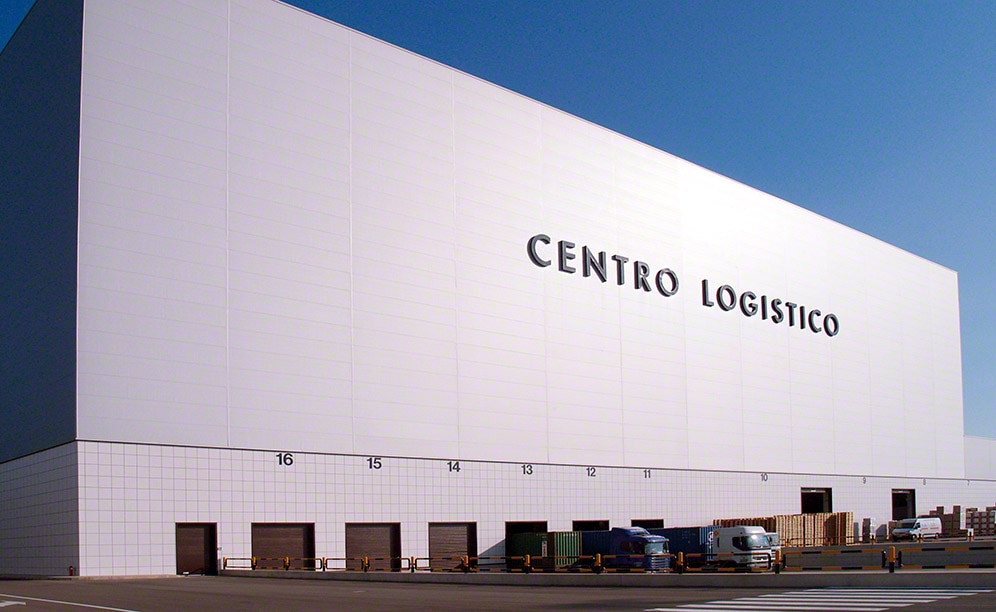
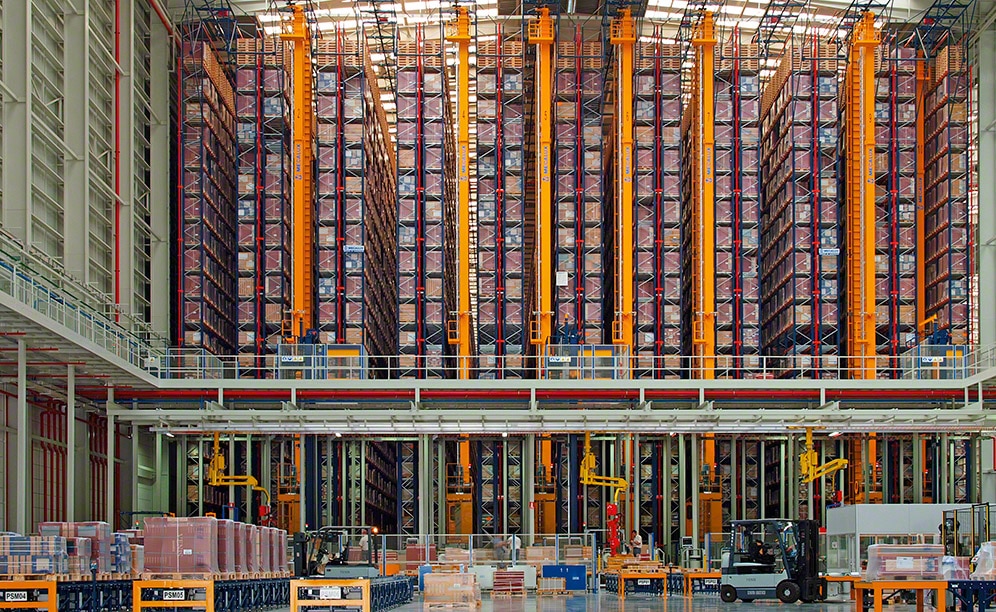
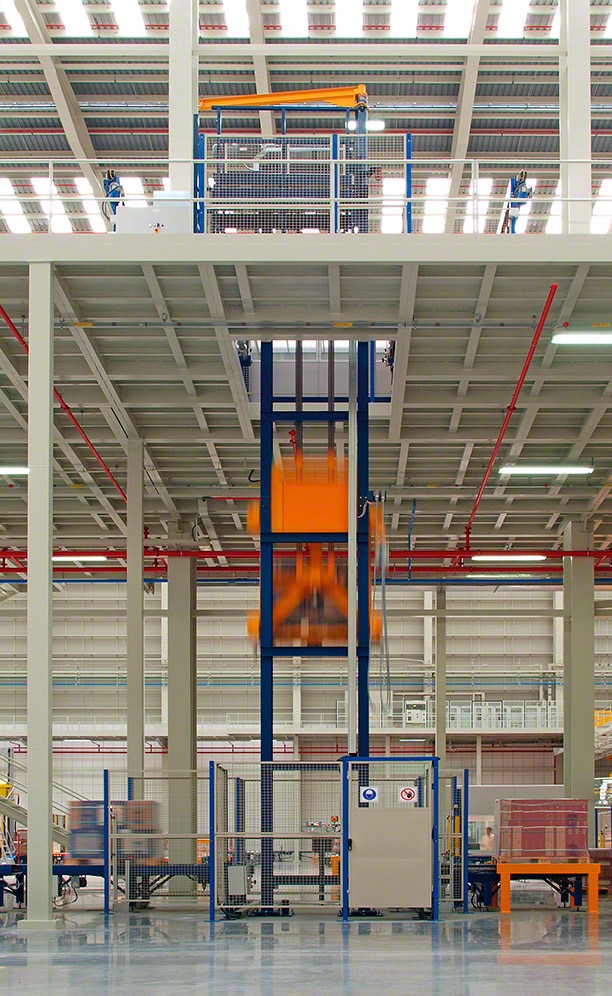
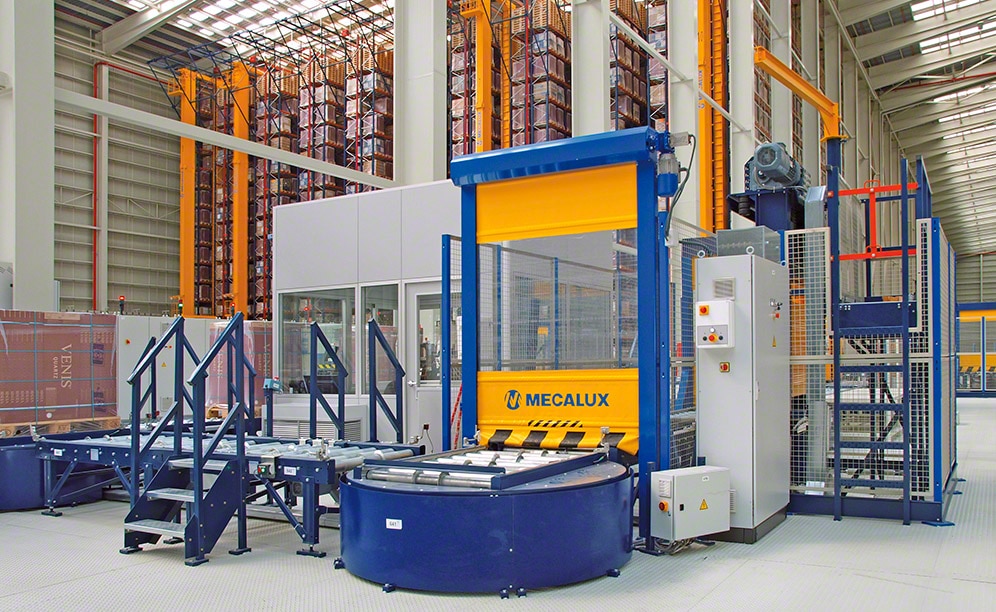
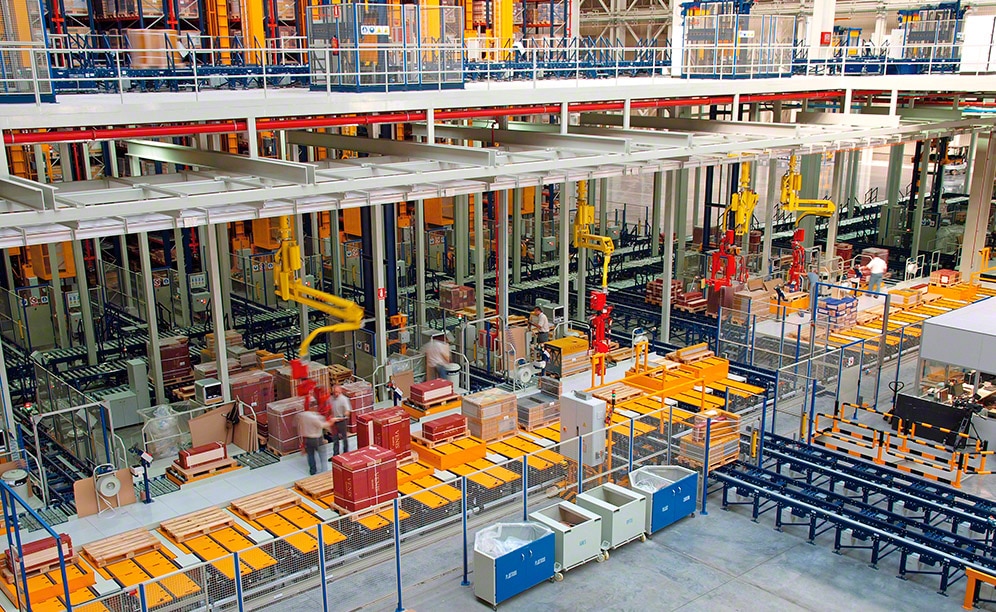
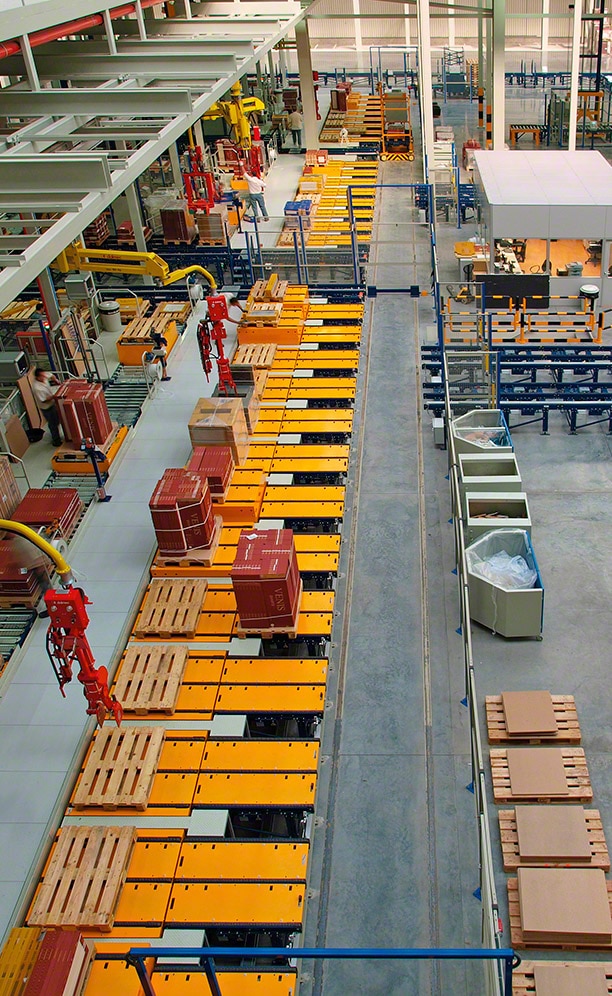
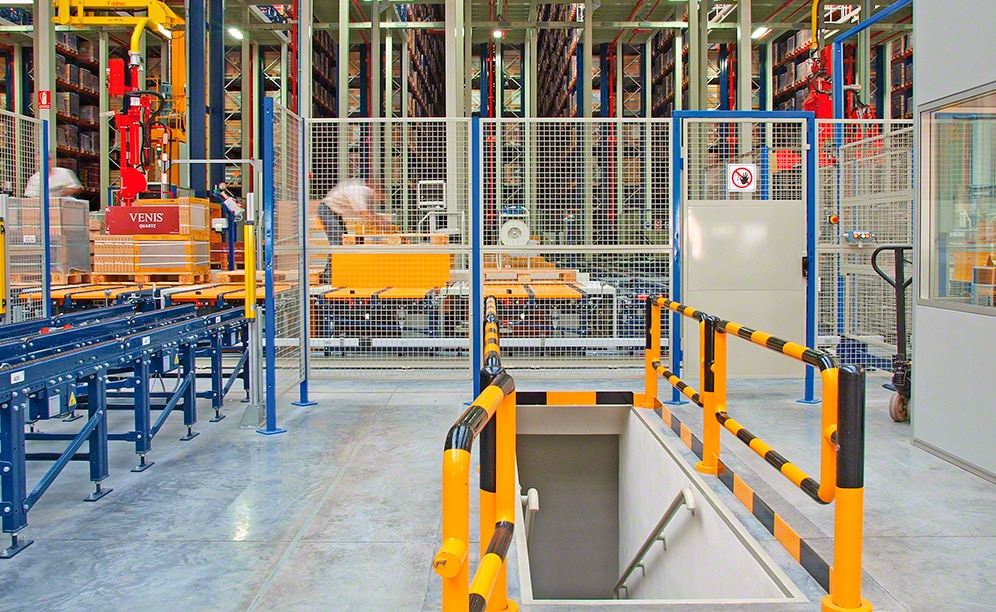
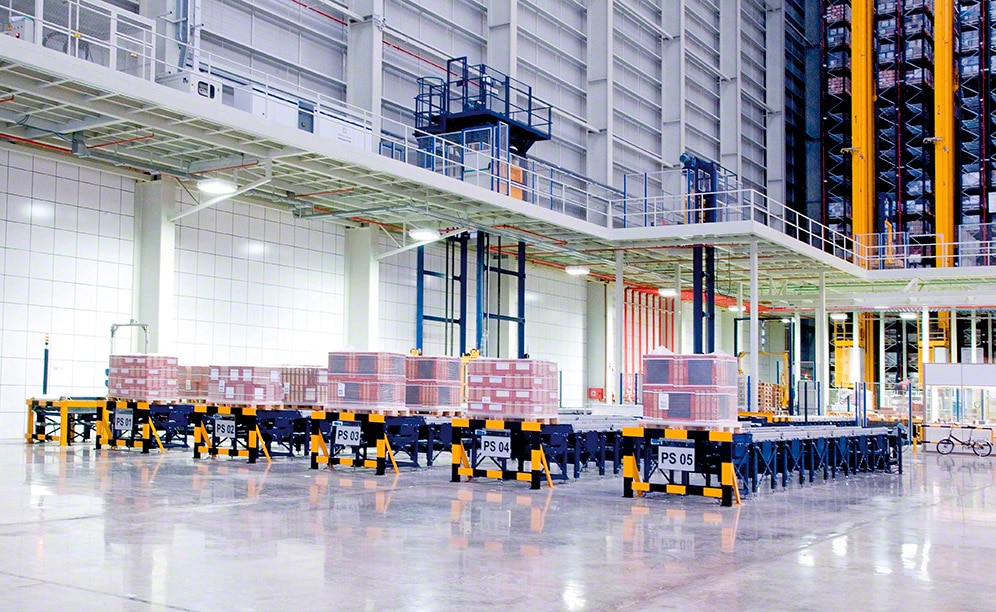
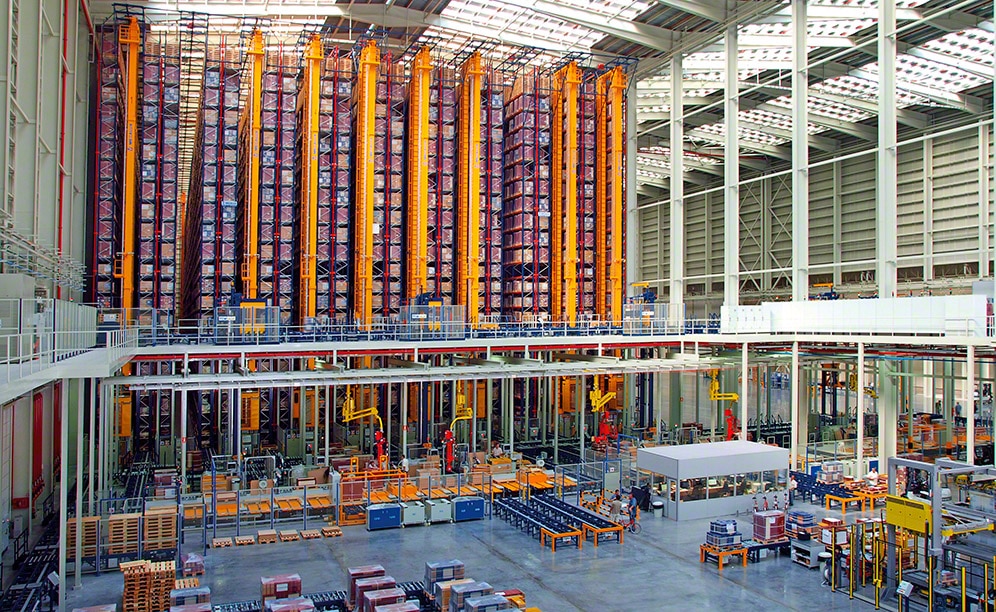
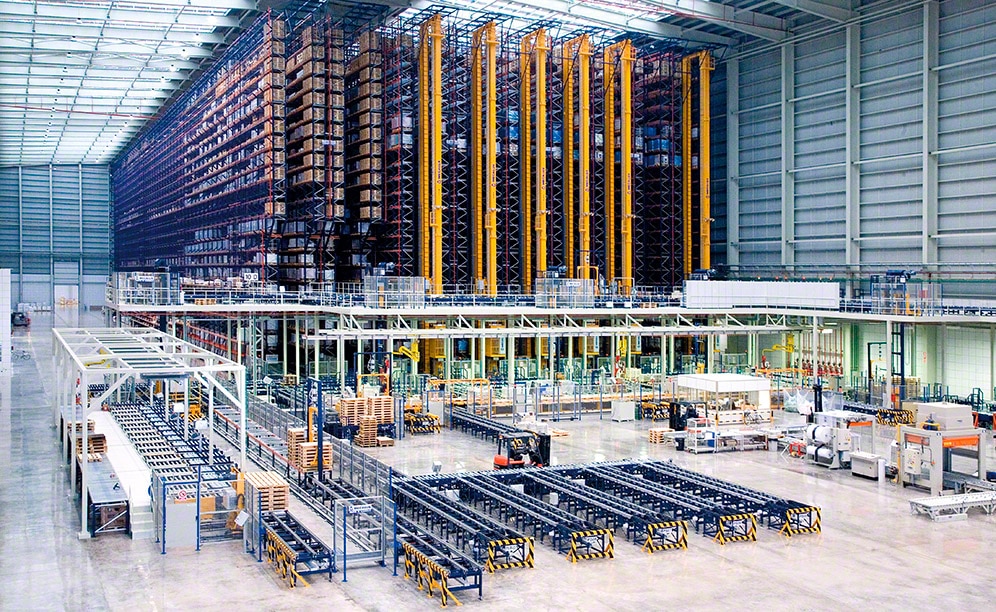
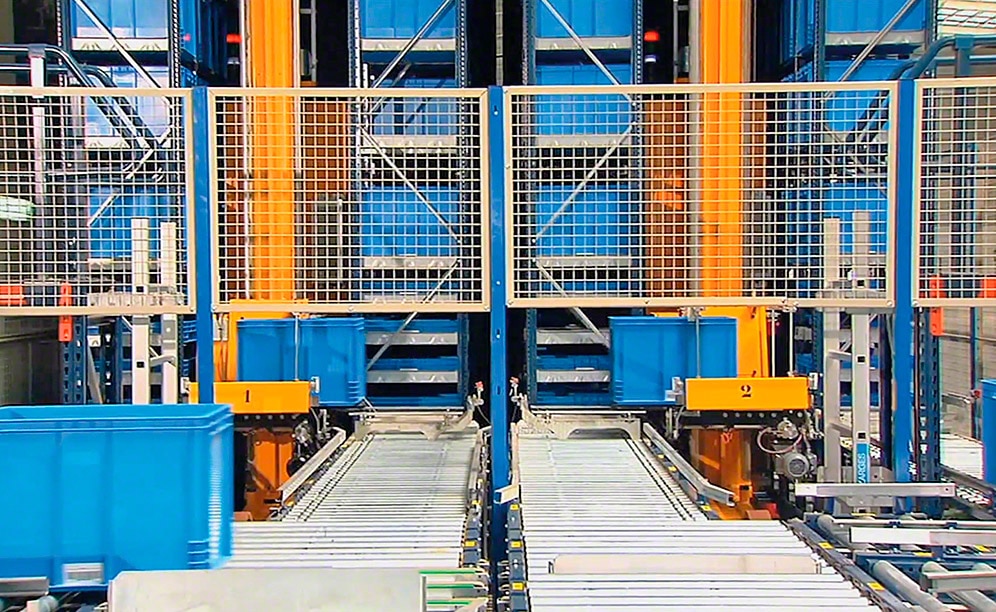
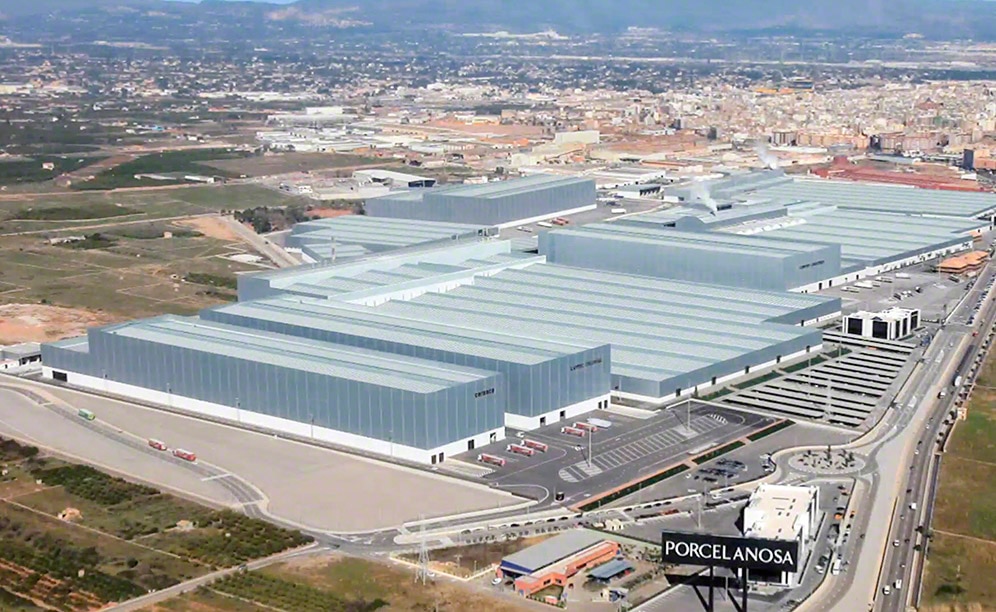
The Porcelanosa Group logistics complex includes five high-capacity automated warehouses
Products used in this project

Ask an expert